
I Saved a 5-Year-Old Boy's Life During My First Surgery – 20 Years Later, We Met Again in a Parking Lot and He Screamed That I'd Destroyed His Life
Dec 11, 202509:38 A.M.
He was my first solo case — a five-year-old boy clinging to life on the operating table. Two decades later, he found me in a hospital parking lot and accused me of ruining everything.
Advertisement
Back when this all began, I was 33 and freshly minted as an attending in cardiothoracic surgery. I never thought the same boy I helped would reappear in my life most crazily.
Five-year-old.
Car crash.
The kind of work I did was not general surgery — this was the terrifying world of hearts, lungs, and great vessels — life or death.
I still remember how it felt walking through the hospital halls late at night with my white coat over scrubs, pretending not to feel like an imposter.
Advertisement
It was one of my first solo nights on call, and I'd only just started to relax when my pager screamed to life.
Trauma team. Five-year-old. Car crash. Possible cardiac injury.
Possible cardiac injury.
That was enough to make my stomach drop. I sprinted to the trauma bay, my heart pounding faster than my footsteps. When I pushed through the swinging doors, I was hit with the surreal chaos of the scene.
A tiny body lay crumpled on the gurney, surrounded by a flurry of movement. Emergency medical technicians shouted vitals, nurses maneuvered with frantic precision, and machines cried out numbers I didn't like one bit.
Advertisement
He looked so small under all those tubes and wires, like a child pretending to be a patient.
That was enough
to make my stomach drop.
The poor child had a deep gash carved across his face, from the left eyebrow down to his cheek. Blood clotted in his hair. His chest rose rapidly, shallow breaths rattling with each monitor beep.
I locked eyes with the Emergency Room attendant, who rattled off, "Hypotensive. Muffled heart sounds. Distended neck veins."
"Pericardial tamponade." Blood was building in the sac around his heart, squeezing it with every beat, strangling it silently.
Advertisement
I focused on the data, trying to shut out the instinctual panic screaming inside me that this was someone's baby.
"Pericardial tamponade."
We rushed an echo, and it confirmed the worst. He was fading.
"We're going to the OR," I said, and I don't know how I kept my voice steady.
It was just me now. I had no supervising surgeon and no one to double-check my clamps or guide my hand if I hesitated.
Advertisement
If this child died, it would be on me. In the operating room (OR), the world narrowed to the size of his chest.
I remember the oddest detail — his eyelashes. Long and dark, feathering gently against pale skin. He was just a child.
He was fading.
When his chest was opened, blood welled up around his heart. I quickly evacuated it and discovered that the source was a small tear in the right ventricle. Worse, there was a brutal injury to the ascending aorta.
Advertisement
High-speed impacts can damage the body from the inside, and he'd taken the full force of it.
My hands moved faster than I could think. Clamp, suture, initiate bypass, repair. The anesthesiologist kept a steady stream of vitals coming. I tried not to panic.
I tried not to panic.
There were a few terrifying moments when his pressure plummeted, and the EKG screamed. I thought this would be my first loss — a child I couldn't save. But he kept fighting! And so did we!
Advertisement
Hours later, we weaned him off bypass. His heart beat again, not perfectly, but strong enough. The trauma team had cleaned and closed the gash on his face. The scar would be permanent, but he was alive.
"Stable," anesthesia finally said.
It was the most beautiful word I'd ever heard!
But he kept fighting!
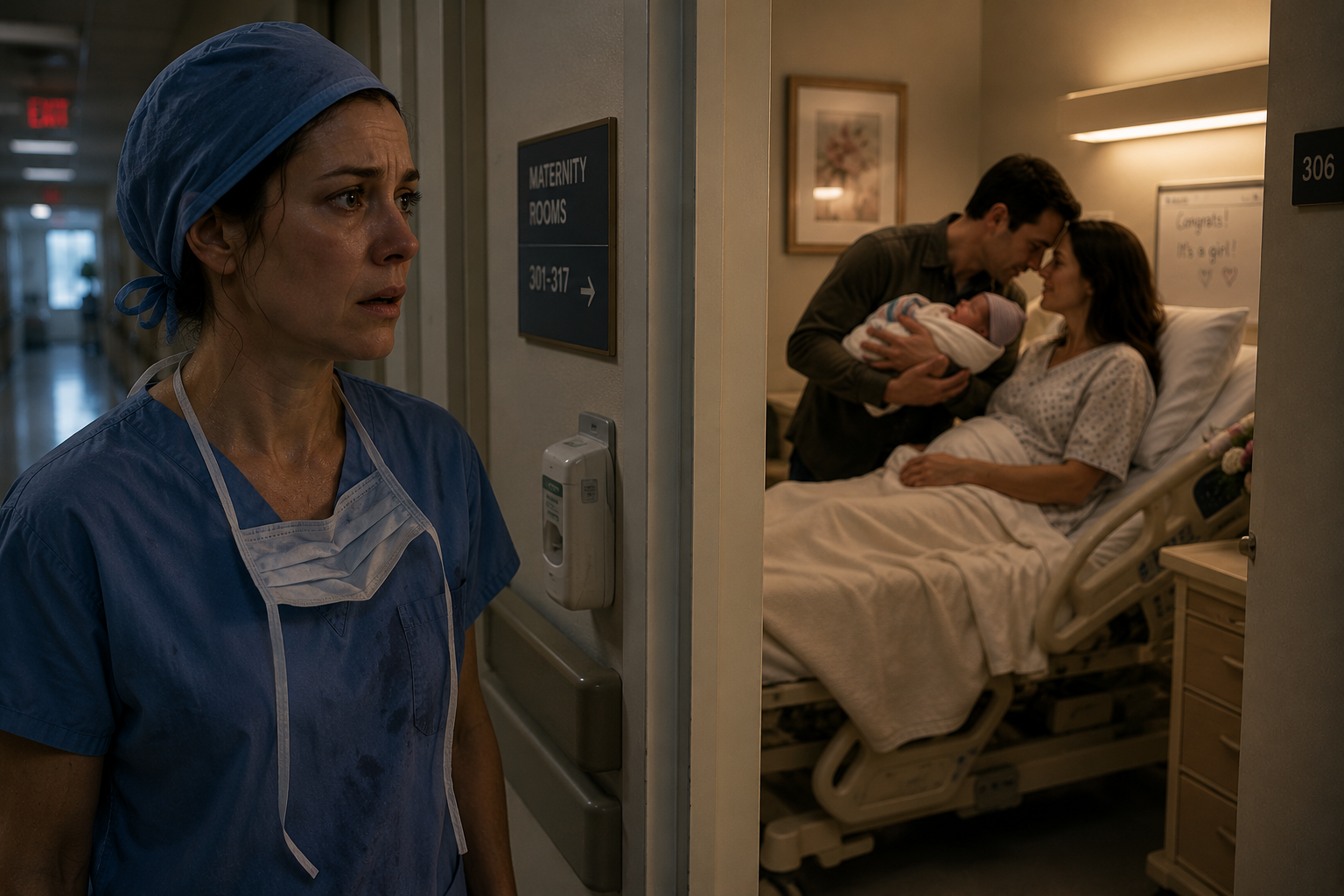
We moved him to the pediatric Intensive Care Unit (ICU), and once I peeled off my gloves, I realized how hard my hands were shaking. Outside the unit, two adults in their early 30s, gray-faced with fear, waited.
Advertisement
The man paced. The woman sat frozen, her hands clenched white in her lap, staring at the doors.
"Family of the crash victim?" I asked.
They both turned to me, and then I froze.
The woman's face, older but instantly familiar, knocked the wind out of me.
The man paced.
I recognized the freckles and the warm brown eyes. High school came rushing back in a flood. That was Emily, my first love!
Advertisement
"Emily?" I blurted out before I could stop myself.
She blinked, stunned, then squinted.
"Mark? From Lincoln High?"
The man — Jason, as I would learn — looked between us. "You two know each other?"
"We... went to school together," I said quickly, then switched back into doctor mode. "I was your son's surgeon."
"Emily?"
Advertisement
Emily's breath hitched, and she grabbed my arm like it was the only solid thing in the room.
"Is he... is he going to make it?"
I gave her the rundown in precise, clinical language. But I was watching her the whole time — how her face twisted when I said "tear in his aorta," how her hands covered her mouth when I mentioned a likely scar.
When I told her he was stable, she crumpled into Jason's arms, sobbing with relief.
"He's alive," she whispered. "He's alive."
I watched them hug as the world had stopped. I stood there, an interloper in someone else's life, and felt a strange ache I couldn't place.
"He's alive."
Advertisement
Then my pager went off again. I looked back at Emily.
"I'm really glad I was here tonight," I said.
She looked up, and for a second, we were 17 again, sneaking kisses behind the bleachers. Then she nodded, tears still fresh. "Thank you. Whatever happens next — thank you."
And that was it. I carried her thank-you with me for years like a lucky coin.
And that was it.
Her son, Ethan, pulled through. He spent weeks in the ICU, then the step-down unit, and finally went home. I saw him a few times in the follow-up. He had Emily's eyes and the same stubborn chin. The scar across his face faded into a lightning bolt — impossible to miss, unforgettable.
Advertisement
Then he stopped coming to appointments. In my world, that usually means good news. People vanish when they're healthy. Life moves on.
So did I.
Life moves on.
Twenty years passed. I became the surgeon people requested by name. I handled the ugliest cases — the ones where death was knocking. Residents scrubbed in just to learn how to think as I did. I was proud of the reputation.
I also did the normal middle-aged stuff. I got married, divorced, tried again, and failed more quietly the second time. I always wanted kids, but timing is everything, and I never got it right.
Advertisement
Twenty years passed.
Still, I loved my job. That was enough until one ordinary morning, after a brutal overnight shift, life pulled me full circle in the most unexpected way. I'd just signed out after a nonstop shift and changed into street clothes.
I was in a zombie-like haze as I headed toward the parking lot. I weaved through the usual maze of cars, noise, and frantic energy that haunts the entrance of every hospital.
That's when I noticed the car.
Advertisement
Still, I loved my job.
It was angled wrong in the drop-off zone, hazard lights blinking. The passenger door stood wide open. A few feet away was my own car, parked like an idiot, jutting too far out and partially blocking the lane.
Great. Just what I needed — to be that guy.
I picked up my pace, fishing for my keys, when a voice sliced through the air like a razor.
"YOU!"
I turned, startled!
Advertisement
"YOU!"
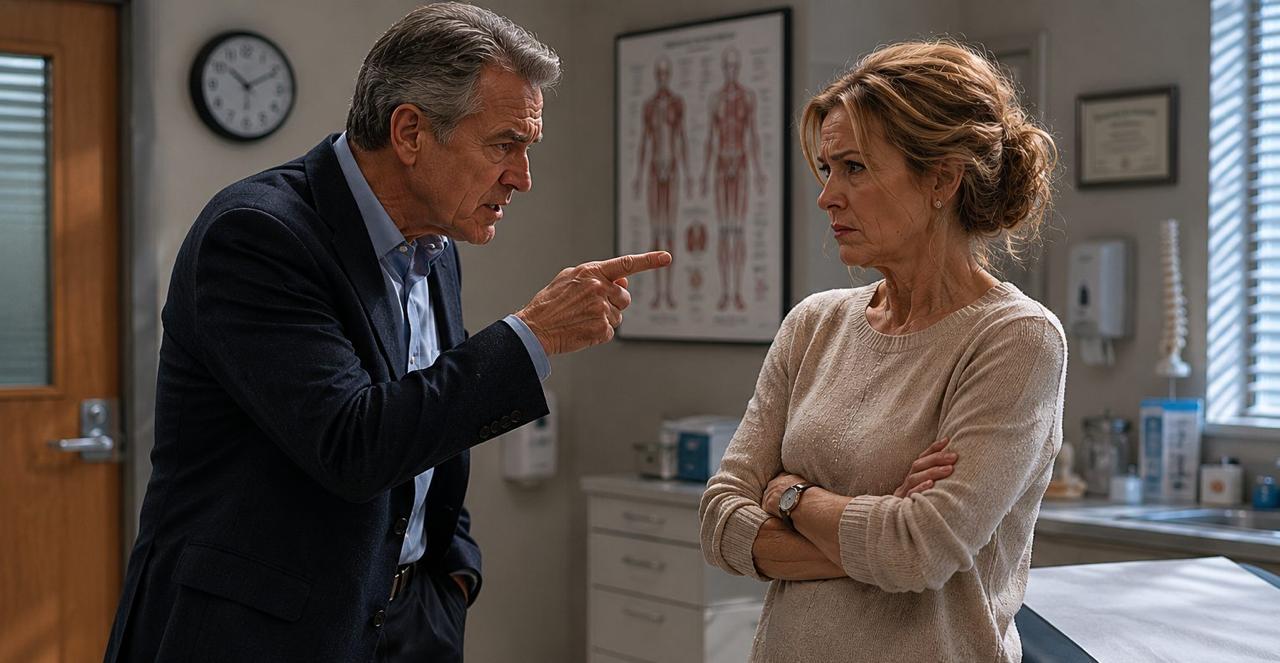
A man in his early 20s was running toward me! His face was flushed with rage. He pointed a shaking finger at me, eyes wild.
"You ruined my whole life! I hate you! Do you hear me? I [expletive] HATE YOU!"
The words hit like a slap! I froze. Then I saw it — the scar.
That pale lightning bolt slicing from his eyebrow to his cheek. My mind reeled as the images collided: the boy on the table, chest open, clinging to life... and this furious man shouting like I'd murdered someone.
Advertisement
The words hit like a slap!
I barely had time to process when he pointed his finger toward my car.
"Move your [expletive] car! I can't get my mom to the ER because of you!"
I looked past him. There, slumped in the passenger seat, was a woman. Her head against the window, unmoving. Even from a distance, I saw how gray her skin looked.
"What's going on with her?" I asked, already sprinting toward my car.
Advertisement
"Chest pain," he gasped. "It started in the house — her arm went numb — then she collapsed. I called 911. They said 20 minutes. I couldn't wait."
I looked past him.
I yanked open my car door and reversed without looking, barely missing a curb. I waved him in.
"Pull up to the doors!" I shouted. "I'll get help!"
He sped forward, tires squealing. I was already bolting back inside, yelling for a gurney and a team. Within seconds, we had her on a stretcher. I was beside her, checking her pulse — thready and barely there.
Advertisement
Her breathing was shallow, and her face was still pale.
Chest pain, arm numbness, and collapse.
Every alarm in my brain blared at once!
"I'll get help!"
We rushed her into the trauma bay. The EKG was a mess. Labs confirmed what I feared — aortic dissection. A tear in the artery that feeds the whole body. If it ruptured, she'd bleed out in minutes!
"Vascular's tied up. Cardiac, too," someone said.
Advertisement
My chief turned to me. "Mark. Can you take this?"
I didn't hesitate.
"Yes," I said. "Prep the OR!"
"Prep the OR!"
As we wheeled her upstairs, something nagged at the edge of my mind. I hadn't looked at her face yet — not really. I'd been so focused on saving her life, I hadn't processed what my subconscious already knew.
Then, in the OR, I stepped up to the table, and the world slowed down. I saw the freckles, brown hair laced with gray, and the curve of her cheek, even under the oxygen mask.
Advertisement
It was Emily. Again.
Lying on my table, dying.
It was Emily.
My first love. The mother of the boy whose life I had once saved — the same one who had just screamed that I had destroyed it. I blinked hard.
"Mark?" the scrub nurse asked. "You good?"
I nodded once. "Let's start."
Surgery for an aortic dissection is brutal. You don't get second chances. You open the chest, clamp the aorta, get them on bypass, and sew in a graft to replace the damaged section.
Advertisement
Every second matters.
"Let's start."
We opened her chest and found a large, angry tear.
I worked fast, adrenaline overriding fatigue. I didn't just want her to survive — I needed her to.
There was a terrifying moment when her blood pressure tanked! I barked orders, more forcefully than I meant to! The OR fell silent as we stabilized her, inch by inch. Hours later, we placed the graft, blood flow restored, and her heart steadied.
Advertisement
"Stable," anesthesia said.
That word again.
That word again.
We closed. I stood there for a second, staring at her face, now peaceful under sedation. She was alive.
I peeled off my gloves and went to find her son.
He was pacing the ICU hallway, eyes bloodshot. When he saw me, he stopped cold.
"How is she?" he asked, voice hoarse.
Advertisement
"She's alive," I said. "Surgery went well. She's in critical condition but stable."
He dropped into a chair, legs folding like paper.
"Thank God," he whispered. "Thank God, thank God..."
I sat next to him.
She was alive.
"I'm sorry," he said after a long silence. "About before. What I said. I lost it."
"It's okay. You were scared," I said. "You thought you were going to lose her."
Advertisement
He nodded. Then he looked at me properly for the first time.
"Do I know you?" he asked. "I mean... from before?"
"Your name's Ethan, right?"
He blinked. "Yeah."
"Do you remember being here when you were five?"
He blinked.
"Sort of. It's all flashes. Beeping machines, my mom crying, this scar." He touched his cheek. "I know I was in a crash. That I almost died. I know a surgeon saved my life."
Advertisement
"That was me," I said quietly.
His eyebrows shot up. "What?!"
"I was the attending that night. I opened your chest. It was one of my first solo surgeries."
He stared at me, stunned.
"What?!"
"My mom always said we got lucky. That the right doctor was there."
"She didn't tell you we went to high school together?"
Advertisement
His eyes widened. "Wait... Are you that Mark? Her Mark?"
"Guilty," I said.
He let out a dry laugh.
"She never told me that part," he said. "Just said there was a good surgeon. We owed him everything."
He was quiet for a long time.
He let out a dry laugh.
"I spent years hating this," he said finally, touching the scar. "Kids called me names. My dad left, and Mom never dated again. I blamed the crash and the scar. Sometimes I blamed the surgeons too. Like... if I hadn't survived, none of the bad stuff would've happened."
Advertisement
"I'm sorry," I said.
He nodded.
"But today? When I thought I was going to lose her?" He swallowed. "I would've gone through everything again. Every surgery and every insult, just to keep her here."

He swallowed.
"That's what love does," I said. "Makes all the pain worth it."
He stood up and then hugged me! Tight.
"Thank you," he whispered. "For back then. For today. For everything."
Advertisement
I hugged him back.
"You're welcome," I said. "You and your mom — you're fighters."
I hugged him back.
Emily stayed in the ICU for a while. I checked in with her daily. When she opened her eyes after a nap, I was standing beside her bed.
"Hey, Em," I said.
She gave me a weak smile. "Either I'm officially dead," she croaked, "or God has a very twisted sense of humor."
Advertisement
"You're alive," I said. "Very much so."
"Ethan told me what happened. That you were his surgeon... and now mine."
I nodded.
"Very much so."
She reached out and took my hand.
"You didn't have to save me," she said.
"Of course I did," I replied. "You collapsed near my hospital again. What else was I going to do?"
Advertisement
She laughed, then winced. "Don't make me laugh," she said. "It hurts to breathe."
"You've always been dramatic."
"And you've always been stubborn."
"It hurts to breathe."
We sat there for a moment, the monitors beeping.
"Mark," she said.
"Yeah?"
"When I'm better... would you want to grab coffee sometime? Somewhere that doesn't smell like disinfectant?"
Advertisement
I smiled. "I'd like that."
She squeezed my hand. "Don't disappear this time."
"I won't."
"I'd like that."
She went home three weeks later. I got a text from her the next morning: "Stationary bikes are the devil. Plus, the new cardiologist said I must avoid coffee. He's a monster."
I sent back: "When you're cleared, first round's on me."
Advertisement
Sometimes, Ethan joins us. We sit in that little coffeehouse downtown. Sometimes we just talk about books, or music, or what Ethan wants to do with his life now.
Sometimes, Ethan joins us.
And if someone told me again that I ruined his life?
I'd look him right in the eye and say:
"If wanting you to be alive is 'ruining' it, then yeah. I guess I'm guilty."
Which moment in this story made you stop and think? Tell us in the Facebook comments.
If this story resonated with you, here's another one: Little Angel sold lemonade to raise funds for her father's surgery, but didn't expect that one day someone in an SUV would change their lives.
Advertisement
Advertisement

The information in this article is not intended or implied to be a substitute for professional medical advice, diagnosis or treatment. All content, including text, and images contained on AmoMama.com, or available through AmoMama.com is for general information purposes only. AmoMama.com does not take responsibility for any action taken as a result of reading this article. Before undertaking any course of treatment please consult with your healthcare provider.