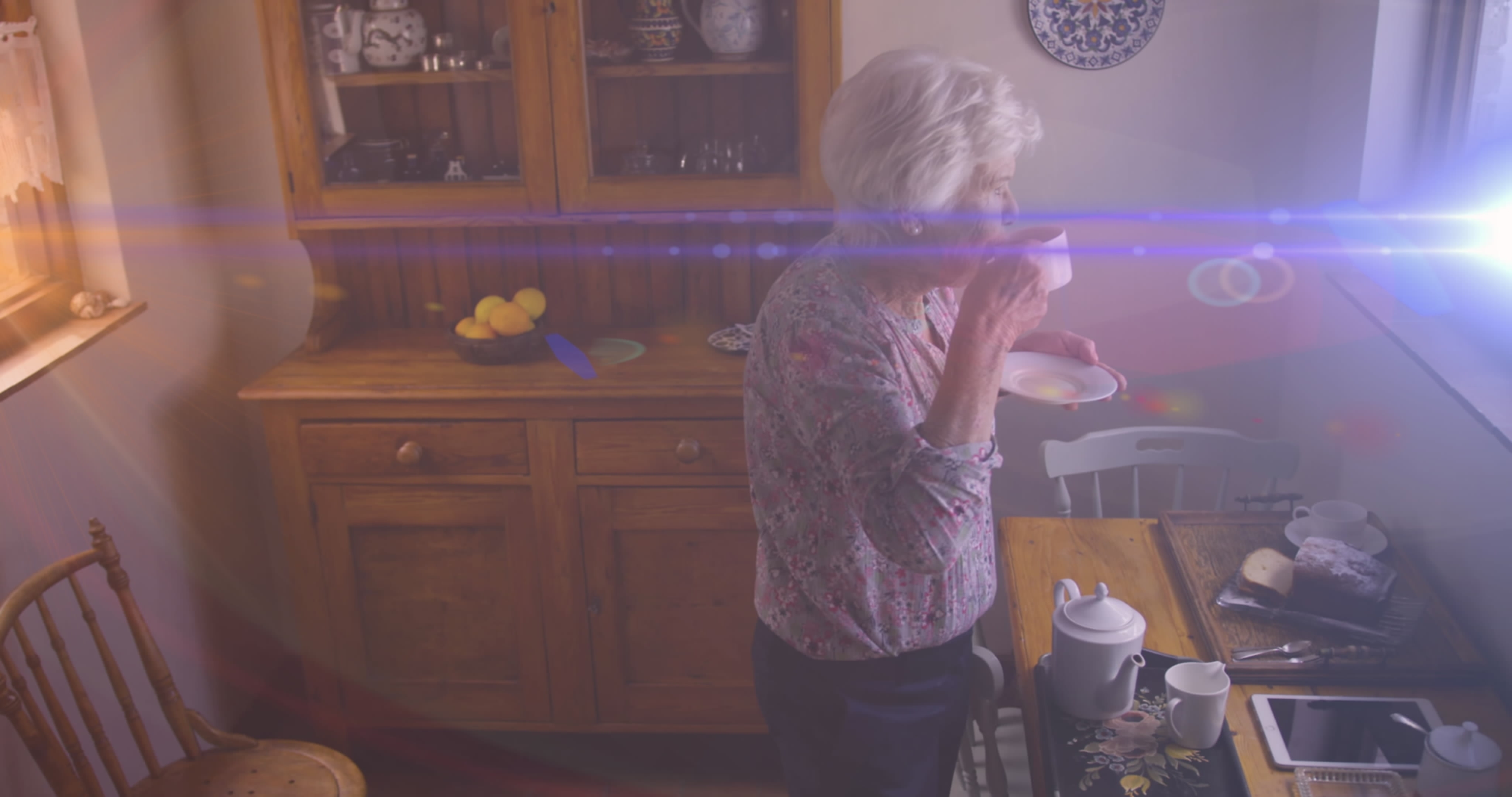

She Let a Homeless Woman Sleep in Her Café – She Was Shocked When She Walked in the Next Morning

Mar 02, 202606:58 A.M.
The night I let a homeless woman sleep in my café, I told myself it was just one act of kindness. I locked the door behind her and spent hours wondering if I had made a mistake. When I came back at dawn and heard sounds from the kitchen, my first thought was panic.
Advertisement
I own a small café on the corner of Rono Street, where the morning traffic moves like a slow river past my windows. It is not fancy, and the chairs do not match perfectly.
However, the lights are warm, the tables are solid, and the regulars like the way the place smells when the cinnamon rolls come out of the oven.
After my divorce, I needed to focus on something I loved doing.
So I built this café the way people build lifeboats: quickly at first, then with obsessive care. Most mornings started the same way.
Advertisement
My alarm rings at 4:45 a.m. I take a shower that never feels long enough. The cold air hits my face when I step outside. Then the quiet walk to the café, keys cold in my palm, and the streetlights still on as if the night had not decided to leave yet.
Inside, it is always dark at first. I flip on the lights, hear the hum of the refrigerator, and breathe in the faint scent of yesterday's coffee.
Then comes the work. I grind beans, prep the espresso machine, and set out clean mugs. I also knead dough until my wrists ache. I fold until the layers promise flake and lift.
By the time the first customers arrive at six, the place looks effortless, like warmth and pastries simply exist.
They do not see the hours that create that illusion.
Advertisement
I have two waitresses, Tessa and May, who are good with people. They know regular orders by heart and can defuse cranky customers with a smile.
I have an assistant, Jordan, who can ring up orders fast enough to keep the line moving, but none of them bake.
They can reheat, arrange, and decorate plates. But if something goes wrong at dawn, if the dough doesn't rise or the oven runs hot, it is always me who has to fix it.
And now I am supposed to go back to school.
I had enrolled in a culinary program at the community college.
Advertisement
This was something I had postponed for years because survival had always felt more urgent than dreams.
Morning classes mostly, which meant that I needed someone who could do the work I do well or even better than I.
I had posted an ad, and two applicants came. One did not know what yeast was. The other wanted double my budget and said, without humor, that she did not "do" weekends.
I could not blame her since weekends were brutal, but I also could not pay for that.
Now, as I closed the café later than usual, I thought about how classes were to start in a week, and I still had not hired a baker.
Outside, the cold hit like a slap.
Advertisement
Winter had not fully arrived yet, but the wind had teeth. Rono Street was quiet, the kind of quiet that makes you notice everything: the drag of a car tire, the distant siren, and the rustle of trash skittering along the sidewalk.
That was when I saw her.
Across the street, near the bus stop, a woman sat hunched on the bench. She was still, almost too still, like she was trying to conserve the last of her heat.
Her coat was too thin, and she looked exhausted.
I stopped walking.
Advertisement
There are moments where your body decides before your mind catches up. I felt my feet shift toward the crosswalk.
The closer I got, the more I could see her face.
It was lined, but not aged beyond reason. Her cheeks were hollow, the way they get when you have not eaten well in a while. Her eyes were open, focused on nothing.
She noticed me and stiffened, the way people do when they expect the world to hurt them.
"Hi," I said softly. "Are you okay?"
She blinked, as if the question did not belong in her reality.
Advertisement
"I'm fine," she said. Her voice was quiet and careful.
I glanced around. There were no other people nearby. The street was empty enough to feel risky.
"It's freezing," I said. "Do you have somewhere to go tonight?"
A pause. Then, a very small shake of her head.
I heard my own voice before I could stop it.
"I own the café," I said, nodding behind me. "You can sleep inside. Just until morning."
Her eyes narrowed immediately.
Advertisement
"Why?" she asked.
I said, "Because it's cold. And it wouldn't be a bother to me."
She stared at me for a long time.
Her gaze dropped to my keys, then lifted back to my face.
There was something proud in her still. Something that hadn't died.
"Just one night," she said, finally.
"Okay," I said, and swallowed the sudden tightness in my throat. "Just one night."
Advertisement
Inside the café, the warmth wrapped around us immediately. She stood near the door for a second, as if she did not know where to place herself.
I pulled a folded blanket from the storage closet, one I kept for emergencies, and handed it to her.
"There's a bathroom in the back," I said. "If you need water, there's a sink."
I locked the door behind me when I left, the bolt clicking into place, and walked home under a sky so clear it looked sharp.
That night, I did not sleep.
Advertisement
I lay in bed staring at my ceiling, replaying the moment over and over. My brain offered every possible disaster, as if it were trying to punish me for daring to be kind.
What if she stole the register money?
What if she smashed the pastry case?
What if she left the water running and flooded the place?
What if she wasn't alone?
At 2:13 a.m., I got up and checked my phone as if it would show me an answer. It did not.
Advertisement
At 3:40 a.m., I made tea that I did not drink. At 4:30 a.m., I gave up and got dressed early.
My hands were trembling when I walked to the café.
The street was still quiet. The windows of the café were dark, and there was no movement inside.
I told myself that was good.
I told myself not to imagine the worst.
When I reached the door, my key felt heavier than usual, like metal could carry guilt.
Advertisement
I unlocked it slowly, and the bell above it rang.
Then I froze. The air smelled sweet and warm, like browned butter and sugar.
Then I heard it. A faint clink, a low scrape, and the sound of a whisk against metal.
My stomach dropped.
"Dear God… what is happening here?" I whispered.
I stepped forward, moving past the counter, toward the back.
The sounds came from the kitchen.
Advertisement
When I reached the doorway, I stopped.
She was there, standing at my prep table as if she belonged to it. Hair tied back neatly, sleeves rolled to the elbows, a bowl in front of her, and a whisk in her hand.
The counters were clean. Cleaner than I had left them. On the cooling rack sat trays of pastries that I did not make.
They were shaped differently. Some braided and twisted. They were glazed with something pale and glossy. A few had a dusting of sugar that sparkled in the overhead light.
She turned when she heard me.
Her expression did not shift into guilt.
Advertisement
It stayed calm.
"I hope you don't mind," she said quietly. "I couldn't sleep."
I stared at the pastries, then at her.
"You… baked," I managed.
"I did," she said. "I used what you had. Only pantry staples. Flour, butter, sugar, spices, and eggs."
My voice came out sharp with fear and disbelief. "How did you even know where everything was?"
I stepped closer and picked up one of the pastries. It was warm,
Advertisement
I broke it open and saw that it had a layer and a soft interior.
I took a bite. The flavor hit in waves: butter, orange zest, cardamom, and something slightly salty that made it sing.
I stared at her.
"Who are you?" I asked.
She set the whisk down slowly. "My name is Margaret."
"Margaret," I repeated, still trying to catch up. "Are you… a baker?"
Something passed through her eyes. A flash of pride, sadness, and hstory.
Advertisement
"I used to own a bakery," she said.
The words landed heavier than I expected.
"I ran it for 12 years," she continued, voice steady. "My husband handled the books. I handled the oven and the recipes."
Her mouth curved briefly, then flattened again.
"He got sick," she said. "It wasn't a long illness. It was expensive, though. We paid for treatments, specialists, and tests."
My chest tightened. I could already feel where this was going.
Advertisement
"We drained our savings," she went on. "Then we took loans. Then we sold equipment. Then we sold the business."
Her gaze dropped to her hands, the ones that had made those pastries so effortlessly.
"After he died, I was left with bills. I sold most of what we owned to pay the debts."
She looked up again.
"I've been homeless for six months," she said quietly. "I've been surviving on what I can carry and what people throw away."
I glanced at her coat again, the thinness of it, the way the cuffs were frayed.
Advertisement
"And you spent your morning making pastries," I said, almost to myself.
Margaret's voice remained calm. "It's what my hands know how to do. When everything else falls apart, your hands still remember who you were."
I swallowed hard.
In front of the café, the first light of morning was filtering through the windows. I could hear the street beginning to wake up.
I should have been angry.
I should have been furious at the risk. At the audacity.
Advertisement
Instead, I felt something else: a strange, painful recognition.
Because I knew what it was like to lose a life and still wake up needing to be useful.
I cleared my throat. "Those are… incredible."
Margaret nodded once, not boastful. Just factual. "Thank you."
I had been terrified all night that she would take from me. Instead, she had created.
Still, a decision like this felt dangerous.
Advertisement
Not because of her skill, but because of how much hope it stirred up in me.
I took a breath. "Margaret, would you like to work here?"
Her eyes narrowed slightly, cautious again. "Work?"
"Paid work," I said firmly. "In this kitchen. All mornings. Making pastries and prepping for the day."
She stared at me like I had offered her the moon.
"I'm starting culinary school soon. I've been stressed about how I'm going to keep this place running without a competent baker. My staff is wonderful, but they can't do what you just did in one night."
Margaret's throat bobbed as she swallowed.
Advertisement
"Why would you hire me?" she asked. "You don't even know me."
I thought about my divorce. About how people had looked at me like I was a woman who failed. About how I had built this café anyway, because failure did not get to be the end of my story.
"I know what you can do," I said. "And I know what it looks like when someone is trying to survive without losing themselves."
A long pause.
Then Margaret said, almost inaudibly, "I haven't had a paycheck in years."
My chest tightened.
"Okay," I said. "Then we start today."
Advertisement
Her eyes filled, but she blinked fast, controlling it.
"I don't want pity," she whispered.
"This isn't pity," I said, voice steady. "It's a job based on your competency."
I walked to the small office, opened the petty cash drawer, and pulled out a stack of bills. Not enough to be reckless, but enough to help someone get back on their feet.
I came back and placed it on the counter.
"An advance," I said. "So you can get a room. A small apartment, if you can. Clothes, soap, and other basics. You can pay it back slowly, or we can work it into your first checks. We'll do the paperwork properly. This is not an under-the-table thing."
Margaret stared at the money, stunned.
Advertisement
"I can't—"
"You can," I said gently. "Because you're not taking it for nothing. You're earning it."

Her fingers hovered over the cash as if it might burn her.
Then she picked it up, slowly, with a reverence that made my throat tighten.
"Thank you," she said, voice rough.
I nodded once, because if I spoke again, I might ruin it with emotion.
Out front, people would soon be streaming in.
Advertisement
Margaret tied an apron around her waist as if she had worn one all her life, because she had.
"Tell me what you need first," she said.
"Coffee and pastries," I replied, almost laughing at the simplicity.
"Then let's feed the morning crowd," she said.
Two weeks later, she had a modest apartment three blocks away. Nothing fancy. A small kitchen, a bed, and a door that locked.
When she told me, her voice shook like she did not trust the good news.
Advertisement
"I forgot what it felt like to turn a key," she admitted.
I swallowed hard. "You won't forget again."
The café changed after that, not because it became glamorous, but because it became steadier.
I took my classes and still slept some nights with recipe cards spread across my bed. Margaret ran the morning bake like a conductor.
Tessa and May became faster and more confident. Jordan stopped panicking during rush hour because the kitchen behind him was no longer held together by one exhausted woman.
Customers started asking for Margaret by name due to her sweet recipes.
Advertisement
And that, more than anything, felt right.
One evening, months later, I watched Margaret wipe down the counters after closing. Her movements were slow now, unhurried, as if time had finally stopped chasing her.
"I used to think I was done," she said suddenly.
"Done with what?" I asked.
"With being useful," she replied. "With being seen."
I leaned against the counter. "You were never done. You were just… buried under grief and bills and cruelty."
Advertisement
Margaret nodded once, eyes bright.
Then she looked at me and smiled, small but real.
"You opened a door," she said. "And I walked through it."
I smiled back. "You walked through it carrying a whole bakery in your hands."
When I turned off the lights that night, the café glowed faintly through the front window, warm and steady, the way it always had.
Now I understand something I had not fully understood before.
Advertisement
Sometimes you think you are saving someone for one night.
And then you realize you have both been waiting for the same thing: a reason to believe that what you lost is not the only thing your life will ever be about.
If fear tells you to lock the door and compassion tells you to open it, which one do you listen to — especially when everything you own and have worked so hard to build is on the other side?
If you enjoyed reading this story, here's another one you might like: A stranger appeared at Stephen's garage during the worst blizzard of the year, desperate for shelter. Against his better judgment, Stephen let him in. The next morning, the man vanished without a trace, and hours later, Stephen's bank called with urgent news about unusual activity on his account.
Advertisement
Advertisement