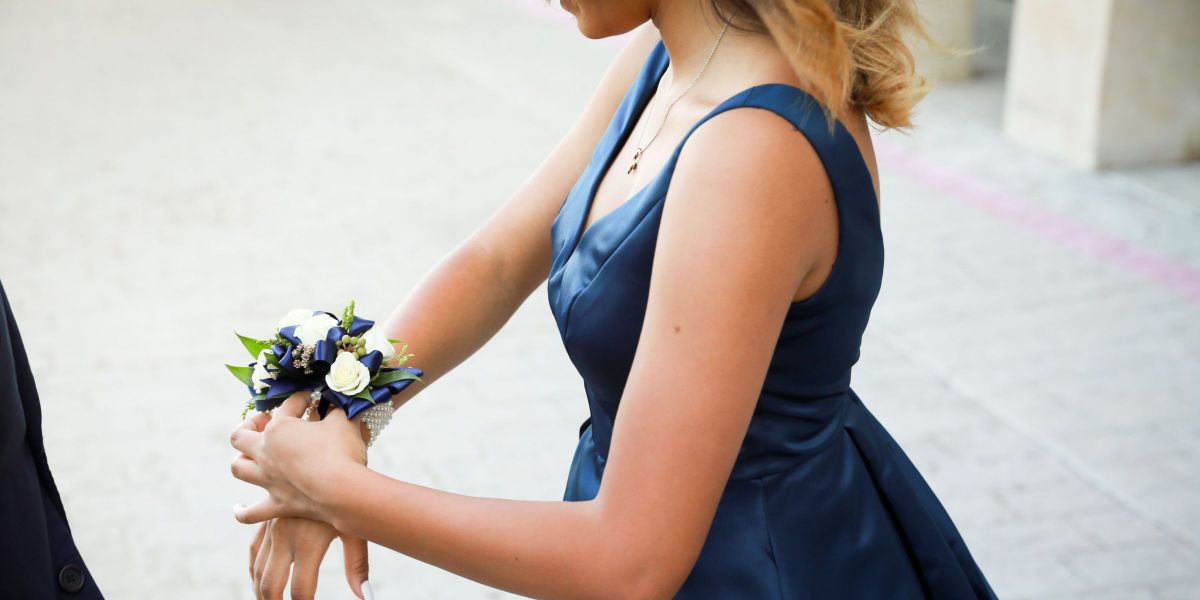
My Stepmom Took Photos of My Prom Dress and Showed Up in an Identical Copy – What My Prom Date Did Next Left 200 People Speechless
June 17, 2026


My daughter-in-law told the waiter, "We're not paying for her." My son heard it — and nodded. I just kept eating. When the bill came, the manager walked over and said one sentence. Their faces went pale.
On Mother's Day, my daughter-in-law told the waiter, "Split the check. We're not paying for her."
She said it clearly, without lowering her voice, without shame, and without even looking at the woman she was insulting. Her. Not Kathy. Not Catherine Sullivan. Not my wife of 47 years. Not the woman whose hands had trembled all through dinner, whose soup had gone cold because pain had stolen her appetite, whose stocking was darkening beneath the table where the ulcer on her foot had started bleeding again.
My son Jason sat beside Amber and nodded. That was the moment I finally understood that the boy I had once carried through a hospital corridor, the boy whose fevered hand I held when he was 6, had grown into a man who could watch his mother be humiliated in public and agree that she was not worth $18 worth of soup.
I did not shout. I did not throw the glass. I simply stood, placed my hand on the old folder I had carried against my ribs all night, and said the one sentence that made Jason's face turn pale.
But to understand why that sentence broke him, you have to understand why I had already paid for dinner before we ever sat down.
It was May 12, 2024, in Scottsdale, Arizona. At 3:00 that afternoon, Kathy and I pulled into the parking lot of Mo's Ocean Club in my 2009 Honda Civic. Kathy sat beside me wearing her pale blue dress — 15 years old, from a thrift store, but ironed that morning with the care of a woman dressing for something sacred. Diabetes had taken strength from her fingers. Kidney trouble had taken color from her face. The ulcer on her left foot had been there for months and would not heal properly, not while she rationed insulin and we chose between medication, rent, utilities, and food.
The restaurant was not open yet, but I had called ahead. The manager, Miguel, met us at the entrance.
I shook his hand, then pulled an envelope from inside my jacket. Inside was $600 in cash. Every dollar we had left. Our rent money for May. We were already 2 months behind.
"I need you to do something," I said quietly. "Tonight, my son and his wife are taking us to dinner. When the check comes, I need you to tell them it's already been paid."
He looked at the money, then at Kathy in her thrift-store dress, then past us toward the scratched Honda.
"Why?" he asked.
"Because I know my son won't pay for his mother. And I won't let her be humiliated tonight."
Miguel tucked the envelope into his pocket. "I'll take care of it. Whatever the total is, if it goes over $600, it's on the house."
My throat tightened. "Thank you."
He turned to Kathy. "And happy Mother's Day, ma'am."
When we returned at 6:00, a black Porsche Cayenne pulled up behind us. Vanity plate: JAYSULLY.
Jason Sullivan was 46, wearing a tailored suit that probably cost more than our monthly rent. Then Amber emerged — 43, blonde, beautiful in an expensive way, moving like someone who had never wondered whether there would be enough money at the end of a month.
She looked at Kathy and me and smiled as if we were proof of something unpleasant.
Inside the restaurant: crystal chandeliers, white tablecloths, couples in cocktail attire. Amber ordered oysters Rockefeller, lobster tail, and a bottle of wine that cost more than our electric bill. Jason ordered tuna tartare and a Wagyu ribeye. Kathy ordered the French onion soup — the cheapest item on the menu. I ordered a house salad.
I looked at my son's expensive watch and thought about March 2008. My parents had died in an accident on I-10. Their estate: $2 million. Kathy and I sat with Jason at our kitchen table — he was 30, fresh out of business school.
"We're going to give it to Jason," I said.
"All of it?" Kathy asked.
"All of it."
Jason had tears in his eyes. "I'll make you proud, Dad. I'll build something great with this."
Sixteen years later, I sat watching him scroll through his phone while his wife ignored the woman who had given him everything.
Then Amber announced she was pregnant. Fourteen weeks. She showed us an ultrasound photo. Kathy cried tears of joy.
But something bothered me. Fourteen weeks pregnant and Amber was drinking wine without hesitation. The ultrasound looked too perfect — textbook, like an image pulled from a medical website.
I kept my mouth shut.
Then Jason's phone buzzed. He went outside, came back pale. Something was wrong with the business.
Part 2
The dinner dragged on. Amber talked about a vacation to Santorini — $4,000-a-night resort. Jason scrolled his phone. Kathy tried to smile about a grandchild I did not believe existed.
Under the table, I saw the dark stain spreading above Kathy's left ankle. The ulcer had started bleeding through the bandage. She shifted her foot to hide it.
I had been carrying a secret of my own since March 3: Stage 2 prostate cancer. PSA level 47. Treatment cost: $78,500. I had not told Kathy. How could I? She was cutting her insulin doses in half just to survive. I had found her notes: "Half dose again. God forgive me. Hank doesn't know."
Then, 8 weeks earlier, I had heard Jason in the hospital hallway while Kathy was in ICU.
"How much longer do you think she has? Honestly?" Amber had said.
"A year, maybe less," Jason answered. "The doctor said her kidneys are—"
"So we wait," Amber interrupted. "We deal with the house, the policy, all of it."
"Yeah," Jason said.
Not a defense of his mother. Just agreement.
Then Tyler returned with the check. $687.42.
Amber reached for it first. Her eyes moved down the receipt. Then she looked up at Tyler.
"We're going to need separate checks. One for us — and one for them. Don't worry. We're not paying for her."
Her.
Tyler's face went red.
Jason cut him off: "That's fine. Separate checks."
Then he nodded.
Kathy's eyes went wide. Tears slid down her cheeks. She did not wipe them away. She did not make a sound.
Phones around the restaurant began rising. The woman in scrubs at table 12 — she had been recording for some time.
I reached into my jacket and pulled out the folder.
Then I stood.
"$687.42," I said quietly. "That's what you were about to ask your mother to pay for. Eighteen dollars for soup she couldn't eat while you ordered $185 steak."
Before I could open the folder, Miguel appeared.
"There's no check," he said. "The bill has already been paid."
Amber stared. "What?"
"Mr. Sullivan paid for this entire meal earlier this afternoon at 3:00 in cash."
"Six hundred dollars," I said. "That was our rent money for May. We're already 2 months behind. Our landlord started sending eviction notices last week."
I looked directly at Jason.
"I took our rent money and paid for this dinner in advance because I knew. I knew you would do exactly what you just did."
Then I opened the folder. The first document: a bank statement from March 15, 2008. Transfer to Jason Michael Sullivan. Amount: $2,000,000.
"Do you remember this?" I asked.
Then I laid out hospital bills. Pharmacy receipts. Insurance denial letters. Three years of paper showing what Kathy and I had been paying since we gave him everything.
Then I held up a single page with medical letterhead.
"Stage 2 prostate cancer. PSA level 47. Estimated treatment cost: $78,500. I have cancer. I've had it since March 3. I haven't treated it. I haven't told anyone. Because we didn't have $78,000. We barely had 78 dollars."
Kathy grabbed my arm. "Hank. You didn't tell me."
"I couldn't. We couldn't afford your insulin. How was I supposed to tell you we needed another $80,000 for me?"
Jason shot to his feet. "Dad, you have to get treatment."
"I chose your mother over my own life. That's what you do when you love someone."
Then I reached into the folder one last time.
"And this is what the opposite of love looks like."
I held up a receipt: BabyBump.com. One silicone pregnancy belly. 14-week size. Price $47.99.
Then a second page: Fake Ultrasound Generator website.
"Your wife is not pregnant," I told Jason. "She never was."
Amber shot to her feet. "You're crazy—"
But when she moved, the silicone belly shifted. The elastic band had loosened. As she stood gesturing in panic, the bottom edge separated from her actual stomach — visible to 30 or 40 phones.
"She faked it," someone whispered.
Amber stood with both hands pressed to her stomach, face burning, tears streaming.
"You told Kathy she was going to be a grandmother," I said. "You watched her cry tears of joy. You lied to a sick woman about the one thing that might have comforted her."
Then I turned to Jason. "And I heard you. In the hospital hallway. I heard you ask Amber how much longer your mother had. I heard you agree to wait for her to die."
Jason sank into his chair. His shoulders shook. "I'm sorry. Dad, I'm so sorry."
Kathy stood beside me. "We're leaving."
We walked out. In the parking lot, Amber came after us shouting about money, about Derek the business partner who had been stealing $230,000 from the company. Jason stared at her.
"You said my parents were going to leave everything to you anyway," she snapped. "Why should they keep it when we need it now?"
Jason said quietly: "Get away from me."
I stepped between Amber and Kathy's door and hit the lock button. "Don't touch her."
The Honda started with that grinding noise from the transmission. That night, it sounded almost like freedom.
Part 3
The woman from table 12 was named Rachel. At 10:17 that night, she uploaded the video: "Son Refuses to Pay for Dying Mother on Mother's Day. Watch What Happens." By morning it was everywhere. By August: 40 million views.
Three days later, Jason called.
"Can we talk? Please. I know I don't deserve it."
He came in the Porsche but looked nothing like the man who had stepped out of it on Mother's Day. Jeans, wrinkled T-shirt, red eyes. He had gone to my truck and found the cancer bills in the glove compartment. He had found Kathy's spiral notebook with her insulin notes: "Half dose again. Hank doesn't know."
He put his head in his hands. "What have I done?"
He started a fundraiser: Help My Parents After I Failed Them. Goal: $250,000. It raised $180,000 in 24 hours. By August: $427,000.
He paid off Kathy's medical debt — $146,300. He paid for my cancer treatment. He bought Kathy an insulin pump for $18,000 that changed her life almost immediately.
Amber's trial began December 15, 2024. The jury had seen 40 million people watch her refuse to pay for a dying woman on Mother's Day. On day 4, she entered a guilty plea on all 12 counts. Judge Patricia Moreno sentenced her to 5 years in federal prison.
Derek Hartman — Jason's business partner — was arrested and sentenced to 8 years for embezzling $3.2 million.
Rachel came to the house. She brought a photograph: a man standing with his arm around a teenage girl. On the back: "Dad and Rachel, 1995."
I looked at the man. My father.
"We share a father," she said quietly. "I'm your half-sister. I was there that night because Mo's was our father's favorite restaurant. And Miguel recognized your scar — his father was the man you saved in that warehouse fire in 1994."
I stood and hugged her. This stranger who was not a stranger. This sister I never knew I had.
On June 20, 2025, Dr. Morrison told me: "Your PSA is 0.8. Complete remission."
She turned to Kathy: "Your A1C is 7.2. Down from 10.2 last March. You're doing everything right."
Kathy looked down at her hands. "Jason did that. He checks my glucose every morning and every night. He sets alarms so he doesn't forget."
Jason came over with groceries, insulin supplies, and a notebook full of questions for the doctor. He looked older. Less polished. More human.
That night, after Jason left, Kathy and I sat by the window.
"Do you forgive him?" she asked.
"I don't know. Not all the way."
She nodded. "Me neither."
Then she reached for my hand. "But he came back."
"Yes," I said. "He came back."
And for that night, that was enough.
My Stepmom Took Photos of My Prom Dress and Showed Up in an Identical Copy – What My Prom Date Did Next Left 200 People Speechless
June 17, 2026

He Was My Dream Boy in High School – 20 Years Later, He Was Homeless and Didn't Recognize Me
May 21, 2026

My College Tormentor Showed up at Our Reunion with My Ex-Husband After He Left Me with Our Twins – But Karma Caught up with Them in Front of Everyone
June 17, 2026

My In-Laws Treated My Cabin Like Their Own Property — What I Did Next Left Everyone Speechless
June 11, 2026

My Sister Warned Me Not to Embarrass Her at the Rehearsal Dinner — Then the Federal Judge Walked Past Her and Shook My Hand First
June 16, 2026

My Sister Showed Up With Suitcases and a Spare Key — I Stayed Calm, Then Everyone Saw What Was Really Happening
June 19, 2026

My fiancé abandoned me for a billionaire's daughter sixteen days before our wedding. When I found out why he was sneaking to the gym at midnight, my heart stopped.
June 12, 2026

My Mother Disliked My Grandmother for as Long as I Could Remember – Then a Hidden Music Box Finally Revealed Why, and I Could Hardly Breathe
June 24, 2026

A Painting at the Gallery Looked Exactly Like My Daughter – But When I Met the Artist, I Couldn't Believe My Eyes
May 11, 2026

I Started Selling My Husband's Expensive Bouquets for Half Price – Until One Buyer Knocked on My Door Crying
August 04, 2026

My Husband's Twin Brother Slept With Me While Pretending to Be My Husband – Now I'm Pregnant With No Idea Who the Father Is
May 13, 2026