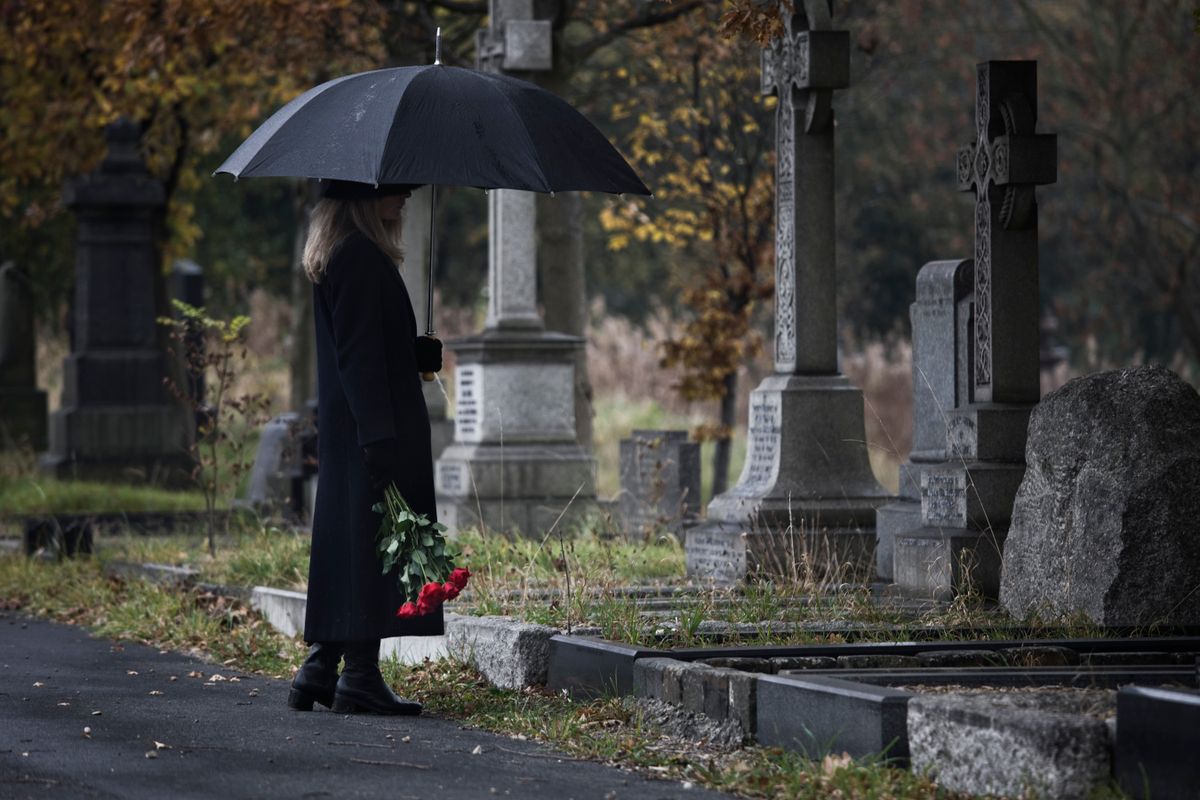
A Man Stopped Me at My Father's Grave and Handed Me a Rusted Pocket Watch – I Wish I'd Never Opened It
June 10, 2026



My ex-in-laws spent months painting my daughters as "heartless villains" who drove their father to his death. But when their friends cornered my 17-year-old at the market on her birthday, I decided it was time everyone learned the complete story my in-laws had been hiding.
My name's Carla, and I'm 46 years old. Before everything shattered, I thought we were just an ordinary family with two teenage daughters, a husband who burned pancakes, and a house that smelled like coffee.
People said we were stable. I believed them.
But back then, I had no idea my daughters were carrying a crushing secret.
But back then,
I had no idea my daughters were carrying
a crushing secret.
It started with a school project. Mia, my 17-year-old, needed baby pictures. She and her younger sister, Lila, were searching the family computer when an automatic backup popped up from their father's phone.
They almost closed it. Almost.
Inside were photos of Thomas with another woman in our living room, taken when my daughters and I were away on vacation. Then hospital photos of her holding two newborns. Then, there was a picture of Thomas holding both boys, grinning.
The timestamps showed nights he'd claimed he was working late. Weekends he'd supposedly gone out of town. Days I'd called and gotten distracted replies.
The timestamps showed
nights
he'd claimed he was working late.
My daughters printed three photos and waited for him to come home.
"Dad," Mia said when Thomas walked into the kitchen. "What is this?"
She put the pictures on the table.
His face went from pale to furious in seconds.
"You went through my private files?" he snapped. "Do you have any idea how wrong that is?"
"Are they your babies?" Lila whispered. "Our brothers?"
My daughters printed three photos
and waited for him
to come home.
Instead of answering, he did the cruelest thing possible.
"If you tell your mother, you'll destroy this family," he'd warned. "Do you want to be responsible for that?"
They didn't. So they tried to carry it alone.
They didn't know what else to do.
For weeks, my daughters sat at dinner, choking down food while their father asked about homework. They watched him kiss me goodnight and thought, "You're lying to Mom's face."
"If you tell your mother,
you'll destroy
this family."
Mia started avoiding Thomas. Lila's grades dropped. They withdrew in a way that felt wrong, but when I asked, they said it was just school stress.
It finally broke when I found them on my bed surrounded by tissues and those photos.
"Mom," Mia said, voice shaking. "We have to show you something. And we're so sorry."
They weren't confessing a crime. They were saving me.
I filed for divorce immediately. Not to punish Thomas, but to stop drowning in lies. I told the girls over and over, "You did the right thing. This isn't your fault."
They weren't confessing a crime.
They were saving me.
Thomas was furious when the papers were served. That was the last time I saw him alive.
Three weeks later, he wrapped his car around a tree on a rainy night. He and the other woman were both killed. Their two little boys, who were thankfully at home with their nanny, became orphans instantly.
Grief hit hard. I mourned the man I'd loved, grieved for the liar he'd been, and ached for two innocent children trapped in his mess.
And my daughters carried one terrified thought: "If we hadn't told Mom, would Dad still be alive?"
"Mom, are we the reason Dad's dead?" Mia asked after the funeral.
"Mom, are we the reason Dad's dead?"
"No," I said firmly, pulling her close. "Your father made his own choices. You did nothing wrong."
My ex-in-laws, Margaret and Harold, were drowning too. But they weren't just anyone in our small town; they were pillars of the community who ran committees and chaired charity drives.
When they spoke, people listened. When they cried, people rushed to comfort them.
At first, I was gentle. I brought food, sat with them, and listened to stories about Thomas as a boy.
Then Margaret said, "You need to drop the divorce proceedings. You'll stain his memory."
"He stained it himself," I replied.
"Your father made his own choices.
You did nothing wrong."
"If you loved him, you would forgive," she argued. "And you would help us. You have everything. We have nothing."
That wasn't true, but it was the version she began sharing with everyone.
My in-laws tried to get custody of my daughters, claiming I was "unstable." They wanted to move into our house. They were furious when the boys were placed with other relatives.
And they talked everywhere. In their story, Thomas was flawed but loving. The affair became "complicated." I was the cold woman who "stole" the insurance money. My daughters were "ungrateful girls" who'd abandoned their grandparents.
My in-laws tried to get custody of my daughters,
claiming I was
"unstable."
A handful of older women in Margaret's circle took up the story like a crusade.
They cornered my daughters at the youth group: "You should visit your grandparents. They're heartbroken."
At the grocery store: "Shopping while your grandparents can barely afford medicine? Shameful."
Outside school: "Is it true you refuse to acknowledge your brothers? Your father was a good man."
Online, women wrote under my daughters' photos: "Pretty smile, shame about how you treat family."
"Your father was a good man."
My girls didn't tell me. "We didn't want to make you hate them more," Lila explained later. "You already had so much to deal with."
"We thought if we ignored it, they'd stop," Mia explained.
On Lila's 17th birthday, the three of us went to the farmers' market like we used to when they were little. The air smelled of fresh bread and strawberries.
I pressed cash into her hand. "You get one hour. Buy whatever makes you happy. No responsible choices. Just joy."
She laughed. "You're going to regret that!"
My girls didn't tell me.
Around 55 minutes later, my phone rang.
"Mom?" Lila's voice was panicked. "There are these women, and they won't let me…"
In the background, an older voice snapped, "Don't hang up on us, young lady. Answer us."
The line went dead. Mia and I ran.
We found her pressed against a table, clutching a paper bag, surrounded by six older women.
"...so selfish," one was saying. "Your grandparents are suffering, and you won't even visit."
"Your little brothers are growing up without parents," another hissed. "And you won't acknowledge them. That's unnatural. You're a selfish monster."
"You're a selfish monster."
Lila looked five years old again, just a scared kid who'd wanted candy on her birthday.
"Back away from her," I said, stepping between them. "Now."
I sent my daughters to the car, then faced the women.
"We're just trying to help," one said. "You've filled their heads with bitterness."
"Your kids are old enough to know better," another declared firmly. "Leaving their grandparents to struggle while you have all that insurance money."
"You don't know our situation," I argued, hands shaking.
"You've filled their heads with bitterness."
"We know enough," the first woman replied.
"Your mother-in-law cries herself to sleep because her granddaughters won't call. Those poor boys are growing up without family love," another hissed.
Something inside me went cold and still.
"You cornered my 17-year-old on her birthday," I retorted. "You've harassed them for months online and in person. I'm done being polite."
The women retreated with offended huffs, but their words followed me to the car.
Something inside me
went
cold and still.
Inside, Lila was shaking. "Did I do something wrong, Mom? They said I'm heartless. That if we'd kept quiet, Dad would still be alive."
My heart broke. "You did nothing wrong, baby. I'm so sorry I didn't see this sooner."
"They've been like this for a while," Mia admitted. "We didn't want to upset you."
"Show me everything," I urged. This had to end.
That night, we went through their phones. Comments. Messages. Little barbs woven into "concern." Adults who smiled at me publicly had been telling my daughters they were selfish, cold, and responsible for a death they didn't cause.
This had to end.
My first instinct was to run… to leave the town and start over.
But I was tired of hiding. I couldn't protect them from whispers if whispers were the only story people heard.
After the market incident, I called Mark, a mutual friend from Margaret's circle. When I explained what happened, he was silent.
"I knew there was talk, but I didn't realize they'd gone that far," he revealed. "Your ex-mother-in-law has been posting a lot in the community group. About being cut off. About you taking everything. I think you should see."
I couldn't protect them from whispers
if whispers were the only story
people heard.
He sent screenshots of a polished story painting Margaret as the victim and my daughters as villains.
In reading it, something in me settled. Not hot rage… something colder and deadlier.
If she wanted sympathy based on half a story, fine. But I was supplying the other half.
"There's a big fundraiser next week where she's speaking," Mark added, and that gave me a brilliant idea.
You know what they say about fighting fire with fire?
Margaret was scheduled to speak at the community fundraiser about "resilience after loss." I wasn't invited, but my paperwork didn't need an invitation.
If she wanted sympathy based on half a story, fine.
But I was supplying the other half.
I opened my divorce folder and chose carefully: Photos of Thomas with the other woman in our living room, dates visible. Photos with the boys, proving the timeline. Screenshots where Margaret and Harold had encouraged Thomas to keep the secret. Messages they'd sent my daughters after his death… blaming them, calling them terrible names.
I printed everything and put it in clean folders labeled "THE WHOLE STORY."
Inside, I wrote: "You have heard a lot about our family. These are the parts left out. No edits. Just in their own words."
On the night of the fundraiser, I quietly slipped into the empty venue and placed one folder on each chair, tucked several in donation envelopes, and put one on the podium under Margaret's program.
Then I went home.
"You have heard a lot about our family.
These are the parts left out."
Mark called later. "People opened them before the speeches. When Margaret started talking about being left with nothing, half the room had those photos in their hands."
He paused. "When they reached the messages to your girls, I heard someone whisper, 'Oh my God.' People looked at her completely differently. She said they were fake, but people recognized her phrasing. It wasn't the reaction she expected."
In a small town, that shift changes everything.
"It wasn't the reaction she expected."
Days later, letters arrived. Apologies from people who'd believed Margaret without questioning. "Your daughters did nothing to deserve those messages. We're ashamed we believed it."
Meanwhile, things quietly shifted around Margaret and Harold. Invitations dried up. Fewer people sought their opinions. Their influence, once unshakeable as bedrock, crumbled.
For the first time, they lived with the consequences of the stories they'd told.
One night, curled on the couch, Lila asked, "Do you feel bad? About embarrassing them in front of everyone?"
"Yes," I said honestly. "Part of me does. I wouldn't have chosen that path if there'd been another way to make them stop."
For the first time,
they lived with the consequences of the stories
they'd told.
"Do you regret it?" Mia pressed.
I thought about the months of my daughters being blamed for a death they didn't cause. Lila shaking in the market on her birthday. Mia's nightmares. Hateful comments and therapy sessions untangling guilt that wasn't theirs.
"I regret any of this happened," I replied softly. "I regret your dad's choices and that his parents blamed you instead of him. But laying out the truth? No, I don't regret that."
Lila leaned against me. "Mom, you didn't do it to be mean. You did it so we wouldn't be villains forever."
"Exactly," I announced. "If someone's telling a dramatic story about our family, it shouldn't be built on lies that crush you."
"Mom, you didn't do it to be mean.
You did it so we wouldn't be villains forever."
Mia and Lila are just two girls who told the truth and got punished by adults who should've protected them.
I'm not perfect. I cried angry tears and printed those folders with shaking hands. But I never wanted revenge, just to watch someone burn. I wanted my daughters to walk through town without being told they were monsters who killed their father.
If that meant placing the truth where it couldn't be ignored, I did that. I'm not cruel. Sometimes the kindest thing a mother can do is stop being nice to people hurting her children and start being fair.
I wanted my daughters to walk through town
without being told they were monsters
who killed their father.
Margaret and Harold tried to write us as villains in their tragedy. I didn't burn their script. I just turned on the lights so everyone could read the whole story… including the scenes they'd deliberately left out.
My daughters are healing now. Slowly, imperfectly, but healing. Telling the truth is never shameful.
And me? I sleep better knowing I finally chose them over everyone else's comfort.
Telling the truth is
never shameful.
Did this story remind you of something from your own life? Feel free to share it in the Facebook comments.
Here's another story about a man who committed the biggest mistake of his life by cheating on his wife with her own sister.
A Man Stopped Me at My Father's Grave and Handed Me a Rusted Pocket Watch – I Wish I'd Never Opened It
June 10, 2026

I Thought the Portrait in My Husband's Office Was Decorative – Then I Met the Woman Who Modeled for It
June 25, 2026

I Married My Ex's Father for the Sake of My Kids – After the Wedding, He Said, 'Now That There's No Going Back, I Can Finally Tell You Why I Married You'
April 20, 2026

I Took Care of My Husband's Sick Mother While He Cheated on Me – I Stood up for Myself in a Way He'll Never Forget
June 12, 2026

My Daughter-in-Law Told My Son to Throw Me Out — She Froze When She Saw What Was Written on the Paper I'd Been Holding
June 24, 2026

I Paid $12,000 for My Sister's Wedding – When She Uninvited Me for 'Ruining the Vibe,' Her New Husband's Next Move Left Everyone Speechless
April 17, 2026

Gifts and Flowers Kept Appearing at My Door Every Night – When I Finally Saw Who Was Bringing Them, My Legs Nearly Gave Out
April 01, 2026

My Son Organized a Charity Dinner for His Less Fortunate Classmates – The Next Morning, We Found a Mysterious Box on Our Doorstep
June 29, 2026

I Adopted My 7 Siblings When I Was 18 So They Wouldn't Be Separated – Three Years Later, My Youngest Brother Handed Me a Photo Revealing What Really Happened to Our Parents
April 27, 2026

During My Wedding Vows, a Woman in a Wheelchair Rolled In Holding a Baby and Said, 'Please, Listen Before You Marry Him'
May 26, 2026
My Daughter Blew Out Her Birthday Candles and Said Her Wish Out Loud to Thirty People – My Husband and Best Friend Went Pale When They Heard It
June 18, 2026