
My MIL Asked My Son to Scrape the Ice off Her Car for $20, Then Refused to Pay – Karma Hit Her Threefold

Jan 14, 202609:53 A.M.
My MIL offered my 13-year-old son $20 a day to scrape ice off her car. He worked in the dark, freezing mornings, believing her. When he came home unpaid, I had no idea karma was already watching her driveway.
Advertisement
I was thirty-seven when I finally stopped pretending my mother-in-law, Eleanor, might change.
“Say hello to Grandma,” I whispered to Oliver, nudging him gently.
He was five then. Small hands. Curious eyes. A faint birthmark on his cheek that doctors had called harmless at least ten times.
I finally stopped pretending my mother-in-law, Eleanor, might change.
Eleanor looked at him over the rim of her porcelain cup.
She didn’t smile.
Advertisement
She didn’t reach out.
She nodded once.
“The boy,” she said, and took a sip of tea.
My husband, Nate, stiffened beside me.
“Mom,” he said carefully. “His name is Oliver.”
“The boy.”
She waved her hand like he’d corrected her grammar, not her humanity.
“Yes, yes. Of course. Oliver.”
Advertisement
But she never said it again. That was the beginning.
Nathaniel, Nate to everyone who actually knew him, came from money that didn’t like being talked about.
Estates that had names. Hallways lined with oil portraits of men who looked disappointed in you on principle. Dinners where forks mattered, and silence was strategic.
That was the beginning.
My parents were teachers. High school English and middle school math. We had hand-me-down furniture and loud laughs and no secrets worth hiding.
Advertisement
Eleanor noticed all of it. She noticed my accent wasn’t refined enough.
That I said “okay” instead of “quite.” That I brought a store-bought pie to her house for the first Thanksgiving instead of something named after a region.
Eleanor noticed all of it.
Later, I overheard her in the conservatory.
“She’s temporary,” she told Nate’s aunt. “Girls like that always are.”
I married Nate anyway. The wedding was polite. Elegant. Cold.
Advertisement
Eleanor kissed my cheek like she was checking my temperature.
“Try not to embarrass us,” she said softly.
I smiled because Nate was watching.
“Try not to embarrass us.”
When I got pregnant, she didn’t say congratulations. She said, “Let’s hope for a strong one.”
After Oliver was born, something in her shifted. Not softened. Sharpened. She stared at his birthmark the first time she saw him.
Advertisement
“Oh,” she said. That was it.
No cuddling. No rocking. No “my grandson.”
Just observations.
When I got pregnant, she didn’t say congratulations.
“He cries too much.”
“He eats too slowly.”
“He’s… sensitive.”
Once, when Oliver was seven, he ran to her with a drawing.
Advertisement
“Grandma, I made this for you!”
She looked at the paper. “Why is the face crooked?”
“He cries too much.”
He froze. I reached for him. She handed the drawing back like a receipt.
Later, Nate said, “She’s old-fashioned.”
I said, “She’s cruel.”
We both went quiet. That night, I didn’t realize it yet, but Eleanor was only getting started.
Advertisement
***
Years passed like that. Polite distance. Holiday visits. Eleanor called once a year on Oliver’s birthday and hung up before he could say much.
I didn’t realize it yet, but Eleanor was only getting started.
Then last winter, she called out of nowhere.
“I think the boy should spend part of his school break with me,” she said.
Nate frowned. “Why now?”
“He needs structure. Discipline. Time away from… softness.”
Advertisement
“I don’t know,” I said. “He’s never stayed alone with you.”
There was a pause.
Then last winter, she called out of nowhere.
“Perhaps that’s the problem,” Eleanor replied.
Nate hesitated. He always did with her. A lifetime of conditioning.
“It could be good for him,” he said. “Just a week or two.”
I looked at Oliver. He was thirteen then. Trying hard to look grown.
Advertisement
“Would you want to go?” I asked.
He shrugged. “If it makes Dad happy.”
“Would you want to go?”
Eleanor smiled for the first time I could remember.
“Excellent! I’ll make a man out of him yet.”
I didn’t like the way she said that. I should’ve listened to that feeling. Because the very first morning he was there, my phone rang before breakfast.
Advertisement
“Mom?” Oliver said quietly.
I should’ve listened to that feeling.
“Yes, honey?”
“Grandma says I can earn money here.”
My heart skipped. “Earn money how?”
There was a pause.
“By doing some work for her. Outside.”
Outside. In January. Before the sun was even up. She made him scrape ice off her car. The windshield. The mirrors. The frozen doors. And that was the moment I realized Eleanor hadn’t invited my son to bond. She’d invited him to be useful.
Advertisement
“Grandma says I can earn money here.”
***
The calls became routine. Every morning, my phone buzzed around six. Never later. Never earlier.
“Morning, Mom.”
His voice sounded older. Heavier.
“Did you eat?” I asked one day.
“After,” he said. “She likes it done first.”
“Done?”
Advertisement
“The car.”
He meant scraping the ice off Grandma’s car before she woke up.
Every morning, my phone buzzed around six.
“Is it cold?” I asked, hating myself for the question.
“It’s okay if you move fast,” he said, repeating her words.
By the end of the first week, Oliver's excitement about the money faded. He stopped mentioning the anniversary gift. Stopped talking about what he’d buy.
Advertisement
On day nine, I noticed his hands on a video call. Red. Cracked. Tiny white lines along his knuckles. From gripping an ice scraper every morning in the dark.
“Oliver,” I said sharply. “What happened?”
I noticed his hands on a video call.
“They’re just dry. Grandma says real work toughens skin.”
I muted the call and stared at Nate.
“This isn’t okay.”
Advertisement
He rubbed his face. “She said she’s paying him. Oliver does want this.”
“She said.”
“She’s strict, not stupid.”
I didn’t argue. I should have.
“Grandma says real work toughens skin.”
On day fourteen, Eleanor drove him home herself.
No goodbye hug. No thank-you.
“Your things are in the trunk,” she said. “He’s all yours.”
Advertisement
Oliver climbed out slowly. He didn’t look at me at first.
“How was it?” I asked, forcing cheer into my voice.
“Fine.”
“Did you—”
No goodbye hug. No thank-you.
“Can we go inside?” he interrupted.
Inside, he took off his coat, his boots, then sat at the table and stared at nothing. I poured him cocoa. Set it in front of him.
Advertisement
“Did Grandma pay you?” I asked gently.
He shrugged. “No.”
“What do you mean, no?”
“She said… I should be grateful she let me stay there.”
“Did Grandma pay you?”
“What about the money she promised?”
“She said money makes kids selfish. And that I already got food and a warm bed.”
Advertisement
My hands shook.
“I wanted to buy you something,” he said quietly. “For your anniversary. I even picked it out online.”
My vision blurred.
“Come here.”
He leaned into me like he’d been holding himself together with tape.
“She said money makes kids selfish.”
That night, Nate called Eleanor.
Advertisement
“I need to talk about Oliver,” he said, voice tight.
“I already returned him,” she replied coolly. “You’re welcome.”
“You promised to pay him.”
A pause. Then a scoff. “I fed him. I housed him. That’s more than enough.”
“He worked for you,” Nate snapped.
That night, Nate called Eleanor.
“He learned. Humility. Discipline. Things you failed to teach him.”
Advertisement
“You used our son.”
“I corrected him. If you’re offended, that’s your weakness.”
The call ended.
I sat on the couch, shaking, Oliver asleep upstairs.
Something shifted in me then. Not rage. Certainty.
“He learned. Humility. Discipline. Things you failed to teach him.”
***
A week later, the weather turned worse. Freezing rain. Ice layered thick over everything. I was making dinner when Nate’s phone rang. He answered, frowned.
Advertisement
“Mom?”
Pause.
“What happened?”
Another pause. Nate covered the phone and looked at me.
“She fell,” he said slowly. “On the driveway.”
A week later, the weather turned worse
I closed my eyes.
“She broke her wrist. Slipped on the ice.”
Advertisement
The same ice. The ice Oliver had scraped for two weeks straight.
“She needs help,” Nate added. “Staff’s gone. Everyone’s booked.”
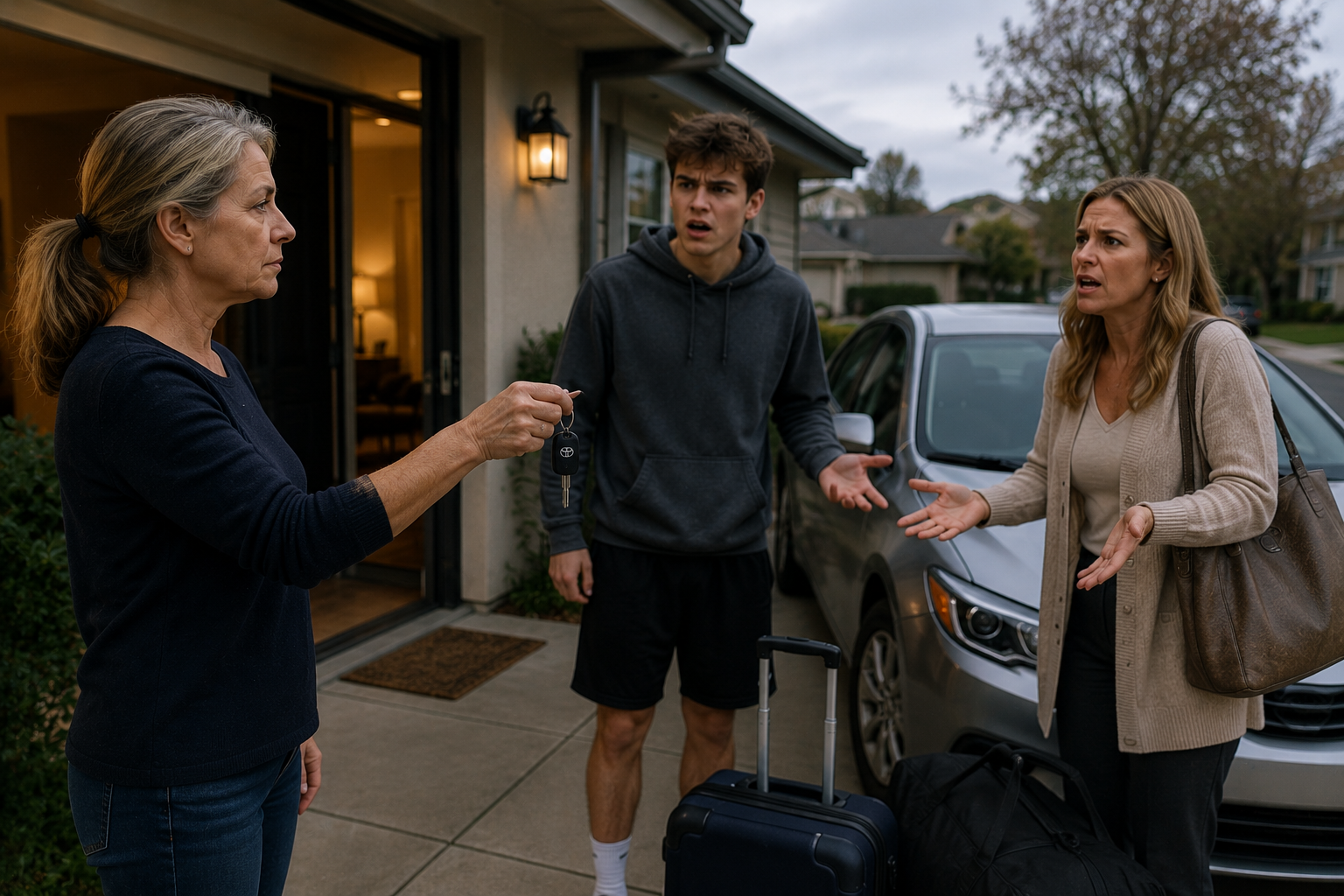
We drove out the next day. The driveway was a mess. Untouched. Slick. Dangerous. Eleanor sat inside with her arm in a cast, scowling at invoices spread across the table. Emergency transport. Snow removal. Home care.
Each number higher than the last.
Eleanor sat inside with her arm in a cast.
Advertisement
“I can’t believe this,” she muttered.
I looked at Oliver. Then at her.
“You should be grateful,” I said softly. “You’re being taught something.”
She looked up sharply. “What did you say?”
“Nothing,” I replied.
But karma was already speaking.
And the next bill hadn’t even arrived yet.
But karma was already speaking.
Advertisement
***
Eleanor called three days later. Not to apologize. To announce.
“I expect Oliver to come by this weekend. I need help.”
“With what?” Nate asked.
“The driveway is still dangerous. And my wrist—” she exhaled sharply. “I can’t manage everything myself.”
“He won’t be coming,” Nate said.
“What do you mean, he won’t be coming?” Eleanor demanded.
“I expect Oliver to come by this weekend. I need help.”
Advertisement
“He’s a child. Not your staff.”
“I raised you. You owe me.”
“No. You raised me to think love had to be earned. I’m done with that.”
“Well,” Eleanor said coolly, “I suppose I’ll have to pay someone.”
“That’s usually how work works,” Nate said and hung up.
“I’m done with that.”
***
Advertisement
A week later, we saw her at a family gathering.
Eleanor stood stiffly near the fireplace, arm still in a cast, eyes scanning the room like she was waiting for obedience to materialize. Oliver stayed close to me.
She finally called him over with a sharp gesture.
“Come here,” she said.
He hesitated, then looked at Nate. Nate nodded once.
A week later, we saw her at a family gathering.
Advertisement
Eleanor reached into her purse and pulled out folded bills.
“Sixty dollars,” she said flatly. “For the car.”
The room went quiet. Oliver didn’t move.
“I don’t need it,” he said.
Eleanor’s mouth tightened. “You earned it.”
“No,” he replied. “You need it more.”
A few heads turned.
“Sixty dollars.”
Advertisement
Eleanor looked at me. Then at Nate.
“This is your doing,” she said.
“No,” I answered calmly. “This is the result.”
She shoved the money back into her purse.
“Well,” she muttered, “don’t expect generosity in the future.”
Nate stepped forward.
“We don’t,” he said.
“Don’t expect generosity in the future.”
Advertisement
That night, Oliver handed us a small box.
“I didn’t get you what I planned,” he said, embarrassed. “But I made something.”
Inside was a card. Uneven letters. Careful lines.
Happy Anniversary.
Thank you for choosing me.
I pulled him into my arms.
Later, as we drove home, Nate said quietly, “I should’ve protected him sooner.”
Oliver handed us a small box.
Advertisement
“You did,” I said. “When it mattered.”
Eleanor never asked Oliver for help again.
She hired people. She paid them.
And every winter, when the ice came back, she remembered exactly how much it cost to mistake a child for free labor. Because karma doesn’t need permission.
It just waits until the lesson is unavoidable.
She remembered exactly how much it cost to mistake a child for free labor.
If you could give one piece of advice to anyone in this story, what would it be? Let’s talk about it in the Facebook comments.
If this story resonated with you, here's another one: My mean neighbor iced our sidewalk on purpose so that my son and I couldn't navigate leaving the house easily. This continued until my 10-year-old son finally had enough.
Advertisement
Advertisement