
My Little Girl Used the Birthday Money She Had Saved for a Dollhouse to Pay for a Stranger's Prescription – The Phone Call I Got That Night Made My Hands Shake
May 28, 2026


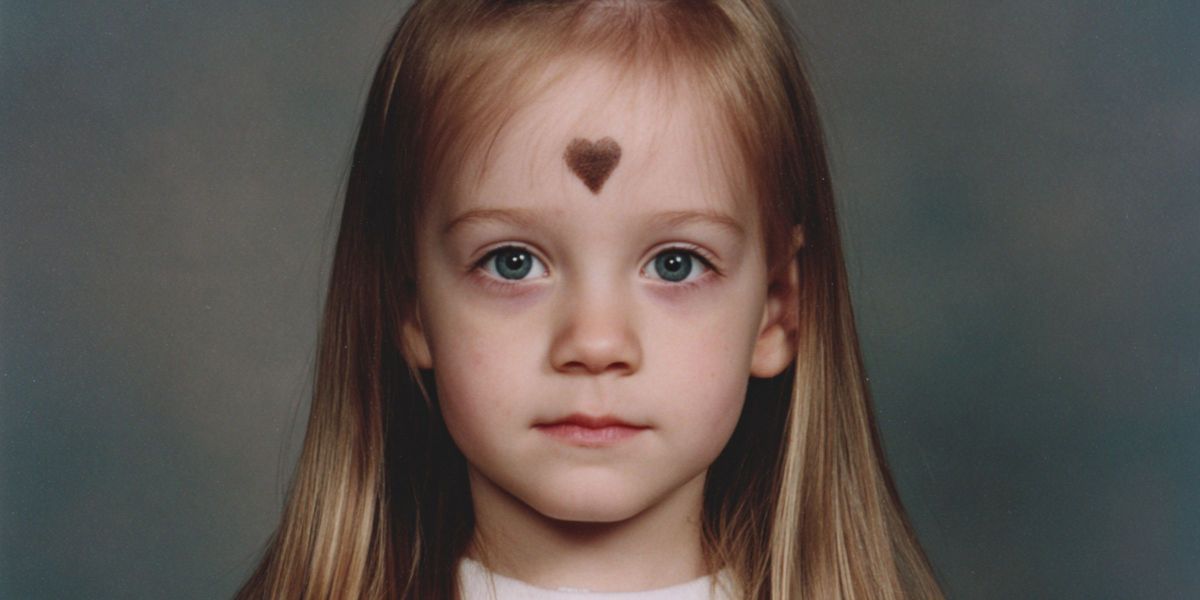

I grew up believing the birthmark on my forehead was the worst thing about me. I spent years trying to hide it, and finally scheduled surgery to erase it. Then a man I'd never met looked at me during a job interview — and told me I was supposed to be dead! What he said next left me shaking.
I was born with a dark birthmark right on my forehead.
The kind that makes people look twice, then pretend they weren't looking at all.
In elementary school, kids mocked me because of it.
It started small. A boy in my class leaned across the lunch table one day and squinted at my forehead like he was trying to solve a puzzle.
I was born with a dark birthmark right on my forehead.
"Did you hit your head?" he asked.
Another kid laughed. "It looks like paint."
It only got worse from that point.
I remember staring down at my milk carton, my ears burning, pretending I didn't hear them, that I was somewhere else entirely.
You learn that trick young when you need to.
It only got worse from that point.
In middle school, it got louder.
Everything gets louder in middle school, doesn't it? The voices, the cruelty, the way kids who barely know you think they have a right to comment on your body.
A girl I barely knew cornered me in the bathroom one afternoon and said, "You should cover that up so the rest of us don't have to look at it."
I told a teacher once.
A girl I barely knew cornered me in the bathroom.
She smiled tightly and said, "Kids can be mean. Try not to let it bother you."
How exactly was I supposed to not let it bother me when it followed me everywhere?
But I didn't ask her that. I just nodded and left.
At home, my adoptive mom tucked my hair behind my ear, her fingers gentle and warm, and said, "It makes you unique."
My dad nodded. "There's nothing wrong with you. Not one thing."
I just nodded and left.
I believed them.
I just also believed the kids.
That's the thing nobody tells you about loving parents.
Love doesn't stop the whispers in hallways, the looks that lingered a second too long, or the feeling that you're being catalogued, filed away under "different" in everyone's mental database.
Love doesn't stop the whispers in hallways.
By the time school pictures came around, I knew how to angle my face — tilt slightly, chin down. Bangs brushed forward just enough to cast a shadow.
"Hold still," the photographer would say every year.
I always did.
In high school, I stopped raising my hand even when I knew the answer. I didn't want heads turning. I didn't want anyone looking too closely.
I knew how to angle my face.
Invisibility felt safe, even if it meant pretending to be less than I was.
Once, a boy I liked asked me why I always wore my hair the same way.
I laughed and said, "Habit."
He nodded, like that made sense.
I survived my school years by building my entire personality around not being seen, and I got good at it. Really good.
Invisibility felt safe, even if it meant pretending to be less than I was.
For a long time, I thought the birthmark was the worst thing that had ever happened to me. The root of every insecurity, every moment of self-doubt.
If I could just get rid of it, I thought, everything else would fall into place. I wouldn't have to hide anymore. I could just be me.
By my 20s, I had a savings account with one purpose: cosmetic surgery to remove my birthmark.
I thought the birthmark was the worst thing that had ever happened to me.
I'd been working as a marketing coordinator since graduating college, saving every extra dollar.
I scheduled consultations during my lunch breaks at work.
Doctors spoke calmly about "options" and "minimal scarring" while I sat in their sterile offices and tried not to cry.
The procedure was set for two weeks later.
I scheduled consultations during my lunch breaks at work.
I told my friend, Amber, over coffee one afternoon.
"I finally scheduled it! In two weeks, this birthmark will be gone forever."
"You're really excited about this, huh?"
"I think I'll feel lighter," I said. "Like I won't have to think about it anymore."
"But you know you don't need to do that, right? I just mean," she said gently, "I've never thought there was anything wrong with you. But if this is what you want, I'm with you."
"I think I'll feel lighter."
That was enough. I didn't need her to understand completely. I just needed her not to judge.
I marked it on my calendar and told myself that after that, everything would be easier.
New face, new life, new chance to be the person I'd always wanted to be.
Then I got the email.
I'd been invited to interview for my dream job! A position I never thought I'd actually land, the kind of opportunity that only comes around once if you're lucky.
Then I got the email.
I almost canceled the surgery just to avoid the interview stress.
My brain couldn't handle both at once.
Instead, I did something I'd almost never done, something that felt almost reckless.
I pulled my hair back.
Looking back now, I don't think I would've done that if it weren't for that conversation with Amber. She inspired me to be brave, and that one small act changed my life forever.
I pulled my hair back.
I told myself, "If they don't hire me because of a birthmark, I don't want the job anyway."
It sounded brave when I said it in my bathroom mirror.
It felt terrifying when I actually walked into that building.
The office was quiet, modern, all glass and neutral colors. I sat across from the hiring manager's assistant, answering questions. It was going well.
Then the door opened.
It was going well.
My future boss walked in.
He was in his early 50s, maybe, with a confident posture. Well-tailored suit. He looked like the kind of man who had control over his life, like nothing surprised him anymore.
He was looking down at his tablet as he entered, probably reviewing my resume one last time.
Then he looked up at me.
And froze.
My future boss walked in.
His face drained of color in a way I'd never seen before, and he stumbled backward like he'd been hit.
"No, no, no. It can't be true."
The assistant stopped typing.
I thought my worst fear had come true, that someone important had looked at me and decided I wasn't worth their time.
He stumbled backward like he'd been hit.
Then he looked directly at my forehead.
"You're dead. You were supposed to be dead."
What?!
I couldn't speak. My throat had closed up entirely.
The assistant looked between us, her confusion obvious. "Sir?"
He waved her out without taking his eyes off me.
He looked directly at my forehead.
His hand was shaking. "Please. Give us a moment."
When the door closed, he sank into the chair across from me, staring like he was afraid I'd disappear if he blinked.
Like I was something fragile that might shatter.
"That mark," he said quietly. "That exact mark."
My heart was pounding so hard I could feel it in my fingertips.
"That exact mark."
"I'm sorry… do I know you?"
He stared at me for a long moment before he spoke again, his voice raw in a way that made my chest ache.
"No, you don't, but I think I know you. I know your birthmark. I never thought I'd see it twice in my life, not after they told me you were gone."
I clasped my hands to stop them from shaking. "I don't understand what you mean."
"Do I know you?"
He drew in a breath, like this moment had been waiting for him his whole life.
"Twenty-five years ago, the woman I loved left town while she was pregnant. We were young. Scared. She said it was easier that way."
He paused, and I watched his throat work as he swallowed. "Later, she called and told me the baby didn't make it."
I swallowed. "I'm sorry, but what does that have to do with me?"
"She told me the baby didn't make it."
"She sent me a photo, just one. The baby had a birthmark." His hand lifted and hovered near his forehead. Right where mine was. "Right there."
The room felt suddenly very still. Like the air had been sucked out and replaced with something heavier.
"Your mother… is her name Lila?"
"The baby had a birthmark."
"I don't know. I was adopted as a newborn."
His eyes filled, but he didn't look away. Didn't blink.
"She lied to me… she must have. It's the only explanation."
I searched his face, trying to steady my breathing. Trying to make sense of what was happening.
"You… you think I'm your daughter."
"I was adopted as a newborn."
He nodded.
"Would you agree to take a DNA test? Because if there's even a chance…" his voice cracked. "I'd like to know, and you deserve to know the truth, too. Even if it changes nothing between us."
The question hung between us, enormous and impossible.
What do you say to something like that? How do you process the idea that the thing you've hated about yourself your entire life might be the thing that brings you answers you didn't know you needed?
"Would you agree to take a DNA test?"
"Okay," I finally said. "I'll do it."
We made arrangements right there in his office.
He paid for an expedited DNA test without blinking, like money meant nothing compared to this moment.
The results came back fast.
Faster than I was ready for.
We made arrangements right there in his office.
We met at my parents' house to open the results.
My real parents. The ones who'd raised me, loved me, and chosen me when someone else had given me away.
The result was a match.
This man was my father. Biologically. Genetically. Undeniably.
We met at my parents' house to open the results.
My mother cried. My father held my hand.
Neither of them let go, and I was grateful for that. I took it as a sign they understood that this didn't erase them, replace them, or change what we were to each other.
He looked at me with tears running down his face and said nothing at first. Just looked.
"I have parents," I finally said, because someone had to. "They raised me. They chose me."
"I understand, and I'm grateful." He looked up at my mom and dad, nodding to them.
My mother cried. My father held my hand.
His eyes were filled with tears, and I think a nod was all he could manage at that moment.
"But I'd like to know where I came from."
He smiled then.
***
A few days before my surgery, the clinic called to confirm my appointment. I stood in front of the mirror after I hung up, my hair pulled back the way it had been the day everything changed.
I think a nod was all he could manage at that moment.
The birthmark I'd spent my life trying to erase wasn't a flaw I needed to fix, or the worst thing that had ever happened to me.
It was proof that I had been carried, remembered, and wanted, even through confusion and fear and mistakes that weren't mine to own.
I called the clinic back an hour later and canceled the appointment.
The receptionist sounded confused. "Are you sure? We have a cancellation policy."
I canceled the appointment.
"I'm sure," I said.
I didn't walk away from all of this with everything figured out.
I didn't suddenly love my birthmark or feel grateful for every cruel comment I'd ever received. I'm not going to pretend this is that kind of story.
But I walked away knowing the truth, and that I didn't need to erase myself to deserve a place in the world.
I didn't suddenly love my birthmark.
The mark on my forehead wasn't a mistake.
It was a map that led me home, even if home turned out to be more complicated than I'd imagined.
And you know what?
That was enough.
It was a map that led me home.
What do you think happens next for these characters? Share your thoughts in the Facebook comments.
If you enjoyed this story, read this one next: Everyone said I married too fast. I thought I'd found safety, until our neighbor's dog wouldn't stop scratching at my husband's locked basement door. I assumed it was nothing, but when I opened it, I discovered that my husband had been hiding a devastating secret.
My Little Girl Used the Birthday Money She Had Saved for a Dollhouse to Pay for a Stranger's Prescription – The Phone Call I Got That Night Made My Hands Shake
May 28, 2026

I Was Waiting for My Fiancé at the Altar for an Hour – But Instead of Him, a Courier Walked In Carrying a Baby
July 23, 2026

I Never Married or Danced with Another Man After My High School Sweetheart Disappeared on Prom Night in 1985 – Last Week, a Little Girl Handed Me His Prom Boutonniere
August 04, 2026

I Thought I'd Be Alone at Graduation After My Parents Passed Away – Then Someone Covered My Eyes
June 01, 2026

My Husband Left Me After My Stroke – He Returned a Year Later as I Let Go of What He Thought I Could Not Live Without
June 25, 2026

I Finally Had the Birthmark on My Face Removed After Spending a Lifetime Believing It Made Me Unworthy of Being Seen – But When I Came Home, My Husband Had Covered Every Mirror and Said, 'Call Your Mom Before You Look'
August 05, 2026

A Flight Attendant Spoon-Fed My Adult Husband on a Plane – When I Found Out Why, I Saw Red
June 09, 2026

I Recognized My Own Birthmark on a Homeless Stranger – And Uncovered a Horrible Family Matter
May 20, 2026

I Fed My Neighbor's Son Almost Every Day Throughout His Childhood Years – 20 Years Later, He Was on My Porch with a Box
August 07, 2026

Every Time I Babysat My Grandson, My Daughter-in-Law Gave Me the Same Strange Rule – One Day, I Broke It
July 07, 2026

My Family Didn't Come to My College Graduation Because They Were Embarrassed by My Age – Then a Professor Brought Me Onto the Stage and What He Did Made My Knees Tremble
June 22, 2026