
My Stepdad Changed the Locks While I Was at Work – Then Texted Me a List of 'Rules' to Enter My Own Home

Jan 22, 202607:27 A.M.
When I got home from work that night, I thought the lock was jammed. It wasn't. It was new. My key was useless, my calls ignored—and then came the text: a cold list of rules to enter his house. The house my mother left to me.
Advertisement
I wiped the grease off my hands and tucked my name badge into my pocket as I stepped out the back door of Denny's. The sun had already dipped beneath the horizon, leaving streaks of orange fading into blue.
My legs ached from the double shift, and my fingers were still stiff from washing dishes for eight straight hours. I could still feel the steam from the kitchen in my lungs, the scent of fryer oil clinging to my clothes like a second skin.
I hated the job. But I also loved it.
Not because scrubbing plates or bussing tables was glamorous — it wasn't. It was loud, relentless, and half the time I was invisible to the customers unless they needed a refill or someone to clean up their mess. But I worked like my life depended on it. Because in some ways, it did.
Advertisement
When Mom got sick, I made a promise to her. She was hooked up to monitors, her voice barely audible, but she made me lean in and look her in the eye.
"Get out, baby. Make something of yourself. No matter what happens, promise me you'll do that."
I'd nodded through the tears. "I promise, Mom."
So yeah, I hated the job — but I showed up early, left late, picked up shifts when people called out. I was saving for college. One day, I'd walk across a campus somewhere and make good on the promise I whispered over her grave.
Advertisement
Some nights I was too tired to think. I'd walk home half-asleep, my uniform clinging to my back, my eyelids heavy. But there was always one thing that kept me going: home.
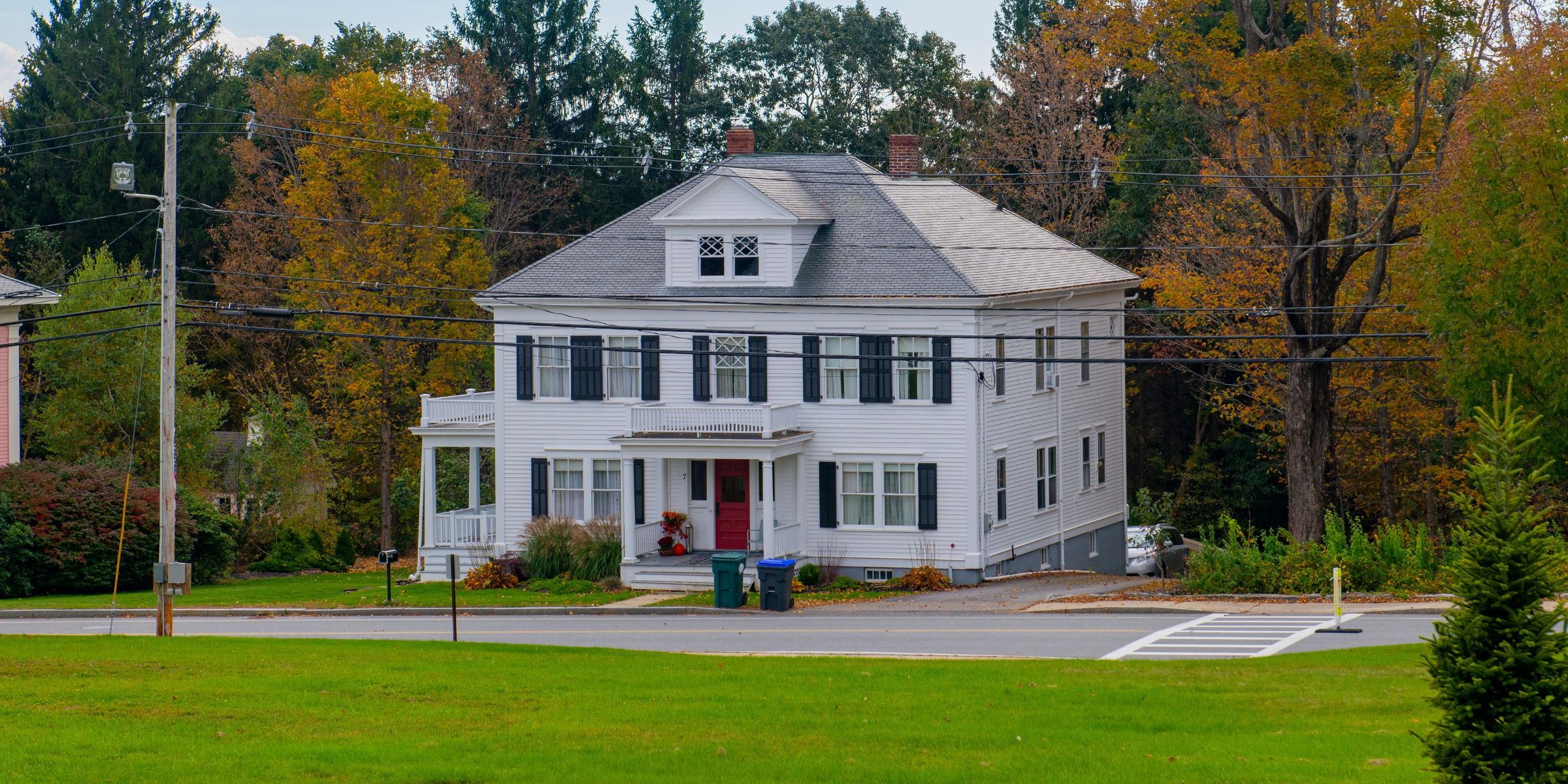
Even if it wasn't what it used to be, home meant a hot shower, my own room, and peace. A little quiet before doing it all again the next day. As I turned the corner onto my block, the streetlights flickered overhead. My house stood like it always had — gray shutters, slanted roof, cracked sidewalk that never got fixed. Familiar and comforting.
I reached into my pocket for my key, gripping the cool metal between my fingers. Slid it into the lock and froze.
The key didn't turn.
Advertisement
I frowned and tried again, jiggling it like I'd done a hundred times before. Nothing. I pulled it out and squinted at the doorknob. That's when I noticed it. The lock was new, and so was the deadbolt.
I knocked, rang the bell, and banged on the door. "Hello?" My voice cracked. "Rick? Open up!"
Nothing.
I pulled out my phone, called once, and it went straight to voicemail.
Again. Voicemail. And then, a buzz.
One message. From Rick. "RULES TO ENTER MY HOUSE – READ CAREFULLY."
I stared at the screen, my breath caught in my throat. What the hell was happening?
Advertisement
I stood there, recalling how there was a time when life didn't feel like a battlefield. I remember warm Sunday mornings when the smell of pancakes drifted through the house, and my mom danced barefoot in the kitchen, swaying to whatever old-school R&B song was playing on the radio.
She had this contagious laugh, loud, unfiltered, the kind that made you laugh too, even if you didn't get the joke. And Dad, my real dad, he used to call her "sunshine." No matter what kind of day he had, he'd walk through the door, kiss her on the cheek, and say, "Evening, sunshine."
Then he'd scoop me up like I weighed nothing and say, "How's my little man?"
Advertisement
He was a mechanic. Hands always stained with grease, and shirt always a little rumpled, but he carried himself with pride. He worked hard, and he loved harder. Our house wasn't big, but it was full of love, of noise, of life.
I was seven when the accident happened.
One rainy night, a trailer lost control on the highway and slammed into my dad's truck. I remember the flashing red and blue lights. I remember the neighbor holding me while Mom screamed into the phone. I remember the way she collapsed on the living room floor when the call came.
Everything changed after that.
Advertisement
Mom tried to stay strong for me. She worked two jobs, sometimes three, doing whatever she could — nursing assistant, catering gigs, and even cleaning houses for a while. But the light in her eyes dimmed. She smiled less and laughed even less than that.
She didn't date for years. She said no one could ever replace my dad. "Some people get one true love," she told me once, late at night, when I caught her crying in the laundry room. "I already had mine."
But loneliness is a quiet kind of ache. You don't notice it until it's sitting next to you at dinner. Or in the empty side of the bed. And after a while, she started changing. She got her hair done again and started wearing perfume on weekends. And then one day, she came home smiling in a way I hadn't seen in years.
"I met someone," she said, setting her keys on the counter.
Advertisement
I didn't know how to feel. I wanted her to be happy — but it felt like we were letting go of something sacred. Something that belonged just to us.
His name was Rick.
At first, he was polite, too polite, like he was reciting lines from a play titled "How to Win Over a Widow and Her Kid." He brought flowers, paid for dinner, and laughed at jokes that weren't funny. But there was something off. Something hollow in the way he looked at me, like I was a detail he had to tolerate.
Still, Mom was glowing, and for the first time in forever, she looked alive again. So I stayed quiet for her because I wanted her to be happy.
At first, I told myself it was just growing pains. Adjustments.
Advertisement
That it was normal for things to feel… off when someone new came into your life. But the longer he stayed, the more that "off" feeling settled in, like furniture rearranged in the dark.
The mask slipped slowly. It started with little things. Jokes that didn't sound like jokes and comments muttered under his breath.
"Maybe if he helped around the house more, you would't be so tired, Clara."
"He's old enough to take the bus."
"You baby him too much."
Mom would always respond the same way: tight-lipped smile, change the subject, and later pull me aside to whisper, "He didn't mean it like that, sweetheart. He's just adjusting."
But Rick wasn't adjusting. He was asserting.
Advertisement
The man who once brought me comic books and asked about my favorite video games stopped making any effort at all. He'd walk past me in the hallway without a word. If I sat on the couch, he'd find a reason to leave the room. At dinner, he'd talk over me like I wasn't even there.
Still, Mom tried to glue us together like broken glass. One night, when I was 13, I overheard them arguing in the kitchen. I'd gone down for water and froze halfway down the stairs.
"Why are you so cold to him?" she hissed. "He's a child."
"He's not mine," Rick snapped back.
"He doesn't have a father," she said, her voice breaking. "He needs you."
"I didn't sign up to raise another man's kid."
Advertisement
Later that night, she came into my room, eyes red, voice shaky. She sat at the edge of my bed and smoothed my hair back as she used to when I was little.
"Give him time," she whispered. "For me. Please."
And so I did.
Every holiday, every birthday, I tried. I made conversation, offered help, and stayed out of the way when that failed. Sometimes he'd make an effort back — after one of their fights, usually. He'd throw me a "Good job" when I got a test grade back or ask how work was going. But it was never real. His eyes were never warm, and I could always tell the difference.
He tolerated me. That's all.
And when Mom got sick, he didn't even bother pretending anymore.
Advertisement
He hovered at the hospital, but never sat by her bed the way I did. He didn't hold her hand or talk to her in whispers, like I did. When she passed, it was like a switch flipped.
One moment, I had a roof over my head, and the next, I had a landlord.
"You need to pull your weight now," he told me at the funeral reception. No emotion, just cold eyes and a glass of wine in his hand.
That was the beginning of the end. I just didn't know how close the end really was.
The night it happened started like any other. I left work past sunset, drained and sore, my feet blistered from a double shift. My only thought was getting home, peeling off my uniform, and collapsing into bed. But the second I reached the door, I knew something was off. That's when I noticed — the lock was new.
I read his text again: "RULES TO ENTER MY HOUSE – READ CAREFULLY."
Advertisement
At first, I laughed. Not because it was funny, but because it was insane. This wasn't a dormitory. This wasn't some landlord posting a memo on a bulletin board. This was my home.
But when I scrolled down the text, my stomach dropped.
RULES TO ENTER MY HOUSE:
- No entry after 9 p.m. without prior notice.
- No bringing guests inside, especially "freeloading" friends.
- No using kitchen appliances after 7 p.m.
- Rent must be paid by the 1st. $400 minimum, cash.
- If you break anything, you replace it immediately.
- Keep your area clean. No mess, no excuses.
- Disrespect me once — you're out for good.
- My house. My rules. Non-negotiable.
Each line felt like a slap. Rent? Curfews? Rules? Like, I was some tenant he could evict at will?
Advertisement
I texted back, "Are you serious? You changed the locks on me?"
He replied almost instantly. "You're almost 18. Time to learn how the world works. You want to stay here? You follow my rules."
His rules.
His house.
That was the moment something inside me snapped. All the years of holding my tongue. All the times I smiled for my mom's sake. All the quiet sacrifices. I stood there, locked out, humiliated, angry, and knowing I had two choices: break down or fight back.
I chose the latter.


Advertisement
I slept at my friend Marcus's place that night. His mom took one look at me and said, "That man's lucky I don't press charges for child neglect." She made me a sandwich. Let me shower. Gave me a blanket that smelled like lavender.
The next morning, I went straight to the law office my mom had once used to draft her living will. I still remember the name because she told me, "If anything ever happens to me, they'll help you."
Turns out, she wasn't just thinking of anything. She was thinking of him. The lawyer looked over the paperwork, checked the files, and, after a long pause, looked up at me and said, "Son, your mother was a smart woman."
She'd left everything to me. The house, the savings, the furniture, and even the insurance payout. The will was rock solid. Signed, witnessed, notarized, and filed.
Rick had no claim, not even as her husband. He wasn't on the deed and wasn't mentioned once.
Advertisement
Two days later, I returned to my house with a lawyer and a court order. Rick opened the door with a smirk that faded the second he saw the envelope in my hand.
"What the hell is this?"
I smiled, "Legal proof," I said, handing it to him. "This house isn't yours. It never was."
He flipped through the pages, his face draining of color.
"You little—"
"I'd choose your next words very carefully," the lawyer said, stepping forward.
Rick backed up. Silent and defeated.
Advertisement
Within a week, he was gone. I had the locks changed again — this time with keys that only I owned. I walked through every room, letting the quiet settle. For the first time in months, maybe years, the house didn't feel haunted.
It felt like mine.
And sometimes, late at night, I still hear Mom's voice, soft and steady in the back of my mind, "Get out. Make something of yourself. No matter what happens."
I kept my promise, Mom. And now — no more rules.
Do you think Rick got what he deserved? Let us know your thoughts.
Advertisement
Advertisement