
My Dad, Who Raised Me Alone, Cancelled Father's Day Dinner Saying He Didn't Feel Well – When I Went to Check on Him with His Favorite Pie, I Went Pale
June 24, 2026


Kate thought she was only buying a four-dollar pastry for a desperate stranger. But as the woman led her and Mark away from the bakery and into a dark basement, fear turned into something far more painful than suspicion.
My husband Mark always said I trusted people too easily.
I used to argue with him about that.
"I don't trust everyone," I would tell him. "I just don't believe every stranger is dangerous."
"And that," he would answer, usually with one eyebrow raised, "is exactly how people get robbed."
Most days, I rolled my eyes and let it go.
Mark was protective by nature. He checked the locks twice before bed. He parked under streetlights. He made me text him when I got home from work, even if he was already sitting in the living room.
It could be annoying, but I knew where it came from. His older brother had been mugged years ago after helping a man who claimed his car had broken down. Since then, Mark saw danger in every unusual request.
I saw pain.
That was always our difference.
On that rainy Tuesday evening, we were walking out of our favorite bakery when that difference nearly tore us in two.
The bakery sat on the corner of Ashford and Ninth, squeezed between a small flower shop and an old tailor's place that always smelled faintly of steam and wool. Mark and I went there almost every Tuesday after work. It had become our little ritual.
He ordered black coffee and a cheese Danish.
I ordered tea and whatever smelled the best.
That night, it was cinnamon rolls.
The whole bakery smelled like butter, brown sugar, and warm dough. Rain tapped against the windows while we sat by the front, sharing the last few bites of my roll because Mark had pretended not to want one, then kept stealing pieces from my plate.
"You know," I said, pulling the plate closer, "you could have bought your own."
He smiled. "Yours tastes better."
"You say that about everything I order."
"Because you choose better."
It was the kind of easy moment marriage gives you when life has been quiet for a while. Nothing grand. Nothing dramatic. Just warmth, rain, and someone who knew exactly how to make you laugh.
Then we stepped outside.
The rain had gotten heavier. It soaked the sidewalk and turned the streetlights blurry. Mark opened our umbrella, pulled me close, and guided me toward the parking lot.
We had barely taken five steps when a woman appeared in front of us.
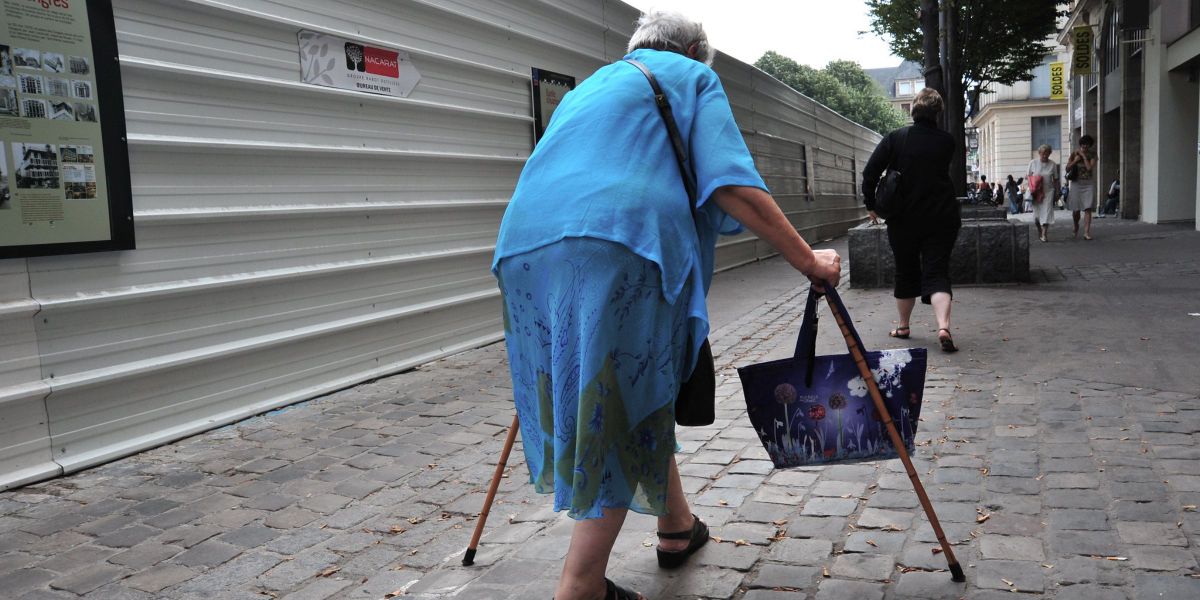
She was elderly, somewhere in her late 70s, maybe older. Her gray hair was plastered to her face, and her thin coat clung to her body like wet paper. She was soaked to the bone and shivering so hard that I could hear her teeth clicking.
My first instinct was to reach for my wallet.
Before I could, she lifted one trembling hand and pointed directly behind us.
At the bakery.
"Please," she whispered. "Please buy me that specific four-dollar cinnamon roll. I don't want your money, I just need you to BUY IT and come with me."
I froze.
Not because she asked for food.
Because of the way she said it.
Her eyes were wide with a desperate, terrifying urgency. She wasn't looking at my purse. She wasn't looking at Mark's watch. She wasn't even looking at us exactly.
She was looking past us, toward the warm pastry bag sitting in the bakery window.
Mark grabbed my wrist so fast it hurt.
"Kate, don't," he hissed in my ear.
I turned toward him. "Mark, she's freezing."
"It's a SETUP," he said, his voice low and sharp. "People use sweet-looking old ladies to lure targets into alleys for muggings. WE NEED TO RUN."
The woman shook her head before I could speak.
"No money," she pleaded. "Please. I don't want cash. I don't want anything else. Just that one roll."
I swallowed. "Ma'am, I can give you money. You can go inside and buy whatever you want."
Her face crumpled.
"No," she said, almost sobbing now. "No, please. I can't. You have to buy it. That one. Warm. Right now."
Mark tightened his grip. "Kate."
The warning in his voice was clear.
Leave.
But the woman took half a step toward me, her soaked shoes scraping against the pavement.
"Time is running out," she whispered. "Please. I only need this specific warm roll right now."
I looked at Mark again.
His jaw was clenched.
His eyes kept flicking toward the alley beside the bakery, then toward the street, then behind us. He was scanning everything. Every shadow. Every parked car. Every doorway.
He was terrified.
Not for himself.
For me.
That should have made me listen.
Instead, I kept staring at the woman's hands.
They were shaking violently, red from the cold, fingers bent with age. She had no bag. No umbrella. No phone that I could see. No sign of anyone nearby waiting for her signal.
Just her.
Rain ran down her hollow cheeks, mixing with tears.
"Please," she said again.
I pulled my wrist gently from Mark's hand.
His eyes widened. "Kate, no."
"I'm buying the roll."
"You are not serious."
"She needs help."
"She needs us to follow her," he snapped under his breath. "That is not help. That is how people disappear."
I hated that his fear made sense.
I hated that mine did too.
Still, I stepped back toward the bakery.
Mark followed close behind me, muttering something I couldn't hear over the rain. The woman stayed outside, watching through the glass with both hands pressed against her chest.
Inside, the warmth hit me so suddenly that I almost felt dizzy.
The cashier, a young man named Nico who recognized us from our weekly visits, smiled politely.
"Back for another one?"
I glanced over my shoulder at the woman. She stood under the weak glow of the bakery sign, trembling in the rain.
"Yes," I said. "One cinnamon roll. The one in the window, please."
Nico looked outside, then back at me. His smile faded a little.
"You know her?"
"No."
Mark stepped beside me. "Exactly."
Nico hesitated. "Do you want me to call someone?"
I almost said yes.
But then the woman pressed closer to the window, her eyes fixed on that pastry like the whole world depended on it.
"No," I said quietly. "Just the roll."
Mark leaned close. "Kate, this is insane."
"I know."
"Then stop."
"I can't."
The roll cost four dollars. I paid with a five and barely waited for the change. The cashier placed it in a small white box, still warm enough to fog the little plastic window on top.
The moment I carried it outside, the woman let out a sound that did something terrible to my heart.
Not relief exactly.
More like someone who had been holding up a collapsing wall with both hands and finally saw help arrive.
I expected her to snatch the box open and eat like someone starving.
She didn't.
She clutched the warm box to her chest like it was a chest of gold. Tears streamed down her hollow cheeks as she nodded again and again.
"Thank you," she whispered. "Thank you. Please, come. Hurry."
Mark moved in front of me. "No. Absolutely not."
The woman flinched, but she did not step back.
"Please," she begged. "He is waiting."
"Who?" I asked.
She looked down the alley.
Mark gave a bitter laugh. "Of course he is."
The woman turned away and began walking.
Not fast. She couldn't move fast. But every step had a frantic purpose, as if she were dragging the last bit of strength from somewhere deep inside her.
I stood there, torn between my husband and this stranger.
Mark stared at me, rain dripping from his hair. "Kate, listen to me. Specific item. No money. Follow me. Dark alley. This is textbook."
"She said time is running out."
"They always say something urgent."
"You don't know that."
"And you don't know her."
He was right.
I didn't.
But some part of me, the part Mark called too trusting, could not let that woman vanish alone into the rain with a four-dollar cinnamon roll and that broken look on her face.
So I followed.
Mark cursed under his breath and came after me.
He stayed close, one hand in his pocket, fingers curled around whatever he thought might protect us. His shoulders were stiff. Every few steps, he looked behind us.
The woman led us away from the safe, lit streets.
The bakery glow disappeared first. Then the flower shop. Then the sound of traffic faded until all I could hear was rainwater rushing through gutters and Mark's tense breathing beside me.
We trailed her down a series of dark, damp alleyways.
Brick walls rose on both sides. Trash bins lined the narrow path. Somewhere nearby, a pipe dripped steadily onto metal.
With every turn, my confidence weakened.
I started to think Mark was right.
Maybe we were walking straight into a trap.
Maybe someone was waiting just beyond the next corner.
Maybe my need to help had made me foolish.
Mark leaned toward me. "Last chance," he whispered. "We leave now."
Before I could answer, the woman stopped.
In front of us stood a decaying, rusted metal door leading to a basement.
The door was half hidden below street level, at the bottom of a short concrete stairwell slick with rain. The metal was dented, rusted at the edges, and marked with old scratches.
The woman turned to us.
Her face looked gray under the weak light from above.
Then she hugged the cinnamon roll box tighter and whispered, her voice cracking, "HE is waiting."
My stomach dropped.
Mark grabbed my arm again.
But I was already staring at that door.
The woman pulled it open with a painful scrape of metal against concrete.
A cold, stale smell rose from below.
Trembling, we followed her down the stairs into the pitch-black.
When she reached the bottom, her hand searched the wall.
A switch clicked.
A single, buzzing lightbulb flickered on.
And the scene before us made my heart stop.
At first, I could not understand what I was seeing.
The basement was not an alleyway hideout. It was not a place where men waited in the shadows with knives or fists. It was a home, though barely.
A thin mattress sat against the far wall. A cracked sink leaned in one corner. Blankets had been stuffed along the bottom of a broken window, but cold air still slipped through. The walls were damp, and the ceiling had dark stains that looked like they had been growing for years.
On the mattress lay an old man.
He was painfully thin, wrapped in two blankets that did not look warm enough for anyone. His breathing came in shallow pulls, each one sounding like it cost him something. In one hand, he clutched an old photograph so tightly that the edges had bent.
The woman hurried to him.
"I got it, Otto," she whispered, kneeling beside him. "I got your roll."
Mark stopped beside me. His hand slowly came out of his pocket.
The old man opened his eyes.
For a second, he looked past his wife and saw us standing there. I expected fear, maybe confusion. Instead, he gave us the weakest smile I had ever seen.
"My Greta found kind people," he murmured.
The woman, Greta, looked over her shoulder at us. "He hasn't eaten much in two days," she said, her voice breaking. "But this morning, he woke up and asked for a cinnamon roll from that bakery."
I looked at the white box in her hands.
"That specific four-dollar cinnamon roll," I whispered.
She nodded. "He used to buy one there when he was a boy. His mother saved coins for it every Saturday. He said if he could taste it one more time, he could remember being young."
My throat tightened so hard that I could not speak.
Mark looked down at the floor, ashamed.
Greta opened the box with trembling fingers. The smell of cinnamon and sugar rose into that cold, miserable room like a memory from another life.
Otto's eyes filled with tears.
"Oh," he breathed. "That's it."
Greta broke off a small piece and held it to his lips. His hands shook too badly to take it himself.
He tasted it slowly.
Then he closed his eyes.
For one beautiful, terrible moment, the pain left his face.
He was not a dying man in a basement. He was a boy again, standing outside a bakery with warm bread in his hands and his whole life still ahead of him.
Greta pressed her forehead to his hand and sobbed.
I wiped my face before I realized I was crying.
Mark stepped closer. "Ma'am," he said softly. "Why didn't you take the money?"
Greta looked up.
Rain still dripped from her coat onto the floor. Her cheeks were red from cold and tears.
"Because money would not help fast enough," she replied. "I asked others. Some offered coins. Some walked away. One man gave me a 20 and told me not to bother him." She looked at Otto. "But I could not leave him long. He was waiting. Time was running out."
I reached into my purse with shaking hands and pulled out the hundred-dollar bills I had tucked inside after leaving the bank that afternoon.
"Please," I said, stepping toward her. "Take this. Take all of it."
Greta stared at the bills, then shook her head.
"No, dear."
"Please," I insisted. "You need food. Heat. Medicine. A doctor."
Her lips trembled. "I only wanted him to have one last moment of joy."
That broke something open inside me.
I thought of all the times I had walked past suffering because I was tired. Because I was busy. Because I assumed someone else would help. And I thought of Mark, who had been so sure this was a trap, because life had taught him fear before it taught him mercy.
Otto opened his eyes again.
"Greta," he whispered.
She leaned close. "Yes, my love?"
"Did they call?"
Her face changed.
She glanced at the photograph in his hand.
I stepped closer and saw three adults in the picture. Two men and a woman, standing stiffly beside Greta and Otto in front of what looked like a house. Their children, I realized.
Greta followed my gaze.
"They have not spoken to us in almost seven years," she said quietly. "They said we were a burden. After Otto got sick, they stopped answering."
Mark inhaled sharply.
Otto stared at the photo with cloudy eyes. "I thought maybe tonight."
Greta touched his cheek. "Rest now."
His gaze drifted to me.
"Thank you," he whispered. "For bringing it."
I crouched beside the mattress. "I'm Kate."
"Kate," he repeated, as if he wanted to remember it.
"This is my husband, Mark."
Mark came forward, his face pale. "I'm sorry," he said. "I thought..."
He could not finish.
Greta gave him a tired, gentle look. "The world makes us all afraid."
Mark swallowed. "That doesn't excuse me."
"No," she agreed softly. "But you came anyway."
That night did not end in that basement.
Mark called emergency services while I wrapped Greta in my coat and sat beside Otto, feeding him tiny pieces of cinnamon roll when he asked.
He ate only four bites, but each one made him smile.
At the hospital, we learned what Greta already knew. Otto was near the end. His illness had spread too far, and their lives had collapsed around it.
But they were not alone after that.
Mark arranged for a warm room near the hospice center. I brought Greta clean clothes, groceries, and the strongest coffee I could find. We contacted a social worker. We made calls. We filled out forms. We sat with them when the silence got heavy.
Otto passed away nine days later.
His last good day was the one with the cinnamon roll.
At the small service, only six people stood by his grave.
Greta.
Me.
Mark.
A nurse named Soraya.
The hospice chaplain.
And Nico, the bakery cashier, who brought a fresh cinnamon roll wrapped in a white box and placed it beside the flowers.
Greta cried when she saw it.
Mark held her hand through the whole service.
Months have passed now.
Every Tuesday evening, we take Greta to that same bakery. She always orders tea. Mark always buys two cinnamon rolls, one for her and one for the empty chair beside her.
He does not call people scams anymore.
And I no longer believe kindness means ignoring danger.
Sometimes, love is cautious.
Sometimes, courage is just buying a four-dollar cinnamon roll and following a stranger into the dark.
Greta is family now.
Not because blood made her ours, but because one rainy night, she asked for help, and we finally understood what she was really asking for.
She was not asking for money.
She was asking for someone to care before it was too late.
But here is the real question: When a stranger's desperate request feels like danger, do you walk away to protect yourself, or do you take one small risk and discover the heartbreaking reason they needed kindness before it was too late?
If you liked this story, here's another one for you: A little girl in a yellow raincoat came to my bakery every day for cinnamon rolls, always buying one for her dad. She had my son's eyes, but I told myself it meant nothing until one rainy evening brought the truth through my door.
My Dad, Who Raised Me Alone, Cancelled Father's Day Dinner Saying He Didn't Feel Well – When I Went to Check on Him with His Favorite Pie, I Went Pale
June 24, 2026
My Son Vanished 20 Years Ago, Leaving Me Ailing and Stuck with His $45,000 Debt – Last Week He Knocked on My Door with One Demand
March 13, 2026

I Opened a 'Shrek' DVD Case After 20 Years – Then I Called the Police
June 18, 2026

My Husband Left Me and the Kids $10 While He Went Fishing – We Taught Him a Lesson He'll Never Forget
May 12, 2026

I Helped Pay for a Pregnant Woman's Groceries at the Store – The Next Morning, 8 SUVs Were Parked Outside My House
June 04, 2026

Poor Woman Bought a Doll at a Garage Sale for Her 5-Year-Old Daughter – There Was Something Hidden Inside
April 22, 2026

I Thought My Husband Was Working Night Shifts – Then My 6-Year-Old Drew a Picture of 'Daddy's Other House'
May 12, 2026

Kind Waitress Gave Her Mother's Birthday Cake to a Hungry Old Couple — Days Later, A Black SUV Stopped Outside Her Home
May 26, 2026

I Carried My MIL's Baby – Years Later, Her Husband Whispered, 'Take Your Son and Run'
June 22, 2026

Thirty Years After My Sister Disappeared, a Young Stranger at a Cafe Showed Me Her Photo and Told Me to Follow Her – What I Discovered Next Made Me Go Pale
June 09, 2026

I Worked 7,300 Night Shifts to Put My Daughter Through College – The Day Before Graduation, She Sent Me a Text I Never Saw Coming
June 12, 2026