
6 Items You Should Finally Let Go Of, According to Experts
April 24, 2026


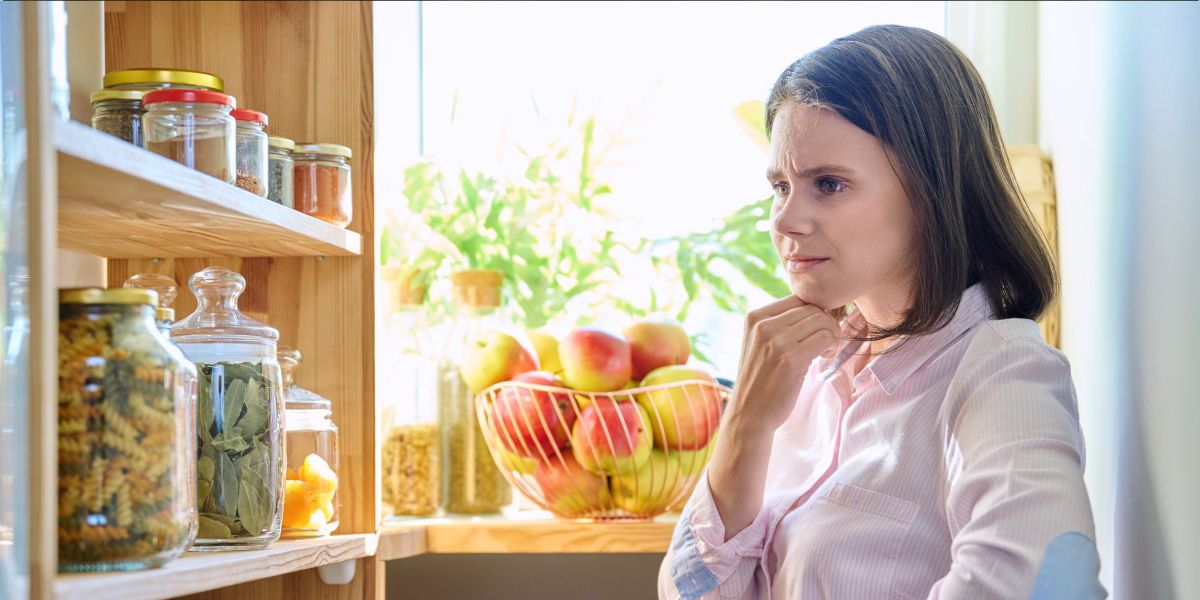

If your pantry feels cluttered no matter how often you reorganize it, the issue may be how it’s set up. Organizers say certain habits can make pantries harder to use.
A cluttered pantry isn't just an eyesore. It can make everyday meals harder. It can be quite wasteful and even more expensive.
Professional organizers say many common pantry habits actually create more stress, even when they’re meant to help.
Instead of aiming for the perfect pantry, experts recommend keeping things simple, flexible, and aligned with your family's eating habits.

Woman fixing her pantry | Source: Shutterstock
One of the biggest mistakes organizers see is storing non-food items in the pantry. This includes cleaning products, batteries, and other household supplies, which should be nowhere near food.
“I would never store toxic products, like household chemicals or cleaning supplies, in the pantry,” says organizer Ashley Hines. “The pantry is a food space that should feel safe and nourishing.”
The pantry isn't a general storage area. Organizers say it’s best to keep it strictly for food and food-related items only, such as small appliances or lunch containers.

An organized pantry with only food and food-related items | Source: Shutterstock
It would look picture-perfect when all your containers are labeled, and the bins match, but organizers warn about being too rigid about it.
“Skip overly rigid systems,” Hines says. “Your pantry should be flexible enough to handle everyday grocery swaps and changes in taste.”
Rachel Rosenthal, an organizational expert, agrees that pantry setups should be based on real habits. For instance, it's more logical to organize snacks, baking supplies, or staples according to how often you use them. This makes the space easier to manage, too.
“Organizing around your habits and routine—not just a standard layout—makes your pantry more functional and efficient,” she says.

A neatly organized and labeled food pantry | Source: Shutterstock
Labels are helpful, but too many can cause confusion. “I’ve seen clients try to label EVERYTHING, and this is counterproductive because no one wants to read 50 labels when they’re hungry,” says Cheryl Russo.
Rosenthal recommends labeling containers and bins by broad categories instead of over-specific ones. And it's easier to find and identify items when they're grouped according to their similarities.
Clear labels help family members put things back where they belong, speeding up cleanup and reducing clutter. The key is sticking to broad categories instead of over-specific ones

Woman storing food in labeled bins | Source: Shutterstock
Another no-no for organizers is keeping food you don't like or won't eat. “I never keep food we do not eat,” Hines says. Items that sit unused take up space and often expire.
Rosenthal suggests checking the pantry every few months and following a “first in, first out” approach, moving older items to the front so they get used before newer ones.

Woman checking the items in her pantry | Source: Shutterstock
Deep shelves and tall pantry walls are often underused. When items are pushed to the back, they’re easy to forget. It's best to use tall bins, adjustable shelves, or tiered racks to make everything visible and within reach. Keep bulky or rarely used items on higher or lower shelves and everyday foods at eye level.

Woman reaching for the top level of her pantry | Source: Shutterstock
Organizers agree that a functional pantry doesn’t need to be perfect—it just needs to work. A flexible setup makes daily routines easier, whether you’re packing lunches, cooking dinner, or grabbing a quick snack.
6 Items You Should Finally Let Go Of, According to Experts
April 24, 2026

You’ve Probably Been Washing Your Pajamas All Wrong — Experts Reveal How Often You Really Should
May 09, 2026

Experts Share Practical Ways to Ease the Mental Burden of Keeping Your Home Clean
May 12, 2026

Grow These 5 Fruits at Home for Fresh Harvests Year-Round
July 28, 2026

My 'Quiet' Neighbor's Apartment Was Leaking Bugs Into Mine – When He Stopped Answering the Door, I Broke It Open and Froze
August 07, 2026

I Bought My Childhood Home at Auction – On My First Night Back, My Mother Called Crying and Said, 'Please Tell Me You Haven't Found the Room Your Father Sealed Off'
May 07, 2026

4 Appliances You Should Never Leave Unattended at Home
May 23, 2026

Dietitians Reveal 5 Fiber-Rich Spring Foods Loaded With Antioxidants for Better Health
May 11, 2026

Doctors Are Warning Against These Vitamin Combos — Here’s What You Should Never Mix
May 07, 2026

Healthy Foods That Don't Spoil Easily
July 16, 2026

One Morning, a Huge Suitcase Appeared on My Porch with My Daughter's Birthday as the Combination – What Was Inside Made My Knees Go Weak
June 04, 2026