
My Sister Warned Me Not to Embarrass Her at the Rehearsal Dinner — Then the Federal Judge Walked Past Her and Shook My Hand First
June 16, 2026


"We're here to discuss your failing company," Dad announced to everyone at the family intervention. Mom nodded sadly. That's when my sister gasped, staring at her phone. "Why is your face on Forbes' '30 Under 30' list?" The room went silent.
The invitation came through our family group chat. Emergency family meeting. Thursday, 7 p.m. Alexandra needs our help with her situation. My situation — that's what they'd been calling my decision to quit my consulting job at McKinsey and start my own company. Two years of subtle jabs, worried phone calls, and not-so-subtle hints about real jobs with actual benefits. I sat in my Toyota Corolla outside my parents' colonial-style house where success was measured in Ivy League degrees and corporate titles. My sister Emma's Range Rover sat next to Dad's Mercedes and Mom's BMW. Exactly how they saw me these days. My phone buzzed. My CFO Marcus: Forbes article goes live at 8:00 p.m. Perfect timing. Family intervention starts at 7. His response: Savage. Want me to send a car to rescue you? No need. Some things are worth waiting for.
The living room was set up like a corporate intervention. Dad at the fireplace. Emma and her husband James on the leather sofa. Mom's sister Aunt Patricia in the wingback chair. They'd called in reinforcements. "Love the blazer," Emma said, air-kissing my cheek. "H&M?" "Thrift store, actually." I watched her hide her horror. Dad cleared his throat. "We're here because we're worried about you, Alexandra." Mom corrected: "About your choices. Two years ago, you had everything. Junior partner track at McKinsey, that lovely penthouse, William." Ah, William — the investment banker they practically planned my wedding to before I called it off to start my company. "And now…" Dad gestured vaguely. "Living in that tiny apartment, driving that old car." James supplied helpfully: "The market is saturated. No room for new players without serious capital backing." I bit back a smile. James, who tried to get his own startup funded three times before falling back on his trust fund. James, who had no idea he'd been pitching to one of my subsidiary investment firms last month. James, who had been rejected again.
I checked my watch. 7:43 p.m. The Forbes article would drop in seventeen minutes. "You haven't even told us what your company does," Mom complained. Dad assumed his CEO stance. "We're here to discuss your failing company and plan your next steps." Then Emma's phone chimed. She glanced at it, did a double take. "Oh my God. Why is your face on Forbes' '30 Under 30' list?" The room froze. Mom's wine glass stopped halfway to her lips. James grabbed the phone. "That's impossible. This can't be. Alexandra Bennett, 28, founder and CEO of NeuroTech Solutions, valued at—this has to be a mistake." "Two billion," I supplied calmly. "That's the current valuation after our last funding round, though that number's a bit outdated now." Dad sank back into his chair.
I pulled out my tablet. "NeuroTech Solutions develops AI-driven adaptive learning systems. We're revolutionizing how machines process and respond to complex data. That tiny apartment I live in? It's actually the smallest unit in a building I own. That old Toyota? I bought it because it's practical and reliable, like all good investments should be. Our technology is being implemented by major tech companies worldwide. That's why I've been working such long hours. That's why I've been secretive. And that's why, in about two minutes, Forbes is running a feature article about how a 28-year-old woman built a multi-billion-dollar tech empire while her family thought she was failing." Emma's phone kept buzzing as the article went live. James looked like he'd swallowed something sour. "You never said anything," Mom said, her voice small. "You never asked. You were too busy lamenting my failure to notice my success." I gathered my things. "Marcus just messaged — make that three billion, we just closed another acquisition. I would tell you more, but I have a CNBC interview in an hour." At the door I turned back. "Oh, and Emma? That startup James pitched last month? The one rejected by Bennett Ventures? That's my investment firm. Better luck next time."
The next morning at NeuroTech's headquarters — a sleek glass tower with my name discreetly etched on the cornerstone — my assistant Maya briefed me. "Your sister posted on LinkedIn about her brilliant tech entrepreneur sister and tagged you." "No response necessary. Let her chase the connection." At 9:00 a.m., expecting a venture capital meeting, I found William in my doorway instead. My ex-fiancé, the investment banker my parents had never forgiven me for leaving. "Alexandra," he said, attempting his old charming smile. "You look successful." "I look exactly the same as when you called my startup dreams cute and admirable." I stayed seated. He said my mother had mentioned my offices. I pressed the intercom. "Maya, please escort Mr. Harrison out and update security protocols." As he was led away, my actual 9:00 a.m. arrived — Sarah Chin, the venture capitalist known for backing unicorn startups. "Entertaining morning?" she asked, nodding toward the retreating figure. "Just clearing out old misconceptions."
At noon, my first board meeting since the Forbes article. The boardroom was full. Our investors — mostly older men who had initially doubted me — now sat up straighter when I walked in. Funny how a few billion dollars changes people's posture. "Our decision to operate in stealth mode while building our technology base has paid off. We're not just ahead of the market. We are the market." Halfway through my presentation, Maya slipped me a note: Your sister Emma's in the lobby. Says she's not leaving until you talk to her. After the board meeting, I took my time reviewing contracts before heading down. She'd been waiting two hours. Her perfect blowout slightly wilted. Her Prada bag clutched like a shield. "Really, Ally? You couldn't tell security who I am? Your own sister?" "They know exactly who you are. That's why they followed protocol." She deflated. "Mom's crying. Dad hasn't gone to work." "Betrayed by what?" I asked. "My success? My independence? The fact that they can't take credit for it?" "You could have included us. We're family." "Like you included me? All those family dinners where you and James talked about your achievements? Those charity galas where Mom introduced you as her successful daughter and me as 'Alexandra, she's finding herself'?" Emma flinched. I pulled out my tablet and showed her James's pitch history. Three failed startups, two SEC warnings for questionable trading practices, a dwindling trust fund. "And two years of him bad-mouthing me to potential investors. Amateur hour, he called it. The recordings are quite clear." Emma's bag slipped from her fingers. "He wouldn't." "He did." I stood. "Family would have believed in me even without the billions. Family would have asked about my dreams instead of dismissing them. Family would have seen me for who I am, not who they wanted me to be."
One month later, Maya appeared in my doorway. "Your father's downstairs." "The same answer as yesterday." "He's different today. No Mercedes, no power suit. He's wearing jeans." Richard Bennett in jeans in public. I pulled up the lobby security feed. He was sitting quietly, watching people work, holding a worn leather briefcase I'd never seen before. "Send him up." He entered quietly, took in my office slowly — the whiteboards covered in complex algorithms, the global market tickers, the view of the city. "Your mother keeps setting a place for you at dinner," he said. "Every Thursday night. Just in case." He sat down and placed the old briefcase in his lap. "I've been thinking about your fifth-grade science fair. You built a primitive neural network. Used it to predict weather patterns. Everyone else had volcanoes made of baking soda. You had algorithms. You won first place, but I missed it. Had a board meeting. You know what I don't remember? Ever asking you to explain how it worked." He opened the briefcase and pulled out a stack of papers — patents, academic papers, early business proposals. "You filed your first patent at 19. Created your first AI protocol at 22. Launched three successful startups under different names before NeuroTech. All while we thought you were just finding yourself." He looked up. "We were wrong. I was wrong." He pulled out an old photograph — me at that fifth-grade science fair, small and serious and absolutely certain about my path. "When did we stop seeing you?"
I stood and walked to the whiteboard. "It starts with a basic neural pathway. But then we added quantum processing." For the next hour, I explained my life's work. He asked good questions, real questions. When I finished, he was quiet. "I have another confession," he said. "Bennett Global is struggling. The old consulting model isn't working. Companies want AI integration, predictive analytics." "I know. Your stock dropped 40% last quarter." He laughed suddenly. "Of course you know. You probably knew before I did." He straightened. "I'm not here to ask for help or money or connections. I'm here to say I'm proud of you. Not because you're successful, but because you had the courage to build something revolutionary while we were all too blind to see it." I looked out at the city where I'd built my empire in secret. "The next family dinner — what if we held it here? In my building. I'll give everyone a tour first. No more assumptions, no more judgments, just reality." "They'd like that." "One condition," I said. "Everyone comes on their own merits. James isn't welcome." He nodded. "Emma's figuring that out anyway. His latest investment scheme cost them heavily." "I know. I bought their debt last week through a subsidiary." His eyebrows rose. "Because Emma's still my sister," I said. "She needs to clean up her own mess. But I won't let her drown." At the door, he paused. "That article quote — success doesn't need permission. I'm framing it for my office." After he left, I added one more framed headline to my wall and hung the old science fair photo beneath it. Sometimes the hardest part of success isn't building an empire. It's teaching others to see you for who you've become, not who they assumed you'd be.
My Sister Warned Me Not to Embarrass Her at the Rehearsal Dinner — Then the Federal Judge Walked Past Her and Shook My Hand First
June 16, 2026

At My First Birthday with My Husband's Family, My FIL Raised His Glass and Said, 'Let's Hope This One Stays Longer Than the Others'
August 04, 2026

My 24-Year-Old Daughter Announced She Was Marrying My 56-Year-Old First Love – At the Wedding, She Pulled Me Aside and Said, 'Mom, You Deserve to Know Why I Really Married Him'
August 05, 2026

My Parents Pulled Up to My Lake House in a Moving Truck — When I Found Out Why, I Froze
June 19, 2026

I'd been secretly paying my family's bills for years — then my dad texted "Don't contact us again," and I stopped. What happened next left them speechless.
June 16, 2026

My MIL Moved My Parents to the Farthest Table So Her Own Family Could Sit Next to the Head Table – She Didn't Know What Was Coming 30 Minutes Later
August 05, 2026

My Parents Adopted Me at 12 and Loved Me like Their Own – Then I Watched Their Lawyer Read the Will and Heard Everyone's Name Except Mine
August 04, 2026
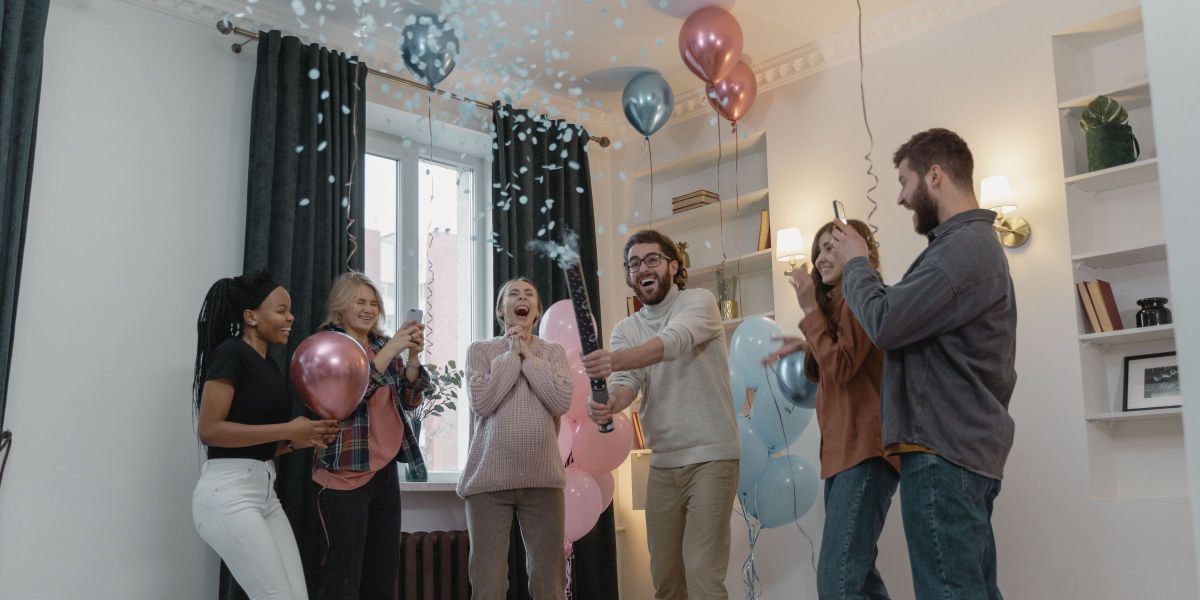
My Brother Vanished 17 Years Ago Without an Explanation – Then He Showed up at My Gender Reveal with a Secret He Could No Longer Keep
June 18, 2026

A Wealthy Mom Kicked Out Her Pregnant Daughter over a Broken Vase – 15 Years Later, a Stranger Asked About Her Mother's Lie
June 19, 2026

I Was Making a Scrapbook for My Pregnant Daughter-in-Law – Then I Found a Photo That Made Me Question Everything I Knew About My Son's Birth
June 23, 2026

My Twin Sister Stole My Life – Nobody Believed Me Until She Made One Mistake
July 22, 2026