
My Daughter Vanished While Our Family Was Living in Egypt – 20 Years Later, I Received a Postcard from There, and the Words on the Back Made My Knees Go Weak

Jun 02, 202611:14 A.M.
I thought my daughter had vanished from a garden in Cairo twenty years ago. Then a postcard from Egypt arrived with an address near my home in Ohio. I drove there expecting another cruel clue, but what waited inside proved someone I trusted had buried the truth all along.
Advertisement
The postcard came from Cairo, but the address on the back was three miles from my house in Ohio.
For twenty years, I'd trained myself not to hope too loudly. Hope had teeth, and it had already chewed through most of me.
But when I turned that postcard over and saw the Egyptian stamp, my hands started shaking so badly that the mail slid across my kitchen table.
There was no name or message.
There was just one address, and underneath it, in small block letters:
"Come alone if you still want the truth about Tara."
The postcard came from Cairo.
Advertisement
***
My daughter had vanished in Cairo when she was eight years old.
Now, twenty years later, I drove to a row of rental garages with that postcard on my passenger seat and my heart pounding.
I found the number written on the card.
Forty-two.
The metal door was cold under my fingers. I pulled it open, bracing myself for the worst thing I could imagine.
Instead, I dropped to my knees.
The metal door was cold under my fingers.
Advertisement
There was no nightmare waiting in the dark. There was a woman sitting on a folding chair beside three cardboard boxes.
She had my eyes.
She looked at me like she'd spent her whole life deciding whether to hate me.
"You came fast, Cassidy," she said.
I couldn't breathe.
"Tara?"
Her mouth trembled, but she didn't move.
"I needed to know if you would come."
"You came fast, Cassidy."
Advertisement
***
Twenty years earlier, my husband, Grant, moved our family to Cairo.
He was just beginning his career as a reporter then. When he was offered a position overseas, he walked around like the world had opened its doors.
"Cass, this is it," he said, waving the letter. "This is the kind of chance people wait years for."
I looked across the table at Tara. She was trying to balance a spoon on her nose.
"What do you think, monkey?" I asked.
She let the spoon fall into her cereal. "Do they have pancakes in Egypt?"
"What do you think, monkey?"
Advertisement
Grant laughed. "We can make pancakes anywhere."
So we went.
We rented a small second-floor apartment with a garden below it. Tara loved that garden. Every afternoon, she ran downstairs with her jump rope.
I watched from the balcony until she waved both arms.
"Mom, stop staring!"
"You're eight," I called back. "Keeping you safe is my job!"
Grant worked from home at the kitchen table. I found work too, because one salary wasn't enough and because I liked having something of my own.
"Keeping you safe is my job!"
Advertisement
For a while, I believed we were happy.
Then came that Tuesday.
Tara was sitting cross-legged on the floor, tying a ribbon around her stuffed rabbit's neck.
"Don't forget pancakes tonight," she said.
"I won't."
"Promise?"
I kissed her forehead. "Promise."
Then came that Tuesday.
Advertisement
Grant stood at the counter, reading notes for an article.
"I'll keep an eye on her," he said.
Those were the last normal words he ever gave me.
***
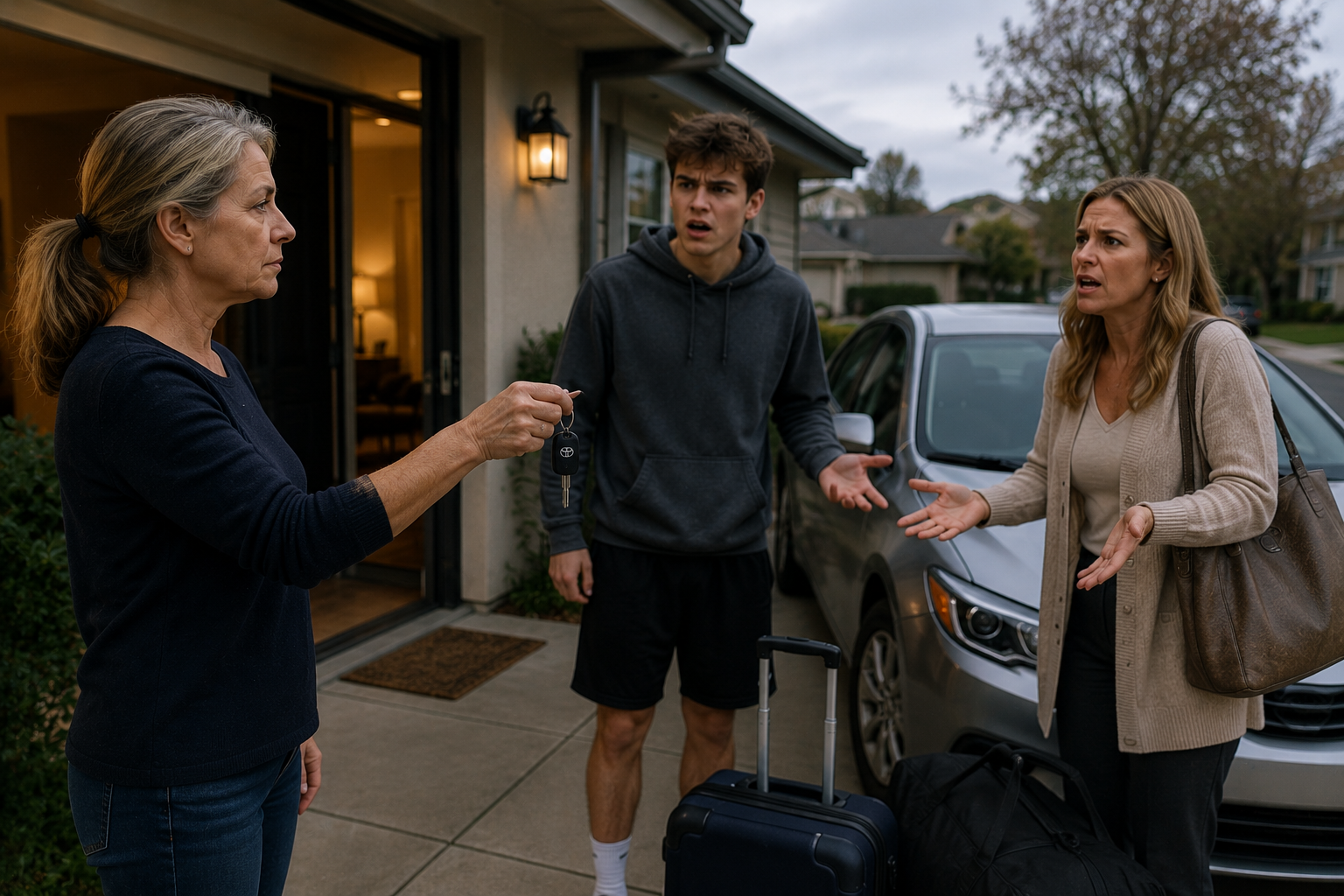
When I came home that evening, police cars were outside our building.
At first, I thought a neighbor had been hurt. Then I saw Grant near the garden gate, his face pale and his hands shaking just enough for everyone to see.
My bag fell from my shoulder.
"I'll keep an eye on her."
Advertisement
"Where's Tara?"
Grant turned slowly.
"She went down to play," he said. "I looked away for a few minutes."
"Grant, where is my daughter?"
***
For weeks, we searched.
Police searched. Neighbors searched. Strangers searched. Women held me while I sobbed. Men called my daughter's name until their voices went hoarse.
"Grant, where is my daughter?"
Advertisement
Tara. Tara. Tara.
Nothing came back.
There were no witnesses, no phone calls, no missing ribbon, and no Tara.
Grant cried in public. He gave statements. He spoke to anyone who would listen. But at night, when it was only us, he went strangely quiet.
I kept asking the same question.
"How does a little girl vanish from a garden right below our apartment?"
And he always gave the same answer.
There were no witnesses.
Advertisement
"I looked away, Cassidy. I looked away, and I'll hate myself forever."
***
After a year, Grant said we had to go home.
I didn't want to leave Cairo. Leaving felt like burying Tara there. But my body had worn down.
I stopped sleeping. I stopped eating unless someone put food in front of me.
So we returned to Ohio without our daughter.
Grant and I didn't survive it.
"I'll hate myself forever."
Advertisement
But still, he thrived. Grant built a career from grief. He wrote essays, speeches, and manuscripts. People called him strong and brave.
I built a life around waiting.
***
Twenty years later, I was fifty-three and still woke some mornings with Tara's name already in my mouth.
That evening, Grant sent me an advance copy of his newest book.
The title made my stomach turn.
"The Daughter I Lost in Cairo."
I shoved it across the kitchen table.
"The Daughter I Lost in Cairo."
Advertisement
"Not today," I whispered.
Then I checked the mail, and the postcard slid out between bills.
My hands went numb.
I didn't call Grant. I didn't call my sister.
I just grabbed my keys and ran.
***
Now, in that rental garage, my daughter was alive and looking at me like I was the missing person.
"Tara," I whispered. "Oh my God."
My hands went numb.
Advertisement
"Don't come closer," she said quickly.
I froze.
"I won't."
Her chin shook. "I needed to know if you would come."
"I would have crossed the world for you."
"Then why did Dad say you left?"
The question hit hard.
"I needed to know if you would come."
Advertisement
"What?"
Tara reached into the box marked MOM and pulled out envelopes tied with string.
"I wrote these every birthday," she said. "Nine to eighteen."
"I never got them."
"I know."
She opened one.
"Dear Mom," she read, her voice tight. "Dad says you went back to America because you didn't want me anymore. I don't believe him, but I'm trying to."
"I never got them."
Advertisement
"No."
She looked up. "That was my twelfth birthday."
"Baby, I never left you. Yes, I left to work that day. But I came right back home, with all the ingredients for pancakes in my bag."
"Then what did he tell you?"
I swallowed hard. "He told me you vanished from the garden."
Her face changed.
"Then what did he tell you?"
Advertisement
"He called the police?"
"Yes."
"He searched?"
"In front of everyone."
Her jaw tightened.
"He came to see me that night."
The words hit so hard I almost folded forward.
"Where?"
"Claire's apartment."
"He called the police?"
Advertisement
***
Claire.
Grant's friend, the woman who brought me tea, passed out flyers, and hugged me while I shook.
"Claire had you?"
Tara nodded. "She came into the garden. She said you had an emergency and Dad had asked her to bring me. Everyone knew Claire, so no one stopped us.”
"And Grant knew?"
"He came that night," Tara said. "I thought he was taking me home."
"Claire had you?"
Advertisement
I pressed my fist against my mouth.
"What did he say?"
Tara's eyes filled.
"He said you were gone."
We sat in silence, surrounded by boxes and twenty years of stolen time.
Then Tara stood.
"He said you were gone."
"There's a diner down the road. I can't do the rest in here."
Advertisement
"Okay," I said quickly. "Anything you want, honey. Anything."
We drove separately. I kept her car in sight, terrified she would disappear again.
***
At the diner, Tara chose a booth and folded her napkin into a neat square.
I stared before I could stop myself.
"What?" she asked.
"Anything you want, honey. Anything."
Advertisement
"You used to do that with paper towels. Your father said you were making tiny blankets."
Her face softened, then closed again.
"Claire raised you?" I asked.
"Not as Tara. She gave me another name. She and Grant said you'd changed everything so I couldn't find you. Claire moved us soon after Cairo. She said I'd be reunited with Dad. That never happened."
"Why send the postcard now?"
"Claire died last month. I went back to Cairo for answers. I mailed it from there.”
"Claire raised you?"
Advertisement
I felt no joy. Only coldness.
Tara pulled a folded letter from her bag. "Before she died, she told me everything."
She slid it across the table.
"Read it," she said.
My hands shook. "I'm trying."
"She wrote that Grant wanted out of your marriage. He wanted her and me too. But he didn't want to look like the man who left his wife and child overseas."
I felt no joy.
Advertisement
I looked up. "You heard them arguing."
"I heard Claire say he promised to leave you," Tara said. "I was eight, but I knew enough to tell you."
"So he panicked."
"He chose himself."
Those three words landed harder than any explanation.
Tara took out her phone and showed me a poster for Grant's event that night.
"The Daughter I Lost in Cairo."
"You heard them arguing."
Advertisement
Her voice went flat. "He made money from missing me."
"No," I said. "He made money from hiding you."
For the first time, her face cracked with relief.
"You believe me, Mom?"
"I believed you before you showed me the letter."
Relief crossed Tara's face, then vanished.
"I didn't come here for a scene," she said.
"Then why?"
Relief crossed Tara's face.
Advertisement
"I needed to see your face when you heard the truth."
I stopped myself before touching her hand. "Then we do this your way. But he doesn't get to keep wearing our grief like a medal."
After a long moment, she placed two fingers against mine.
***
Before the event, we went to my ex-husband's house.
Grant opened the door in a pressed shirt. Then he saw Tara, and his face drained.
"Tara," he whispered.
"Then we do this your way."
Advertisement
"You remember my name," Tara said. "That's more than I expected."
"Cassidy... Tara, listen."
"No," I said. "You're done deciding what I get to hear."
Grant swallowed. "It was complicated."
"Divorce is complicated. Grief is complicated. But what you did was simple."
Tara stepped closer. "When you came to Claire's apartment, did you know Mom was out looking for me?"
Grant said nothing.
"Tara, listen."
Advertisement
That silence was enough.
"You watched me beg strangers for help," I said.
His eyes filled. "I made a terrible mistake."
"No. You erased our daughter and called it tragedy."
"I have an event," Grant said. "We can talk later."
"We'll come with you," Tara said.
"I made a terrible mistake."
Advertisement
***
At the book event, Grant stood before a packed room.
"Losing a child," he read, "leaves an empty chair at the table of your soul."
Tara stiffened.
"You don't have to," I whispered.
"Yes," she said. "I do."
She stepped into the aisle.
"Was that before or after you left me at Claire's apartment?" Tara asked. "Funny how the woman you were having an affair with never made it into your book."
"You don't have to."
Advertisement
The room went silent.
"My name is Tara," she said. "I'm the daughter he claims he lost in Cairo."
Grant gripped the microphone. "Tara, please. Not like this."
"Why not? You told it in public for twenty years."
She placed Claire's confession, her birthday cards, and Grant's letters on the table.
"You didn't lose me," she said. "You hid me."
A reporter called, "Do you deny it, Grant?"
Grant looked around. "I was trying to protect everyone."
I stood beside Tara. "You protected your name. You destroyed ours."
"You hid me."
Advertisement
***
Outside, Tara exhaled hard. "I thought I'd feel better."
"You might later. Or you might not."
She looked at me. "That's honest."
"I'm trying to start there."
At the cars, she paused. "Do you still have coffee?"
"Coffee, tea, and probably expired cereal."
A tiny smile appeared. "I can stay for a little while."
"I thought I'd feel better."
Advertisement
***
At home, I opened the cedar box I had kept for twenty years.
Inside were her hair ribbons, her favorite red shoes, a pancake recipe card, and missing posters worn soft at the edges.
"I kept what I could," I said. "Proof that you were loved."
Tara touched the ribbon and cried.
***
Later, my daughter sat at my kitchen table and cried with one hand over her mouth.
I stayed across from her.
"Can I sit closer?" I asked.
"Proof that you were loved."
Advertisement
She wiped her cheek. "Not yet."
"Okay."
After a while, she looked at the cedar box. "You really kept all this?"
"Every piece I could."
"Why?"
"Because I needed proof you were real when everyone else wanted me to move on."
Her face crumpled again. "I don't know how to be your daughter."
My tears fell.
"That's okay," I said. "I don't know how to be your mother at twenty-eight yet."
"You really kept all this?"
Advertisement
***
The next morning, I made pancakes.
The first one burned. The second one tore. By the third, Tara walked in wearing my old sweater.
"You're crying into breakfast," she said.
"I'm adding salt."
A tiny laugh escaped her.
For a second, I saw her at eight years old. Then I saw the woman she had become.
Both hurt.
A tiny laugh escaped her.
Advertisement
"You used to ask for the smallest pancake first," I said, sliding a plate toward her.
"I don't remember if I liked them."
"That's okay. We can find out again."
She took a bite and chewed slowly.
"Still too much vanilla," she said.
Her smile faded, but not fully.
Then she set the fork down. "I'm not ready to call you Mom."
The words hurt, but they were true.
"We can find out again."
Advertisement
"Then call me Cassidy," I said. "That's enough for me."
Tara looked at me for a long moment.
Then she reached across the counter and touched my hand.
I spent twenty years thinking Egypt had taken my daughter, but it was a lie that stole her.
And truth, late as it was, had brought Tara back to my table.
Advertisement
Advertisement