
The Principal's Daughter Took My Child's Place in the Dance and Pushed Her to the Back – Karma Arrived Before Graduation Was Over
Sharon thought her daughter Stella was upset over losing the spotlight at graduation, but one painful performance proved the truth was much worse.
Advertisement
My daughter, Stella, had been counting down the days to her elementary school graduation like it was a national holiday.
Every morning, before I had even finished my coffee, she would appear in the kitchen with another announcement.
"Mom, only nine days left."
Then it was eight. Then seven. Then six.
She was 11 years old, with a heart that still believed good things happened when you worked hard enough. I loved that about her. I also worried about it because life had already taught me that effort did not always get rewarded as it should.
Advertisement
Still, I did not want to dim her light.
Her school decided to organize a talent show for the graduation ceremony. Parents would come, the students would perform, and afterward, there would be speeches, certificates, and pictures under balloon arches in the gym.
When Stella came home and told me about it, her whole face was glowing.
"They said each class can do something," she said, dropping her backpack by the door. "Like singing, acting, dancing, anything."
"That sounds fun," I replied while sorting through the mail.
Advertisement
"Mom, I volunteered."
I looked up. "For what?"
"To create a dance routine for my class."
That made me smile. Stella had been taking dance classes for years. Ballet first, then hip-hop, then a little jazz when she decided she liked "big movements and dramatic arms."
She was the kind of child who could hear music in a grocery store and start marking steps with her feet before she even realized she was doing it.
"You volunteered to make the whole routine?" I asked.
Advertisement
She nodded hard enough that one of her braids slipped over her shoulder. "The teacher said I could. She said since I already dance, I could help everybody learn it."
"That is a big responsibility."
"I know," Stella said, standing taller. "But I can do it."
And she did.
For weeks, our living room became her rehearsal studio. She pushed the coffee table against the wall, counted beats under her breath, and restarted the same part of a song until even I knew when the turn was coming.
"Five, six, seven, eight," she would whisper, then step, clap, spin, and point. "No, that part is too fast. They won't all get it."
Sometimes she made notes in a little purple notebook.
Advertisement
Sometimes she called classmates after school to explain where they should stand. She was patient with them, even when she came home tired.
"Jenna keeps forgetting the second part," Stella told me one evening.
"Is she trying?"
"Yes. She just gets nervous." Stella tapped her pencil on the table. "I told her she can stand beside me so I can help."
That was Stella. She wanted to shine, but she also wanted everyone else to feel safe enough to shine too.
She couldn't stop talking about how excited she was.
At dinner, she told me about the costumes. In the car, she told me who had improved. At bedtime, she asked if I thought Grandma would cry when she saw the dance.
"She cries during commercials," I said. "So yes, probably."
Advertisement
Stella laughed so hard she buried her face in her pillow.
Then, a few days before the performance, she came home crying.
Not quiet tears either. She walked through the front door, and her face crumpled the second she saw me.
"Stella?" I rushed toward her. "What happened?"
She shook her head and tried to speak, but the words broke apart.
I guided her to the sofa and sat beside her. "Take a breath. Tell me slowly."
"They changed it," she finally managed.
"Changed what?"
Advertisement
"The dance. Everything."
I frowned. "What do you mean?"
She wiped her cheeks with the sleeve of her hoodie. "They moved me."
"Moved you where?"
"To the back."
I waited, thinking there had to be more. "Okay. Did the teacher explain why?"
Stella's chin trembled. "She said it was better for the formation."
I sighed before I could stop myself.
Advertisement
That sigh was my mistake. I was tired from work, distracted by bills, and too quick to reach for the easiest explanation.
"Sweetheart, other kids probably wanted their moment too," I told her. "You helped make the dance. That still matters."
Her eyes filled again. "You don't understand."
"I'm trying to."
"No, you're not," she said, her voice small but sharp. "It's still my dance."
"I know it feels that way."
"It doesn't feel that way. It is that way."
Advertisement
I should have listened harder. I should have noticed that she was not whining. Stella was not the type to fall apart because she did not get applause. But in that moment, I thought she was hurt because she had expected to be front and center.
So I rubbed her back and gave her the kind of advice adults give when they are too busy to see a child clearly.
"Sometimes being part of a team means letting someone else stand in front."
She pulled away from me. "Fine."
That one word sat between us for the rest of the night.
On graduation day, I arrived at the school gym with my phone charged, flowers in my hand, and guilt already nibbling at me.
Stella had barely spoken that morning.
Advertisement
She let me fix a loose strand of hair near her temple, but she did not smile when I told her she looked beautiful.
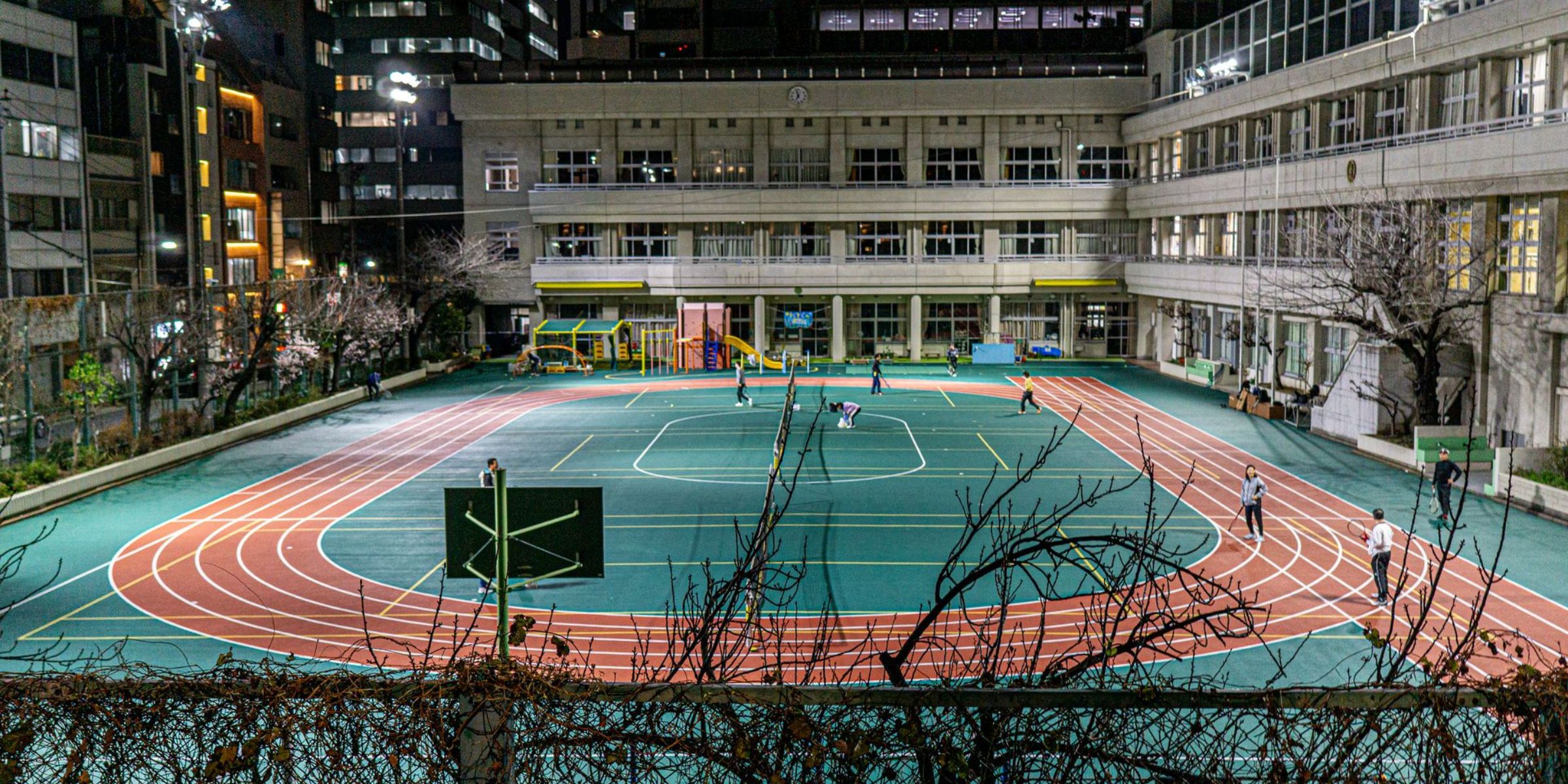
The gym was full of folding chairs, proud families, and kids running around in dress shoes that looked too stiff for their feet. A banner stretched across the stage that read, "Congratulations, Graduates!" The principal stood near the front, greeting parents with a polished smile.
I spotted my best friend, Marissa, near the side of the stage. She was the dance teacher running the performance, but to Stella, she was Aunt Marissa, her godmother, the woman who had brought soup when Stella had the flu and cried at every recital like she had given birth to her herself.
Marissa caught my eye, but her smile seemed tight.
Advertisement
Before I could think too much about it, the music started.
The class took the stage, and my heart lifted at the sight of Stella. Then my stomach dropped.
The dance was still hers. The choreography was still hers. I knew every count because I had watched her build it in our living room.
But Stella was in the back.
Another girl stood in the lead position, right where Stella had always practiced. She wore a glittering headband and smiled like a pageant queen.
At first, I told myself not to overreact.
Advertisement
Then the girl stepped backward on purpose, cutting across Stella's line. A moment later, she shifted her shoulder and shoved Stella aside just enough to make her stumble. When Stella tried to move back into place, the girl slid in front of her again, blocking her from being seen.
It was subtle enough that most people might have missed it.
But once I noticed it, I couldn't look away.
My hands tightened around the flowers.
"Move back," I whispered under my breath, as if the girl could hear me.
She did it again. One small shoulder. One smug glance. One stolen space.
Stella kept dancing, but her face had changed.
Advertisement
She was not performing anymore. She was surviving.
Later, I found out that the girl was the principal's daughter.
Suddenly, Stella's tears made sense. She wasn't upset because she wasn't the center of attention. She was upset because something she had created was being taken from her piece by piece.
What the principal didn't know was that the teacher running the performance wasn't just a teacher.
When the dance ended, the audience erupted into applause.
The principal's daughter stood proudly in the center of the stage, smiling as if the entire performance belonged to her.
Stella was standing in the back row, trying to hold back tears.
Advertisement
Then the dance teacher walked onto the stage and took the microphone.
At first, everyone thought Marissa was about to thank the students and end the evening.
That was how these school events usually went. A teacher would smile, say how proud everyone was, and hand the microphone back while parents clapped and reached for their phones.
But Marissa did not smile.
She stood in the middle of the stage with the microphone in one hand and a folder tucked under her arm. Her eyes moved across the room, past the rows of parents, past the teachers standing near the walls, and finally landed on Stella.
My daughter was still in the back row.
Advertisement
Her little shoulders were stiff, and her lips were pressed together so tightly I could see she was fighting not to cry in front of everyone. The principal's daughter stood in the center, glowing under the stage lights, still wearing that proud smile.
Then Marissa lifted the microphone.
"Before tonight ends, there's something everyone deserves to know."
The room fell silent.
I felt my breath catch. Beside me, a woman stopped rustling through her purse. Somewhere behind me, a baby fussed once, then quieted.
Marissa pointed toward my daughter.
Advertisement
"The dance you just watched was her idea. She created it. She spent weeks working on it. She helped teach it to the other students. Without her, there would be no performance tonight."
The audience immediately started whispering.
I saw heads turn. A few parents leaned toward each other, confused. One mother in the second row looked back at me, then at Stella, her face softening with sudden understanding.
The principal's daughter looked completely stunned. Her smile vanished so quickly it was almost painful to watch. She glanced toward her mom, as if waiting for her to fix the moment.
But Marissa was not done.
Advertisement
"And there's something else I need to say."
She paused, and in that pause, I heard my own heartbeat.
"That little girl isn't just one of my students. She's my goddaughter."
You could have heard a pin drop.
Stella looked up then. Her eyes widened, not with embarrassment, but with disbelief. It was the look of a child who had been told to swallow her hurt, only to realize one adult had seen everything after all.
Marissa's voice trembled.
Advertisement
"For weeks I stayed quiet because I was told not to make trouble. I was told the school was struggling financially. I was told everyone needed to make sacrifices for the good of the school."
Several parents exchanged confused looks.
My fingers tightened around the bouquet in my lap. I remembered every fundraiser flyer Stella had brought home. Bake sales, raffles, donation drives, classroom supply fees, and urgent emails about supporting "our school family." I had paid what I could, even when it meant skipping things for myself.
Then Marissa pulled an envelope from her folder.
"Which is why this is my resignation letter."
Gasps spread through the auditorium.
Advertisement
The principal immediately stood up.
"No, please, let's discuss this privately."
Her voice was calm, but her face was not. The polished smile from earlier had cracked, and what showed beneath it was fear.
But Marissa shook her head.
"No. I've stayed quiet long enough."
The principal's face turned pale.
For a second, nobody moved.
Then one parent stood up.
Advertisement
"If the school is struggling so much financially, where are all the donations going?"
A murmur rolled through the room.
Another parent immediately joined in.
"Exactly. We've been donating money for years."
"And every fundraiser breaks records," someone called from the back.
A woman near the aisle added, "And every semester we're told the school needs even more."
Soon, voices were coming from every corner of the auditorium.
One father pointed toward the parking lot outside the auditorium windows.
"Funny how the school is supposedly broke, but the principal showed up in a brand-new luxury SUV this year."
The room exploded.
Advertisement
Parents started talking over one another. Questions came from every direction.
"What about the playground fund?"
"What happened to the music program money?"
"Why are teachers buying supplies themselves?"
The principal kept trying to calm everyone down, but nobody was listening anymore.
"Please, everyone," she said, raising both hands. "This is not the time or place."
A father near the front snapped, "Then when is the time?"
Another parent stood. "We have asked before, and we never get straight answers."
For years, people had ignored small things.
Advertisement
Tonight was the first time they had all connected.
The favoritism. The special treatment. The endless requests for money.
Everything.
And it had all started because one little girl was pushed to the back of a stage.
I stood slowly, my knees weaker than I wanted them to be. Stella spotted me from the stage, and the moment our eyes met, her face folded. She was trying so hard to be brave, but she was still my little girl.
I walked to the steps at the side of the stage. No one stopped me. Not the teachers. Not the principal. Not even the woman who had spent the whole evening pretending nothing was wrong.
Stella came down the steps and into my arms.
Advertisement
"I'm so sorry," I whispered into her hair.
She clutched my jacket. "You believe me now?"
That question broke something in me.
I pulled back enough to look at her. "I should have believed you the first time."
Her lips trembled. "I didn't want to be mean. I just wanted it to be fair."
"I know, sweetheart," I said. "I know."
Marissa stepped down from the stage a moment later. Her eyes were wet, but her chin was lifted.
"I'm sorry I waited," she told Stella.
Advertisement
Stella reached for her hand. "You didn't let them keep doing it."
Marissa squeezed her fingers. "No. I didn't."
Behind us, the principal was surrounded by parents demanding answers. Her daughter stood alone near the center of the stage, no longer glowing, no longer triumphant.
For the first time that night, she looked like a child who had been taught the wrong lesson by adults who should have known better.
I did not feel happy seeing her upset.
Advertisement
I only felt sad that so many children had been placed in the middle of grown-up pride and greed.
By the following week, the school board had announced a review of the school's finances. Several parents requested records. Marissa's resignation emboldened other teachers to speak. Things that had been whispered in hallways finally reached people who could do something.
As for Stella, she kept dancing.
Not because everyone finally knew the truth. Not because people apologized. She kept dancing because one bad night was not strong enough to steal what she loved.
At home, she placed the wilted graduation flowers in a jar on her dresser.
"Mom?" she said quietly.
Advertisement
"Yes?"
"Next time I tell you something feels wrong, will you listen?"
I sat beside her and took her hand.
"Next time," I promised, "I will listen before the whole room has to."
What would you have done if you were in Sharon's place? Would you have confronted the principal right away, or would you have waited for the truth to come out onstage?
If you liked this story, here's another one for you: My sister invited me on a double date because she thought I needed help, or at least an audience for the kind of help that makes her look generous and me look pathetic. She expected me to smile through the humiliation and let her tell the story of who I was. I showed up for a very different reason.
Advertisement
Advertisement