
My Children Put Me in a Nursing Home and Stopped Visiting – One Day, a Young Woman Walked in and Called Me 'Mom'

By
Monica Otayza-Go
Jun 02, 202607:33 A.M.
I gave my children everything, only to end up forgotten in a nursing home bedroom. But when a 25-year-old stranger walked in and called me "Mom," a hidden box of letters revealed that my late husband's deepest secret had traveled across decades just to save me.
Advertisement
I have three children. Or at least, I used to feel like I did.
After my husband, Robert, died, I spent years doing everything I could for them.
I took on extra shifts at the pharmacy, missed holiday vacations with my siblings, and made countless sacrifices for their sake.
I never complained.
I thought that was what mothers were supposed to do.
I poured my entire soul into Karen, Julian, and Steven. I hoped that one day, the warmth I gave them would eventually find its way back to me when the winter of my life arrived.
Advertisement
But after they grew up, something changed.
The calls became rare.
Visits became brief, obligatory check-ins on major holidays.
I watched from the sidelines of their lives, always waiting by the telephone, always keeping a pot of coffee fresh just in case one of them decided to stop by.
It became painfully obvious that keeping track of my worsening arthritis, my grocery shopping, and my doctor appointments from afar was becoming an unwanted obligation.
Advertisement
To them, I had become a burden — just a lingering obligation in the back of their minds, and a constant inconvenience.
"Don't worry about me," I would tell them. "I can handle myself. All I want is for us to spend time together."
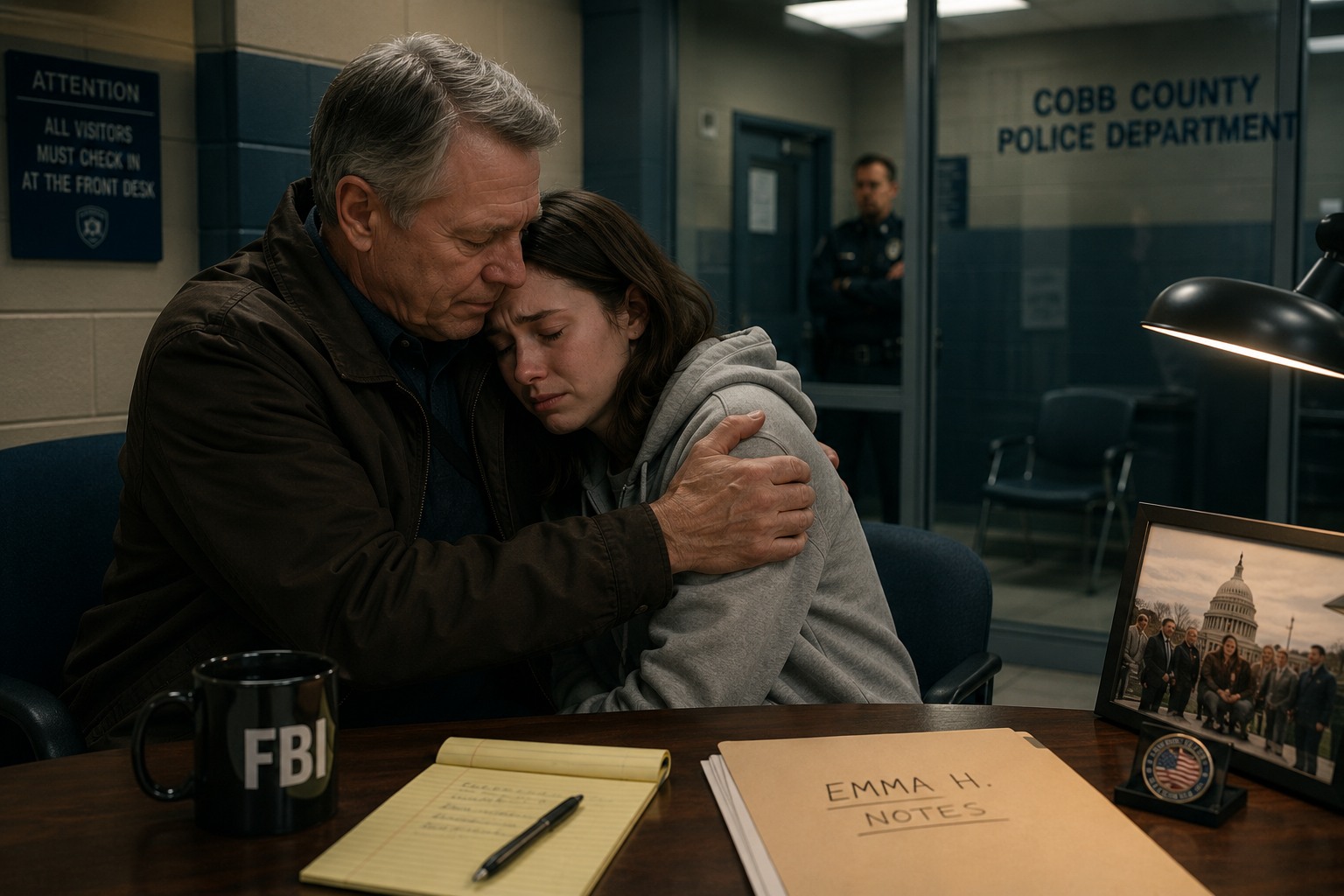
When I turned 78, they sat me down and told me it was time for a nursing home.
They invited me to Karen's house for dinner, but the table was not set for a celebration.
Instead, my three children lined up in the living room, their expressions stiff and rehearsed.
Advertisement
Without saying a word, they pointed to a leaflet on the coffee table. It was for a nursing home.
"It will be better for you, Mom," Karen said, reaching out to pat my knee with a hand that felt entirely detached.
Julian nodded in agreement, adjusting his watch nervously. "We found a wonderful place just outside the city. It has beautiful gardens and full-time staff. To us, you are becoming a burden, and having to worry about you in the back of our minds is getting difficult, Mom."
I looked at Steven, my youngest, hoping for a spark of defiance, but he merely looked down at the carpet.
Advertisement
I knew better than to argue.
My body was slowing down, yes, but my mind was perfectly sharp, and I could see the truth written clearly in their eyes.
I was becoming an inconvenience to them simply by requiring their attention.
The transition to the facility was quiet.
During the first few weeks, my children made a show of visiting.
They brought small plants for my windowsill and helped me arrange my old photo albums.
Advertisement
At first, their visits were frequent. Then, they dropped to once a week. Soon, it was once every two weeks, then once a month, and then not at all.
Eventually, the calendar pages turned, and the visits stopped entirely.
I became just another face in the recreation room, sitting by the window, watching the rain beat against the glass.
I had gotten used to the routine: breakfast at 7:00 a.m. sharp, medication right after, and then hours of sitting in the recreation room watching the dust motes dance in the sunlight.
In places like this, time does not move; it drags.
Advertisement
Most residents spend their days shuffling between scheduled meals, physical therapy sessions they do not want to attend, and bingo games designed to fill the empty hours.
It is an existence measured by the ticking of the wall clock, where the highlight of the week is simply a change in the dinner menu.
One afternoon, I was sitting alone in my room when a nurse knocked on the door.
Nurse Beatrice peeked her head inside with an encouraging smile. "You have a visitor, Rachel."
I frowned, adjusting the shawl around my shoulders.
Advertisement
"Are you sure you have the right room, Beatrice? I'm not expecting anyone."
"She asked for you by name," the nurse replied, stepping aside to allow the guest to enter.
A few seconds later, a young woman walked in.
She could not have been older than 25.
She wore a damp trench coat and held a leather satchel tightly against her chest.
She had dark, expressive eyes and a familiar curve to her jawline that sent a strange shudder through my chest, though I had never seen her before in my life.
Advertisement
She closed the door behind her and looked at me for a long moment, her breathing shallow.
Then tears filled her eyes.
I was completely puzzled by her reaction to seeing me.
And the first word out of her mouth made my blood run cold.
"Mom," she whispered.
I gripped the armrests of my chair, my heart hammering against my ribs.
Why was she calling me "mom?"
Advertisement
"I think you have made a terrible mistake, young lady. I do not know you. My name is Rachel, and my only daughter is Karen."
The girl took a trembling step forward, wiping her face with the back of her hand.
"I am so sorry, I did not mean to shock you. It is just that I have stared at your photograph for months, and seeing you in person made the word slip out," she began to explain. "My name is Chloe, and I am here because of Robert."
Hearing my late husband's name spoken by a stranger in a nursing home bedroom made the room feel entirely devoid of oxygen.
"Had he cheated on me?" I thought to myself. The knots in my stomach were getting tighter.
Advertisement
Robert had been gone for 12 years, taking a piece of my heart with him to the grave.
We had been married for 45 years, and I thought I knew every single corner of his soul.
"What does my husband have to do with you?" I demanded, my voice shaking with a mixture of fear and rising defensive anger.
Chloe sat down on the small vinyl chair opposite me, placing her heavy leather satchel on her lap.
"I found a collection of letters and financial receipts that my dad kept hidden in an old safe box for decades," Chloe explained softly, unbuckling the satchel.
"He passed away two months ago, and while clearing out his study, I discovered the truth about where I came from. Robert was not my biological father, Rachel. He was loyal to you all along. Still, he is the reason I am alive today."
Hearing that relieved me of all the worries building up inside of me.
Advertisement
She pulled out a thick bundle of papers, tied neatly with a faded piece of blue ribbon.
My eyes locked onto the handwriting on the top envelope.
It was unmistakably Robert's neat, blocky print.
"Twenty-five years ago, your husband did something incredible," Chloe said, handing me the first letter. "And he kept it a secret from everyone, including you, to protect a promise he made."
My fingers trembled as I took the yellowed paper from Chloe's hand.
Advertisement
I unfolded it, my eyes blurring as I recognized the familiar stationery from the hardware store Robert used to manage.
The letter was dated exactly 25 years ago, addressed to a lawyer named Marcus, and the contents detailed a monthly financial arrangement.
As I read the words, the missing pieces of a quarter-century-old puzzle began to fall into place.
During the winter of that year, Robert had come home late from work every Thursday night, claiming he was staying behind to balance the inventory ledger.
Around that same time, our family savings had taken a mysterious hit.
Advertisement
I remembered confronting him about a missing sum of $5,000. He had quietly told me that he had made a bad business investment and asked me to trust him.
I had let it go. But a tiny seed of doubt had lingered in my mind for decades.
"Explain this to me," I whispered, looking up at Chloe.
"Twenty-five years ago, a young, terrified pregnant woman walked into Robert's hardware store during a freezing rainstorm," Chloe said, her voice thick with emotion.
"Her name was Maya. She was completely alone, rejected by her family, and had no place to go. Robert saw her shivering, brought her into his office, gave her his coat, and bought her a warm meal."
Chloe paused, taking a deep breath to steady herself.
Advertisement
"He helped her find a small apartment and paid her rent using his own personal savings. But tragically, a few months later, Maya went into premature labor. There were severe complications. She died during childbirth right there in the county hospital."
I gasped, pressing a hand to my mouth. "Oh, the poor soul."
"The baby survived," Chloe continued, a tear slipping down her nose.
By then, I could already tell where her story was going.
"That baby was you, wasn't it?" I asked her,
Advertisement
Chloe nodded.
"I was left with absolutely no family, no name, and the hospital was preparing to place me directly into a crowded, underfunded state foster care system. Robert refused," she said, tearing up.
She continued, saying, "Robert desperately wanted to protect me, but he knew he could not take a newborn baby home to you. He knew you already had your hands full with three young, chaotic children, a tight budget, and a household that was already stretched to its absolute limit."
She pointed to the letters in my lap.
Advertisement
"He knew that bringing another child into the mix would have broken your spirit and bankrupted the family. So, instead of turning his back on me, he made a pact with a local attorney and a kind, hardworking couple who were desperately looking to adopt. Robert secretly paid for my entire upbringing to ease their financial burden."
I stared at the pages in disbelief.
"He funded my medical insurance, my clothing, my school supplies, and eventually, my entire college education," Chloe said. "He made sure that the couple who raised me had every resource necessary to give me a beautiful, stable life. He visited my adoptive parents once a year in a neighboring town just to look at my school photographs and ensure I was thriving."
There were 24 years of receipts, progress reports, and short notes from Robert to Chloe's adoptive parents.
Advertisement
In one letter, written when Chloe was 10 years old, Robert had written a sentence that shattered my heart completely.
"I want this little girl to have the future her mother never got to see. Please ensure she takes music lessons if she wishes. Do not ever worry about the cost; I will handle it."
"Why didn't he tell me?" I wept openly now, the grief and awe warring inside my chest.
"We shared everything, Chloe. I would have understood. We could have helped her together."

"He took the burden entirely on himself so your own three children wouldn't suffer any financial deprivation. So that you didn't have to take on the mental load of caring for another child — especially one that wasn't yours," Chloe explained.
Advertisement
She looked around my sparse, lonely nursing home room, her eyes hardening slightly as she noticed the lack of family photos on the bedside table.
"I went to your old house, and the new neighbors told me that Robert had passed away years ago and that your children had moved you here," she said. "I wish I could have met him. If only I had found the letters sooner."
"I called Karen, Julian, and Steven. I wanted to tell them what a hero their father was."
"You spoke to them?" I asked.
"I did," Chloe said, a flash of disappointment crossing her face. "But they did not care. Karen told me that it was ancient history and hung up on me. Julian told me not to call again because he thought I was looking for money from the estate. They abandoned their father's legacy, just like they abandoned you in this place."
Advertisement
She stood up, her jaw set with a beautiful, fierce determination that reminded me so much of the quiet strength Robert used to carry.
"Robert saved my future before I even knew what a future was," Chloe said softly, her eyes shining.
"He made sure I was cared for and had every opportunity in the world. I am an accountant now, because of your husband. I have a good life, a home with a spare bedroom, and a career because of your husband's secret generosity," she said, reaching for my hand.
I had tears in my eyes. I always knew Robert was a saint, but I didn't expect him to go through all these lengths for another person.
Advertisement
"Rachel, I refuse to let the wife of the man who saved me sit alone in a nursing home while her own children forget she exists," Chloe told me.
She knelt beside my chair, looking up at me with absolute sincerity.
"I already spoke to the facility administrator to handle the paperwork. I am packing your things today, and I am bringing you home to live with me in my own place. You are going to be a part of my family now. If you will have me, I want to be the daughter who actually shows up."
I stared at this beautiful young woman, the tears flowing freely down my wrinkled cheeks.
Advertisement
For 14 months, I had felt hollow, discarded by the children I had sacrificed everything to raise. I had thought my story was effectively over.
But sitting there, clutching the letters of the husband I had loved for nearly half a century, the truth became blindingly clear.
Robert's final, greatest act of kindness had traveled across 25 years to find me right when I needed it most.
"Thank you," I choked out, pulling Chloe into a tight, desperate hug.
The grief of my children's abandonment did not completely vanish, but the emptiness inside my chest was suddenly filled with something entirely new.
Advertisement
Even after death, Robert had managed to send me the love and protection I thought I had lost forever, wrapped in the embrace of a daughter born from a secret grace.
But here is the real question: When the children you gave everything to walk away from you, is family defined solely by the blood in your veins, or is it found in the unexpected grace of a stranger who steps forward to honor the legacy of the person you loved?
If this story touched your heart, here's another one you might like: A woman's wealthy family called her the unattractive daughter for years, marrying her off to a rich widower and completely cutting her off. Five years after the wedding, they beg for her forgiveness and seek to be a part of her life again.
Advertisement
Advertisement