
My Husband Left Me While I Was Pregnant for My Best Friend – Then His Mother Begged Me to Hear Her Out
July 24, 2026


My son moved into my house the week of my husband's funeral, called me a maid, and told me his wife was going to put me in a cheap nursing home. The morning after I buried Ernest, I packed one suitcase, left a legal folder on the kitchen table, and boarded a cruise ship to the Caribbean.
My phone started vibrating. Austin. Chloe. Austin again. Then Tyler, my other son, who had been living in Charlotte for years and only called on Christmas or when he wanted to know what size shirt his father wore. I didn't answer. In front of me, the cruise ship lit up like a white city ready to lift off from the sea. The Port of Miami smelled of salt, diesel, coffee, and early morning. I walked up the gangway with my blue suitcase in one hand and my passport in the other. A young man in uniform smiled at me. "Welcome on board, Mrs. Theresa." The word "welcome" pierced right through me. It had been years since anyone had said that without asking for something right after.
I thought of Ernest — of his white linen shirt, of his thin hands during his final months. Three months before he died, Austin had taken his father to the bank "to help him with some signatures." Ernest was weak, confused by his medication. That night he took my hand and said: "Theresa, don't give him the house. Not while you're still breathing." I thought it was just the fever. It wasn't a fever. It was a warning.
After the funeral, when Austin asked about the house with the cemetery dirt still on his shoes, I looked through Ernest's papers. There I found promissory notes, an attempted power of attorney, personal loans in my husband's name, and an application to use our house as collateral for Austin's debt. My son didn't want to know what I was going to do with the house. He wanted to know how soon he could strip it away from me.
My attorney Claire Montgomery — a white-haired woman with a calm voice who had been friends with Ernest since high school — reviewed everything. "Theresa," she told me, "your husband managed to protect you." Ernest had updated his will a year prior. The house was left entirely to me, with no strings attached, and a clear clause: as long as I lived, no one could occupy, sell, rent, or use it as collateral without my explicit written consent. Austin had already tried. Not once. Three times.
The first folder I left on the kitchen table was Claire's formal notification: a lawsuit for signature forgery, cancellation of any power of attorney, and an injunction preventing Austin from entering my property without authorization. The second folder contained copies of bank transfers, receipts, messages, and a log of every dollar I had given him over the years. Not to collect it back — a mother doesn't keep a ledger to charge for love. But when a son calls his mother a maid with his hands full of cages, those ledgers become a shield.
Austin called as I stood on deck watching Miami slide away. I answered. I didn't say hello. I just listened. "What did you do? Where are you? There's a court server here. She says we can't stay!" Behind him, Chloe was shrieking about the cat, the rabbit, and the parakeets. "Good morning, Austin." "This is my house!" I looked out at the brightening sky over the ocean. "No, son. It's my house." Silence. Not of remorse. Of calculation. "Mom, you're hysterical. You just became a widow. Tell us where you are and we'll come pick you up." I almost laughed. "I am exactly where I should have been many years ago."
The ship's speakers announced imminent departure. "It means I am not going to take care of your pets, or your debt, or your marriage, or your hunger, or your pride. The animals are safe. Mrs. Mary took them to her nephew's shelter. I left food, vaccines, and a donation. The cat is finally out of that horrible carrier." Chloe snatched the phone. "You crazy old woman! That cat was incredibly expensive!" Hearing that, something clicked inside me. I didn't cry because of the insult. I cried because for years, things that had no teeth had made me hurt.
"Chloe, I also left a folder for you in the entryway drawer." She went silent. "What folder?" "The one containing the text messages where you said that when I 'get a little older,' you were going to put me in a cheap nursing home so you could take over the house. Claire already has copies." Chloe gasped as if she had swallowed a splinter. Austin came back on the line. "Mom, don't do this. We're family." Family. That word some people use to demand your blood without ever offering you a drop of water. "That is precisely why I did it," I replied. "Because you are still my son, and I didn't want to wait until I hated you." I hung up.
The ship let out a deep horn blast. The city began to slide away. I walked to the deck and the ocean breeze hit my face. A woman around my age leaned against the railing beside me, wearing an enormous sun hat and bright red lipstick. "First cruise?" "First escape," I said without thinking. She looked at me and smiled. "Then I'll toast to that." She offered me a small thermos. "Coffee with cinnamon. I'm from Tallahassee. A woman never travels without decent coffee." She said her name was Sarah. I told her mine was Theresa. "Traveling alone?" I looked out at the ocean. "For the first time, yes."
Tyler called that afternoon. Unlike Austin, he didn't scream. He just said: "Mom, Austin called me. He says you've lost your mind." "Of course." "Is it true about the house?" "Yes." Long silence. "Why didn't you tell me?" I looked at my hands — aged spots, protruding veins, short nails from so much washing, cooking, caretaking. "Because when your father got sick, I called you three times and you didn't come. Because I didn't want to ask for permission to live." Tyler said quietly: "I'm sorry, Mom." The word hurt. Not because it was enough. But because it arrived so late. "Save it. Use it when I come back, if you still want to get to know me as a person and not just as an available mother." "Are you coming back?" The ocean opened wide in front of the ship. "In a year." I could almost picture him calculating everything he had never had to calculate before: birthdays without my cakes, Thanksgiving without my collard greens, illnesses without my soup. "And what if something happens?" "Call an adult," I said. "You all are adults now."
I spent the first morning walking around the deck and then went to the dining room and served myself fruit, toast, eggs, and coffee. As I raised the first spoonful to my mouth, I paused. For forty years I had eaten last — first Ernest, then the children, then the grandchildren, then the guests. My plate always sat waiting, cold, next to the sink. This morning I ate my food hot. And I cried. Not a lot. Just enough.
That afternoon, a voice note arrived from my granddaughter Lily: "Grandma, Daddy says you left because you don't love us anymore. Is that true?" I sat on a deck bench, the wind whipping my hair. I recorded a message back. "My sweet girl, Grandma loves you very much. But loving people doesn't mean letting them treat you poorly. No woman was born to be anyone's doormat." I sent it. Then I blocked Austin and Chloe for a few hours. Not forever. Just enough to breathe.
At nightfall, the ocean turned pitch black and gleaming. On deck they played live jazz. Sarah took me by the hand and pulled me into the center of the floor. I danced poorly. I danced with embarrassment. I danced while crying and laughing all at once — for Ernest, for the young girl I used to be, for the woman buried beneath aprons and debts. I danced until my knees ached and my chest opened up wide.
When I returned to my cabin, I unblocked my phone. A message from Claire: "Everything is handled. Austin handed over the keys after making a scene. The court officer recorded the transition. Enjoy your trip, Theresa." Beneath it, one from Mrs. Mary: "The parakeets are already singing, the rabbit ate some hay, and the cat scratched my nephew — but he says that's a good sign. Rest easy. Ernest would be giving you a standing ovation right now."
On the third day, Austin emailed from an old account: "Mom, I messed up. But you can't do this to me. I'm your son." I read it several times. Then I typed: "Yes, you are my son. That is why I gave you so many chances. Now I am giving you a consequence. Talk to Claire. Find a job. Pay your debts. Take care of your daughter. When you can speak to me without demanding anything, maybe we can start over." He took a long time to reply. "And if I can't?" I looked out at the horizon. "Then learn."
Months from now there would be other ports — Cartagena, islands with impossibly clear water, dinners with strangers, sunrises that seemed to rise solely for me. There would be a court hearing where Austin, his voice cracking, would admit he forged signatures driven by debt and the absurd certainty that everything belonging to me already belonged to him. I wouldn't celebrate. A mother doesn't celebrate seeing her son fall. But she doesn't lie down underneath him to cushion the blow either.
That first night, however, none of that existed yet. Only me, my cabin, the gentle lapping of the sea, and a new message from Lily: "Grandma, send me a photo of the ship. I love you. You are not a doormat." I sent her a photo of the moon reflecting across the Gulf. Then I turned off my phone. I put on the perfume Ernest had bought me, opened the cabin window, and let the salty air whip my hair.
Behind me lay the empty cages. The clean living room. The folder. The son who would have to learn how to live without bleeding me dry. In front of me was the black water — vast, immense, and entirely free. And for the very first time since I buried my husband, I didn't feel like a widow. I felt alive.
My Husband Left Me While I Was Pregnant for My Best Friend – Then His Mother Begged Me to Hear Her Out
July 24, 2026

My mother planned to seize my $45 million trust fund the morning of my 18th birthday. I sealed it a few hours before she slid the folder across the kitchen island with a smile and said: "We need to talk about that money."
June 11, 2026

I Took the Cruise My Late Husband and I Had Saved for over 30 Years – On Day Five, the Captain Called My Name and Told Me to Look Under Table Seven
July 13, 2026

My Sister Used My Son's Inheritance to Buy a Sports Car — Then a Lawyer Found Something Much Worse
June 22, 2026

At 3:17 PM, a Message on My Husband's Phone Said 'Babe, Don't Be Late' – When I Found Out Why, I Nearly Collapsed
June 09, 2026
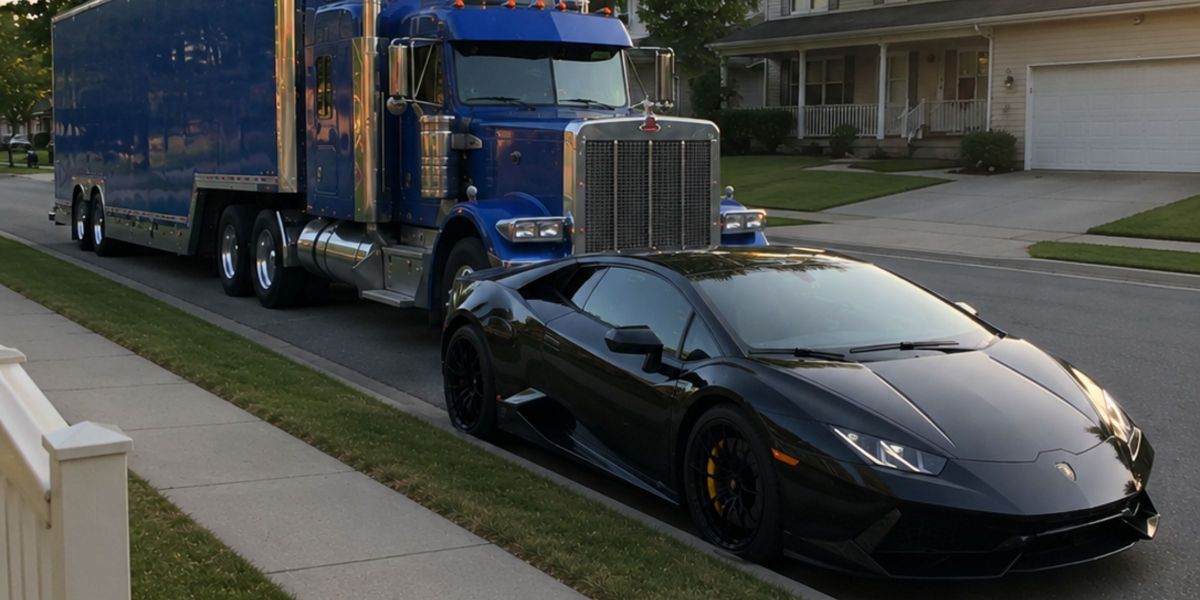
My Stepmother Sold My Prom Dress Behind My Back to Ruin My Prom – But at 8 p.m., a Lamborghini and an 18-Wheeler Pulled up Outside My House
June 05, 2026

My Daughter-in-Law Covered Her Body Even in 100-Degree Heat – Then I Discovered What She Was Hiding
June 15, 2026

I Didn't Invite My Mother to My Wedding Because She Left Me Years Ago – Then She Showed Me the Photo My Father Had Hidden for 15 Years
June 15, 2026

My SIL Begged Us to Take Her Twins Right Before Our Dream Vacation, Saying She Was Sick and Afraid They'd Get Sick Too – Her Real Motive Was Much Worse
June 16, 2026

A Dog Ran up to Me in the Park Carrying My Missing Son's Denim Cap in His Mouth – When I Flipped It Over, the Dog's Owner Shouted, 'Who Told You to Look Inside?'
June 09, 2026

My Elderly Parents Were Locked Out of Their Own Home — I Rushed Over and Couldn't Believe What I Found
June 19, 2026