
My Son Said Something That Hurt Me More Than Losing My Roof in a Tornado — Three Days Later, I Discovered Why
May 22, 2026


At Sunday dinner, my son said if I had a problem watching his kids for free, "the door is right there." I stood up, folded my napkin, and said, "Perfect. I'm leaving." My suitcase had already been packed. By the next morning, he finally understood I wasn't the only one leaving that house.
My name is Eleanor. I am seventy-two years old. I had a little cream-colored house near Hudson, New York, with a front porch and a wooden rocking chair that creaked when I sat in it with my morning coffee. My late husband and I had dreamed of a place like that for years. After he died, I bought it with part of his pension and my savings. Every corner held a memory. The kitchen smelled of coffee and mint. I had lived alone there for years but never felt lonely. Then my son Michael called. "Mom, I need you." Those four words were enough. Within a month, I had sold my house for $45,000 and arrived with two suitcases and three boxes. Michael and his wife Jessica greeted me with hugs and bright smiles. My grandchildren ran to me shouting. Clare, the sixteen-year-old, kissed my cheek quietly, but even then her eyes looked sad in a way I didn't understand.
They showed me my room — the small one at the end of the hall, the one they had used for Christmas decorations and old electronics. A twin bed, a narrow closet, a window facing the alley. "It's temporary, Mom," Michael said. "Just until we get organized." I smiled and told him it was perfect. The first week was lovely. I cooked for everyone, prepared school lunches, washed clothes, ironed Michael's shirts, helped the twins with homework. I felt useful. Needed. Like I belonged somewhere again.
By the second week, Michael and Jessica were traveling. A conference in Albany, they said. Three days. I stayed with the children. They returned Sunday tanned and relaxed, smelling faintly of expensive perfume and wine. They brought me a box of chocolates as a thank-you. Then they traveled again the third week. Then the fourth. I woke at five in the morning to pack lunches and walk the children to school. I mopped floors, washed dishes, folded laundry. At noon I often ate standing at the kitchen sink. In the afternoons I picked the children up from school. At night I cooked dinners Michael and Jessica rarely came home in time to eat.
The suitcases by the front door became part of the landscape. One black. One wine-colored. Always ready. But hotel tags appeared on their luggage from beach resorts. Receipts from restaurants nowhere near Albany. Spa brochures in Jessica's purse. One afternoon, Jessica left her phone unlocked on the sofa. A banner notification appeared across the screen. Jessica standing in an elegant restaurant in Cancun with a glass of wine, smiling at the camera. Posted two days earlier, while they were supposedly at a work conference. I swiped once. More photos. Jessica on a white-sand beach. Michael beside her, tanned, holding a beer. The two of them toasting with champagne. The dates matched every supposed work trip. Every single one. I closed the app and placed the phone exactly where I found it. Something had entered me — not anger, not grief, but a cold clarity, like muddy water settling until the bottom becomes visible.
Clare noticed. She came to me that afternoon, locked her bedroom door, and took out her phone. Screenshots she had saved from her parents' private chat, labeled The Mom Plan. Michael had written: I talked to my mom. She's in. Jessica replied: Perfect. With her watching the kids, we save the $1,200 a month for a nanny. Michael: And she'll give us the money from her house sale. We can use it to pay down the credit cards. Jessica: Great. We'll tell her we're keeping it safe for her, but we'll use it for the debts. She doesn't know how to check online banking anyway. There were dozens of messages. Jessica complaining I cooked with too much oil. Michael laughing because I didn't understand the television remote. The two of them planning trips while I stayed behind with the children. Then: Jessica: Your mom is starting to ask questions about the money. Michael: I'll tell her it's invested. She doesn't understand that stuff. Then the line that made my hands clench until my nails dug into my palms: Jessica: We should have her sign power of attorney. That way we can manage everything. Michael: Good idea. I'll tell her it's for emergencies. Clare lowered the phone. "There's more," she whispered. "They sold the furniture you left in the garage. The pieces you said you wanted to keep. They got eight hundred dollars and went to a fancy restaurant. Dad made a toast and said, 'Thanks, Mom, for your generosity.'"
I stood and walked to her window. Everything outside looked normal. Clean. Ordered. But inside me, the world had turned inside out. Clare was crying. She told me I was the only person in the house who asked how her day was and waited for the answer. "When you leave," she said, "I want to go with you." That was when I understood: I was not the only invisible person in that house. "I'm not leaving without you," I whispered. "I promise."
That afternoon I found an old business card from Arthur Vance, the attorney who had helped my husband prepare his will. I used the house landline while the children watched television. Arthur listened without interrupting. When I finished, he said, "What you are describing may qualify as financial elder exploitation, fraud, and theft. You have rights. You have options." He gave me precise instructions: gather evidence, do not confront them yet, do not sign anything, make a safe plan for leaving. "You cannot let them know you know. Act normal until you are ready to leave." Act normal. Those two words became my private command.
The next morning, while Michael and Jessica were out, I went to his closet. In a shoe box on the top shelf I found bank statements. My account. My name. My $45,000 from the house sale. Michael had been added as a convenience signer after convincing me that online transfers would be easier if he helped. The withdrawals began two weeks after I arrived. $3,000. $5,000. $2,500. $4,000. Family expenses, home repair, medical support, investment transfer. There had been no medical bills. No repairs. No investment. The current balance was $16,200. Almost $30,000 was gone. I photographed every page, put everything back exactly as found, went downstairs, made tea, and sat at the kitchen table until they came home. When Jessica walked in carrying shopping bags, I smiled the smile I had perfected over seventy-two years.
I called a distant cousin named Carol. We had not seen each other since my sister's funeral, but she had always been kind. Over coffee I told her everything. She reached across the table and took my hand. "You can stay with me for as long as you need. And if Clare needs to come with you, she is welcome too." I also found, while cleaning Michael's study, a folder labeled Strategy. Step one: convince her to sell her house and move in. Step two: take control of her money under the pretext of helping. Step three: get power of attorney signed. Step four: use her as free childcare while paying down debts. Step five: when the money runs low, convince her a senior facility is best. Step six: sell the house and move somewhere smaller. It had been planned from the beginning. Every hug. Every "we need you, Mom." Calculated. I was not his mother in that document. I was a resource.
When Michael and Jessica left for Miami, I packed quietly. One suitcase with clothes. Another with documents, photos of my husband, my rosary, my mother's recipe book, and the few things that still mattered. I hid the suitcases in the back of my closet. The day they returned, I was ready. I made roast chicken with potatoes and carrots. After the children were in bed, Clare came downstairs with her backpack containing her ID, her laptop, and a few photos. We slipped out through the kitchen, crossed the backyard, walked around the side of the house, and reached the street where my old car was parked. Michael had suggested I sell it. Thank God I had not listened. I left a white envelope under the front door. Michael — By the time you read this, I will be gone. My lawyer will contact you about the funds taken from my account and the property sold without my permission. Do not contact me directly. All communication must go through my attorney. Eleanor. Then I started the engine and drove away without looking back.
The emergency filing went in that afternoon. Michael's access to my account was frozen. The district attorney received the evidence packet. Michael violated the no-contact order within twenty minutes by driving to the police station. They arrested him in the parking lot. I learned later that he was furious. Not frightened. Furious. That mattered to me. Men who plan things carefully are not frightened when they are caught. They are enraged at being exposed.
The agreement, when it finally came, required Michael to return $24,000 immediately, plus $800 for the furniture sold without my permission. He signed an acknowledgment of what he had done. He agreed not to contact me or Clare directly or indirectly. I agreed to cooperate with a deferred prosecution arrangement so long as all terms were honored. At the signing, Michael stood at the door and said quietly, "Mom, I'm sorry. I don't know when everything got out of control. I love you. I've always loved you." I looked into his eyes. "Michael," I said, "I wish that had been enough. But love without respect is not love. It is just a word people use when they need something. I hope you understand that someday, for your children's sake." He opened his mouth as if to answer. No words came out. He left.
Clare and I found a small two-bedroom apartment in a well-kept senior building two miles from Carol's house. Rent was $600 a month, utilities included. It had an east-facing kitchen window, a narrow balcony, and enough room for us both. I planted mint on the balcony. Three pots. Mint became my symbol of survival — cut it back and it returns stronger. Like me. I found a part-time job at a neighborhood flower shop, three days a week, eleven dollars an hour. Not much. But mine. Money I earned. Money no one could touch. Clare began to thrive. Her grades improved. She made friends. She smiled more. One night she came home excited about art club, an exhibition coming next month. The girl who had been used as a decoration in a polished family was becoming herself. As for Owen and Caleb, they called when they could. Owen found my number in his father's old phone and called once to tell me he missed me. I told him what was true: I loved him. I loved Caleb. I had not left because I didn't love them. I had left because their father was hurting me in ways he was too young to understand. Sometimes walking away is not abandonment. Sometimes it is protection. He said, quietly: "When I'm older, can I visit you?" "My door will always be open," I said.
On my birthday that year, Carol and Clare threw a small party in our apartment. Chocolate cake, candles, an off-key song. Clare gave me a journal. On the first page she had written: So you can write your story, Grandma. The real one. The one no one can take from you. That night I opened the journal and wrote: Today I turned seventy-three, and for the first time in decades, I am free. I spent seventy-two years learning to be small, invisible, and helpful. Now I am learning to be whole. I did not need to shout to be heard. I only needed to leave to be understood. Some people will say I should have forgiven sooner. Some will say I should have fought harder. But I learned that forgiveness is not a gift you give to the person who hurt you. It is a door you unlock inside yourself so the pain stops owning your future. I forgave my son slowly, privately, in my own time. But I never returned. Because returning would have told him that love excuses anything. And it does not. On the balcony in the evenings, I watch the city lights and drink tea and feel the mint leaves between my fingers. The scent rises into the air — sharp, clean, familiar. My old house near Hudson is gone. But I am still here. And I discovered something no one warned me about survival: it takes time before it starts to feel like living. Then one morning it does. You wake up and the silence is not empty. It is yours. You pour your own coffee. You sit in your own chair. You breathe your own air. And you realize: this is not the life you imagined. It is better. Because it is real. Because it is free. Because every single part of it belongs to you.
My Son Said Something That Hurt Me More Than Losing My Roof in a Tornado — Three Days Later, I Discovered Why
May 22, 2026

The night I became director, my mother-in-law cut my hair while I slept. My husband's response left me speechless.
June 05, 2026
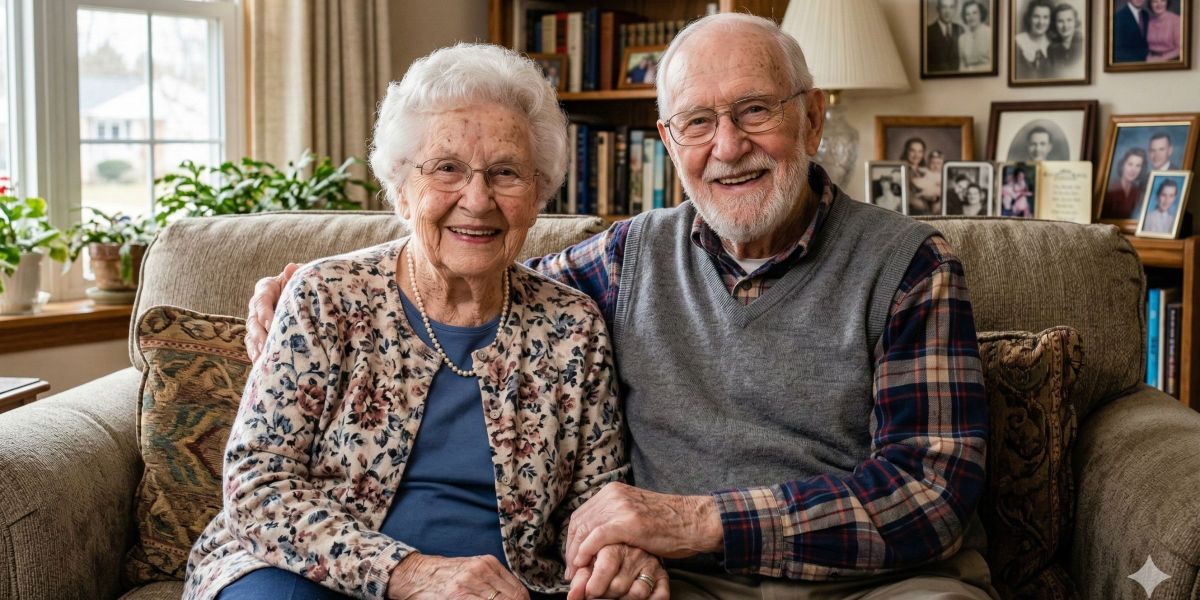
I Was Married to My Husband for 72 Years – At His Funeral One of His Fellow Service Members Handed Me a Small Box and I Couldn't Believe What Was Inside
March 10, 2026

After I retired, my daughter laughed in my face: "Your pension is barely $1,000. You won't survive on that." Her husband added: "You have two options: serve me, or go beg." They didn't know I owned six houses and had $10 million in a trust.
June 05, 2026

I Found Out My Husband Was Secretly Messaging My Stepmother
April 03, 2026

I Went to My Husband's Sister's House to Bring My Daughter's Medication – What I Found There Made Me Question My Entire Marriage
June 11, 2026

On their golden anniversary, Michael took the microphone and said, "I haven't loved you these past 50 years." Valerie didn't cry. When she asked to reply, even the waiters stopped breathing.
June 01, 2026

My Boyfriend Bought a New House for Us After Finding Out I Was Pregnant – Then, at 3 A.M., a Stranger Knocked on My Door and Said, 'You Don't Know the Truth About This Place'
June 10, 2026

I Won $89 Million and Told No One — Three Days Later, My Son Said Something That Made Me Realize Why I Had to Keep It Secret
June 03, 2026
My Kids and Grandkids Ignored Me for Years Until I Won the Lottery – When They Showed Up at My Door Expecting a Share, I Taught Them a Lesson They'll Never Forget
April 30, 2026

I Bullied a Boy in School – 40 Years Later, He Became My Grandson's Teacher and Took His Revenge
June 04, 2026