
An Old Man Helped a Poor Boy with Math – 11 Years Later, They Met Again in a Hospital
May 04, 2026


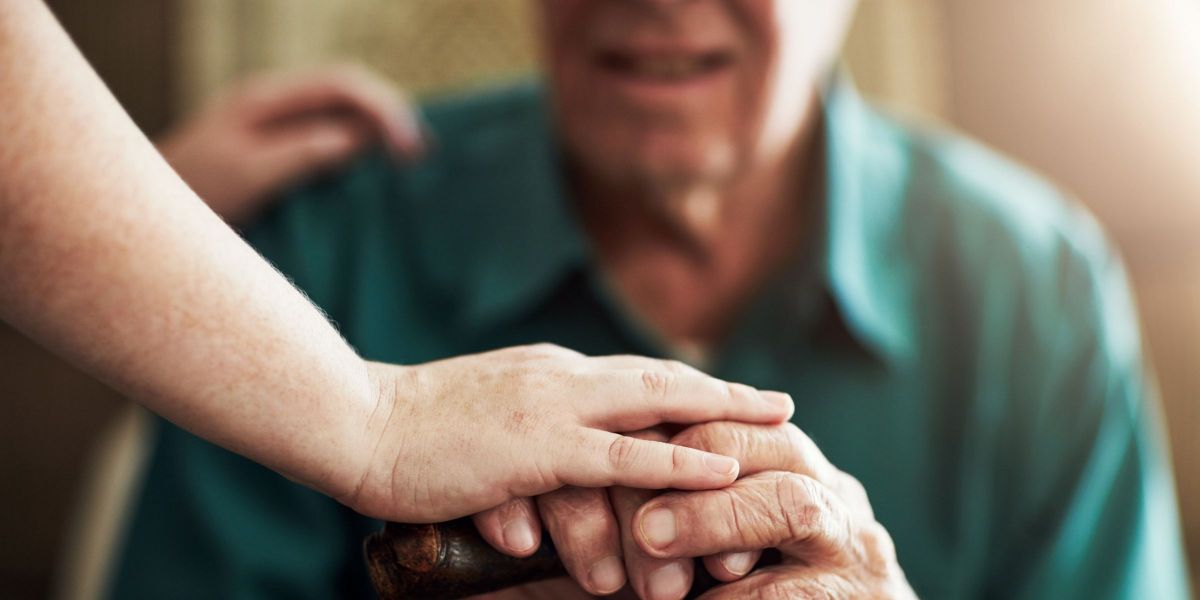

April thought the call about an inheritance had to be a mistake until a dead neighbor's letter led her to a notebook filled with names, dates, and money. But one entry was different from all the rest, and it brought back a moment she had almost forgotten.
I was halfway through folding laundry when my phone rang.
I almost let it go to voicemail the second I saw the unknown number. I had been getting too many spam calls lately, and that afternoon, I did not have the patience for another fake offer or robotic voice.
But something made me answer at the last second.
"Hello?" I said, pinning my phone between my ear and shoulder as I matched a sock I was sure had lost its pair months ago.
The voice on the other end was unfamiliar. Calm, official.
"Is this April?"
"Yes."
"I'm calling to ask if you could come to a lawyer's office. It's about a will."
I stopped folding.
"A will?" I repeated. "I think you have the wrong number."
"We do not," the caller replied, in the same steady tone. "You need to come and collect your inheritance."
For a moment, I honestly thought it had to be some kind of joke. My life was many things, but surprising in a glamorous way was not one of them.
I did not have any wealthy relatives. In fact, no one close to me had died recently. My parents were alive, my aunt liked to remind everyone she was in perfect health, and the rest of my family mostly existed as holiday cards and forgotten birthdays.
The caller gave me an address.
It was close. Very close.
A house nearby.
The second I heard it, something in my memory shifted. I looked out my living room window toward the building across from mine, the old brick one with chipped paint near the entrance and narrow hallways that always smelled faintly of dust and boiled cabbage.
That was when I remembered the old man from across the building: Waylon.
We barely spoke.
Sometimes we would run into each other in the hallway and nod, nothing more. Once, I held the front door open for him when his hands were full of groceries.
Another time, he stepped aside so I could pass on the stairs and gave me one of those polite little half-smiles older people use when they were raised to be formal, even with strangers. That was the extent of it.
No friendship. No secrets. No reason on earth for his name to be attached to mine.
Still, curiosity got the better of me.
I went anyway, just to figure out what was going on.
The lawyer's office sat on a quiet street lined with tidy hedges and identical mailboxes. Inside, everything looked too clean, too expensive, and too still. Even my footsteps sounded out of place against the polished floor.
A receptionist with neatly pinned hair led me to a small office and asked me to wait. I sat in a stiff chair and clasped my hands together so tightly my knuckles turned pale.
When the lawyer came in, he looked like exactly the sort of man who handled wills for a living. He was probably in his late 50s, wearing a dark suit and silver-framed glasses, his expression careful and unreadable.
"Ms. April," he said, taking the chair across from me.
I nodded. "I'm here because someone called and told me I inherited something, which makes absolutely no sense."
He opened the file, glanced down at the papers, and told me the old man had left his property to me. Not to his relatives. Not to the people who had known him for years. To me.
I swallowed. "There has to be a mistake."
Instead of answering, he reached into the folder and silently handed me an envelope.
"He asked for this to be given to you personally."
I stared at it in my hands. Plain white. Unmarked. Somehow, that made it worse.
I didn't open it right away. My hands were shaking for some reason. Maybe because I already felt something shifting under my feet, and I had no idea what it was.
Finally, I slid my thumb beneath the flap and unfolded the single sheet inside.
There was only one sentence on it.
"I'm paying back my debt."
I looked up so fast the chair creaked beneath me.
"What does this mean? I don't understand anything."
The lawyer folded his hands. "He also left a notebook. Maybe it will explain everything."
He placed it in front of me.
It was old, black, and worn at the edges, like it had been opened a hundred times. My throat felt dry. Nothing about this was normal. Nothing about it made sense.
I had never borrowed money from that man.
I had barely exchanged ten words with him in my life.
I carried the notebook home like it might fall apart in my hands.
The apartment felt strangely loud when I stepped inside, even though nothing was making a noise. I locked the door, set my bag down, and sat at my kitchen table with the old man's letter and notebook in front of me. For a long moment, I just stared at them, trying to steady myself.
Then, I opened the notebook and started reading the entries.
They began with my name.
I also unfolded the letter.
"Dear April,
If you are reading this, then I am no longer here to explain any of it myself, and perhaps that is for the best. Some things are easier to write than to say.
In the last years of my life, I came to see people more clearly than I ever wanted to. My relatives did not come to visit me out of love or concern. Most of the time, they appeared only when they needed something.
One asked me for help with rent. Another needed money for car repairs. Someone else told me it was for school fees, only to return a month later with yet another reason.
"The excuses changed, but the pattern never did."
For a long time, I gave them what they asked for. At first, I did it because they were family, and I wanted to believe that meant something. Later, I think I did it out of habit.
And perhaps, if I am honest, out of loneliness too. It is a painful thing to admit, but when a person grows old, even being used can begin to feel like a kind of company.
I stopped believing most of their reasons long ago. Still, I kept track of it all. Every visit. Every request. Every amount taken. I wrote it down so I would not have to rely on memory, and because some part of me needed proof that I had not imagined what our relationships had become."
The notebook was his record of all of it.
I turned the pages slowly. Each name had dates beside it, then amounts. Some were small. Others made my stomach tighten. A few names appeared over and over, the numbers growing larger each time. Then I found my own name.
It was written separately.
Next to it was a sum, and beneath it, in smaller handwriting, were the words: "to be returned."
I frowned, confused, until the memory hit me so suddenly I put my hand over my mouth.
The pharmacy.
It had been months earlier. I had stopped in after work to pick up pain relievers and vitamins. He was standing at the counter ahead of me, pulling medicine out of a paper bag and setting some of it aside.
"I'll just take these, then," he had told the pharmacist quietly.
She looked uncomfortable. "Sir, that still leaves one prescription unpaid."
He checked his wallet again, though it was obvious he already knew what was inside. "Then leave it."
Something in his voice had made me step forward before I could think twice.
"I'll pay for it."
He turned sharply. "No. That's not necessary."
"It's fine," I replied, already reaching for my card. "Please. Just take your medicine."
His eyes had filled with a kind of stunned embarrassment that stayed with me long after I left. I had not waited for thanks. I had simply paid and walked out.
Now, in the silence of my kitchen, I read his explanation through tears.
"Then there was you.
What you did may have seemed small to you, but it was not small to me. It was the only time in many years that someone treated me like a person instead of a source of money. You asked for nothing. You expected nothing.
"You simply offered help when I needed it most."
That is why I made my decision.
Everything I leave behind goes to the one person who showed me kindness without wanting anything in return: you.
Sincerely,
Waylon."
I cried harder than I expected to.
The next morning, I called the funeral home.
I could have arranged something simple and formal, the bare minimum expected for a man who had lived quietly and died almost unnoticed. But I could not bring myself to do that.
I used part of the inheritance to give him something gentle and dignified. Fresh flowers. A decent casket. Music that felt soft rather than heavy. It was not extravagant. It was personal. It felt like the sort of farewell someone deserved when they had spent too much of their life being used.
At the ceremony, his relatives appeared one by one.
I recognized the names before the faces because I had already seen them in the notebook. A niece with tight lips and a stiff posture. A middle-aged man with restless eyes. Another woman who looked around the room as though measuring what everything had cost.
They watched me with open disapproval.
Finally, one of them approached me near the front row. "Why are you handling all this?" he asked sharply. "Who exactly are you to him?"
I looked at him for a moment, then opened the notebook.
Without a word, I showed him the pages. His name was there, along with the dates and amounts. I turned another page, then another.
His expression changed. He stepped back.
After that, there were no more questions.
Later that evening, I returned to Waylon's apartment. The rooms were quiet, modest, and painfully tidy, as if he had spent his final years trying not to take up too much space in the world.
I sorted through the few belongings he had left behind, folded what could be donated, boxed what needed keeping, and stood in the doorway one last time before leaving.
Then I closed the door softly.
And as the lock clicked into place, I understood what he had really given me. Not just an inheritance, but a responsibility. A final chance to make sure he did not leave this world as someone used and forgotten, but as someone sent off with respect.
Exactly as he deserved.
But here is the real question: when a stranger's final act of gratitude reveals just how deeply the people around him had failed him, what do you do with that truth?
Do you turn away from the bitterness of what was taken, or do you honor the quiet kindness that made all the difference in a lonely man's life?
If you liked this story, here's another one for you: Jenny was the only one who stayed loyal to her grandfather while the rest of the family mocked him and circled for his money. But after his funeral, one quiet encounter and a single note opened the door to questions she never expected and truths she was not ready for.
An Old Man Helped a Poor Boy with Math – 11 Years Later, They Met Again in a Hospital
May 04, 2026

My Husband Was Diagnosed with Alzheimer's, Then Vanished – A Year Later, a Detective Knocked on My Door and Said, 'Ma'am... He Paid a Doctor to Fake His Diagnosis'
June 26, 2026

My Grown Children Refused to Come to My Wedding at 71 – What They Sent Instead Left Me Speechless
July 16, 2026

The Woman Who Bought My Childhood Home Called Me Crying Three Days Later – 'Did You Know There Was a Hidden Compartment Inside the Kitchen Clock?'
July 23, 2026

'I'll Ruin Your Life One Day,' a Student Told His Teacher – 17 Years Later, He Came to Her House One Night
April 08, 2026

My 14-Year-Old Daughter Sewed Toys from Her Late Father's Clothes for Children at an Orphanage – The Next Day, Officers Knocked on Our Door
May 06, 2026

I Gave My Last $10 to A Homeless Man in 1998, and Today a Lawyer Walked Into My Office With A Box – I Burst Into Tears the Moment I Opened It
April 27, 2026
She Vanished While Her Twin Slept in 1993 — 33 Years Later, Demolition Crews Found the Secret
May 18, 2026

I Was Driving to Sell My Wedding Ring After Losing My Job When I Stopped to Help a Stranded Single Mom – What She Left in My Car Changed Everything
June 22, 2026

The Three Words My Daughter Wrote in Her Diary About Her Father Destroyed Our Family
May 14, 2026

I Bullied a Boy in School – 40 Years Later, He Became My Grandson's Teacher and Took His Revenge
June 04, 2026