
I Couldn't Believe How My Sister-in-Law Treated My Daughter at Christmas Dinner — What Happened After Left Me Shaken
May 25, 2026



My grandmother, Eleanor, was a woman who never wasted a single word. So when her will turned out to be a riddle wrapped inside a decaying Vermont farmhouse, none of us should have been surprised. But we were. Every last one of us — and most of my family walked away before the story even really began.
The house had always looked like it was slowly giving up. The roof sagged in the middle, the porch boards groaned under your feet, and the windows stayed hidden behind heavy curtains no matter what season it was. Driving up to it as a child, I used to think it looked like a house holding its breath.
But Eleanor never apologized for it.
She had been a concert pianist in her younger years, the kind whose name filled theater programs and whose recordings still turn up in dusty record shops if you know where to look. She made serious money during those years, and then she married. When my grandfather died, she quietly disappeared from all of it.
She moved back into her parents' old countryside home outside a small Vermont town, hung up her concert dresses, and spent the rest of her life in that garden.
"The house doesn't matter," she used to tell me when I'd visit on Saturdays. "As long as the garden survives."
I never fully understood what she meant by that.
I just thought she loved roses.
When Eleanor passed, the family lawyer — a quiet, meticulous man named Mr. Hargrove — called all five of us in for the reading of the will.
My cousins Daniel, Sam, Olivia, and Brandon filed into his office alongside me, and we all sat in a row like children waiting to be told something they already suspected wasn't going to be good news.
The rumor had floated through our family for years like smoke that never quite cleared. Eleanor had sold a small music publishing company she'd built in her 50s, and the amount that people whispered ranged anywhere from impressive to unbelievable.
Nobody knew exactly how much.
But everybody assumed it existed somewhere, tucked away, waiting.
Mr. Hargrove cleared his throat and began reading.
The house and its contents would pass to whichever grandchild agreed to live there for one full year and personally maintain the garden Eleanor had kept behind the property. The house could not be sold, rented, or left unoccupied during that period. At the end of the year, full ownership would transfer to whoever had stayed.
The room went so quiet I could hear the clock on Mr. Hargrove's wall.
Daniel spoke first. He leaned back in his chair and let out a short, humorless laugh. "That house is a ruin," he said. "I'm not spending a year of my life in a ruin waiting for some mystery inheritance that probably doesn't even exist."
"She must've gone crazy before she died," Sam added, and a couple of the others nodded along as if that settled it.
Olivia didn't even look up from her phone. Brandon said something about having a life to get back to. One by one, they all shook their heads, gathered their things, and walked out of that office like the decision was obvious.
I sat there for a moment after they left.
Mr. Hargrove looked at me carefully over the rims of his glasses. "And you, Claire?"
I thought about Eleanor in that garden on early Saturday mornings, kneeling in the dirt in her good wool coat because she never bothered to change before going outside. I thought about the way she talked to her roses like they could hear her, and the way she'd press my hand sometimes and say, "You understand this place, don't you, sweetheart?"
"I'll stay," I said.
The first month was genuinely hard. The furnace was temperamental, the kitchen pipes knocked loudly at night, and the rooms felt enormous and echoey without Eleanor moving through them. I set up my laptop in her old sitting room, kept my job remotely, and spent my mornings in the garden the way she had taught me.
My cousins texted occasionally. Daniel once sent a message that just said, "Any treasure yet?" with a laughing emoji.
I didn't respond.
By spring, I had fallen into a real rhythm with the garden. I knew which beds needed thinning, which rosebushes had been neglected, and which corner of the property Eleanor had always fussed over the most — a dense, overgrown section near the back wall where the soil was darker and richer than anywhere else.
It was there, on a warm morning in late April, that my shovel hit something solid about eight inches down.
I thought it was a stone at first.
I cleared away more soil and found the edge of something metal, crusted with rust and dirt. I kept digging, carefully now, and slowly the outline of a hatch emerged from the ground, maybe three feet across, with an old iron handle on one side.
I stood there staring at it for a long moment with my heart going very fast.
Then I went inside and called Mr. Hargrove.
"I found something in the garden," I told him. "A hatch. In the ground. I don't know what's underneath it and I'm not opening it alone."
There was a pause on his end. "I'll be there within the hour," he said, and I noticed he didn't sound even slightly surprised.
We opened it together, Mr. Hargrove and I, the two of us pulling on that iron handle until the hatch groaned and swung upward, releasing a rush of cool, stale air from below. A short wooden staircase led down into a small underground room, dry and surprisingly well-built, lit by a single battery lantern sitting on a shelf that Eleanor must have placed there herself.
Along one wall, five wooden boxes sat in a row.
Each one had a name written on it in Eleanor's handwriting. Daniel. Sam. Olivia. Brandon. Claire.
I pressed my hand over my mouth and stood there for a moment just breathing.
"She planned this," I said quietly.
"She planned all of it," Mr. Hargrove said. "From the very beginning."
I lifted my box first. Inside was a sealed envelope with my name on the front, and beneath it, a smaller folded note in my grandmother's careful script.
I opened the note and read it standing there in that underground room.
"Look for the treasure in the place that became most precious to me at the end of my life."
I read it twice. Then I read it a third time.
"What does it mean?" I asked, more to myself than to him.
Mr. Hargrove just looked at me with that same careful expression he always wore. "I think you already know," he said.
I carried the other four boxes upstairs and set them on Eleanor's kitchen table. Then I stood in the sitting room for a long time, turning her words over in my mind. The place that became most precious to me at the end of my life.
At first, I assumed it was the garden.
But I kept coming back to something else.
The piano in the corner of the sitting room — an old upright that had stood there for as long as I could remember — had always been locked. Eleanor never played it, never talked about it, never let anyone touch it. I had assumed it was grief, that playing again after my grandfather died was simply something she couldn't do anymore.
I went to the garden and started at the rosebushes near the back wall, the ones she had always tended most carefully. I dug gently around the base of the largest one until my fingers found something small and cold buried just beneath the roots.
An old key, wrapped in a square of oilcloth.
My hands were shaking as I carried it back inside.
The key fit the piano perfectly.
When the lid lifted, there were no keys inside — or rather, the keys were all there, but the interior had been carefully modified over the years.
Stacked neatly in the space where the hammers and strings should have been were bundles of cash, folders of property documents, a velvet pouch of jewelry I recognized from old family photographs, and a thick bundle of letters tied with kitchen twine, each one addressed to a different grandchild in Eleanor's handwriting.
I sat down on the piano bench, pressed both hands flat against my knees, and just breathed for a while.
I couldn't believe what was happening.
I called Mr. Hargrove back in from the kitchen, and he stood in the doorway looking at the open piano with the expression of a man who had been waiting a long time for this particular moment.
"She never told you, did she?" I asked him. "She just told you to wait."
"She said whoever found it would know what to do with it," he said simply.
I called my cousins that same evening.
I told them what I had found, all of it, and I told them their boxes were on Eleanor's kitchen table whenever they wanted to come and collect them. I told them about their letters, the jewelry, and the documents.
The line stayed quiet for a moment.
"She left something for all of us?" Daniel asked, and his voice had lost that edge it usually carried.
"She left something for all of us," I said. "She always was going to."
They came the following weekend, all four of them, quieter than I had ever seen them. Nobody made any jokes. Sam stood in the garden for a long time without saying anything. Olivia cried a little, which I had never seen her do before.
We sat around Eleanor's kitchen table and read our letters together, and I won't share what mine said because it belongs only to me. But I will say that by the end of it, I finally understood what my grandmother had been doing all along.
The money was never the point. The house was never the point. The garden was never really the point either.
She just wanted to know who still loved the family enough to stay.
And I think, in the end, she already knew exactly who that would be.
If you enjoyed reading this story, here's another one you might like: She thought the worst thing her neighbor could do was cover the last piece of her parents in mud and garbage under the dark of night. She was wrong. Because by the next morning, the whole street was moving toward his house with a purpose he never saw coming. What had everyone finally decided?
I Couldn't Believe How My Sister-in-Law Treated My Daughter at Christmas Dinner — What Happened After Left Me Shaken
May 25, 2026

My Seven-Year-Old Son Crawled Into My Bed and Whispered: 'Daddy Has a Secret' — What I Discovered Three Days Later Made My Blood Run Cold
June 01, 2026

During Our 4th of July BBQ, My Husband's Mother Told My Crying Daughter She 'Wasn't True Family' – And What She Said Next I Will Never Be Able to Unhear
July 03, 2026
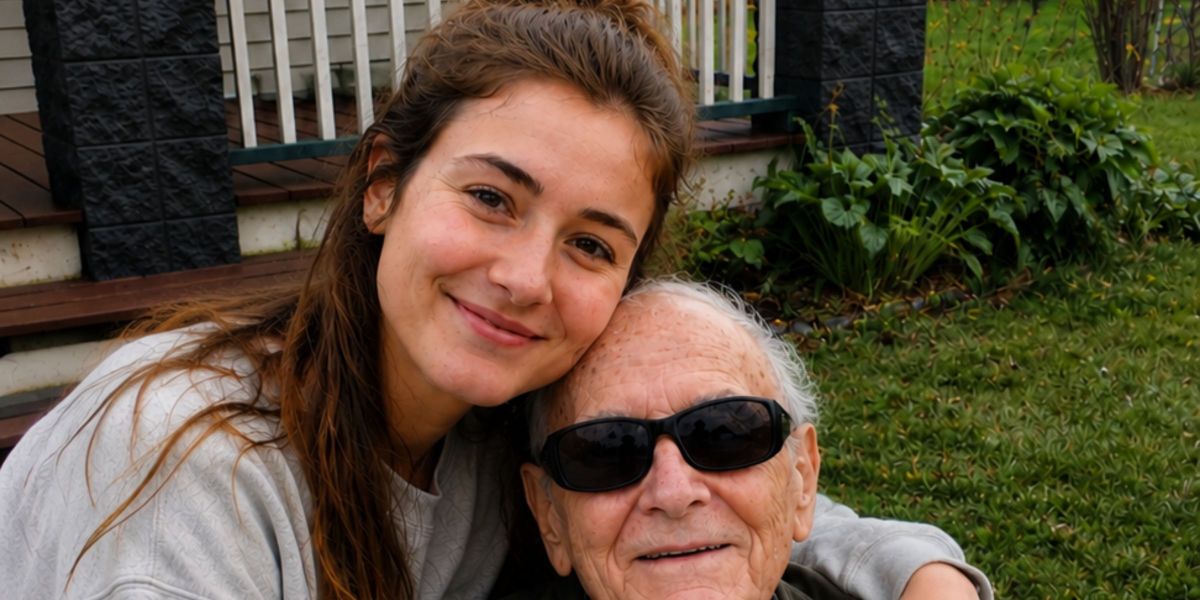
I Was Paid to Visit a Blind Veteran and Pretend to Be His Granddaughter – Then His Lawyer Said, 'Before He Passed, He Left One Final Instruction About You'
June 10, 2026

My Mother-in-Law Threw My Dinner on the Floor While My Husband Watched – After I Left, a 3-Word Call Made Me Scream
June 15, 2026

I Installed a Memorial Bench to Honor My Husband – One Week Later, Someone Had Attached a Locked Silver Box Underneath It, and I Couldn't Stop Shaking When I Opened It
June 19, 2026

Lonely Old School Gardener Decorated the School Yard Overnight – The Next Morning, His Life Changed Forever
May 28, 2026

My Daughter-in-Law Put My Suitcase Outside After the Funeral — When the Lawyer Opened His Envelope, I Couldn't Believe What I Found
May 22, 2026

I Was Making a Scrapbook for My Pregnant Daughter-in-Law – Then I Found a Photo That Made Me Question Everything I Knew About My Son's Birth
June 23, 2026

The Woman Who Bought My Childhood Home Called Me Crying Three Days Later – 'Did You Know There Was a Hidden Compartment Inside the Kitchen Clock?'
July 23, 2026

My husband spent 15 years restoring a blue Chevrolet piece by piece. The morning I found the garage empty, my son just looked down and said: "I sold it to pay for my honeymoon."
June 10, 2026